
“Children Have A Lot Of Freedom”
2- 10.06.2026, 10:41
- 1,562
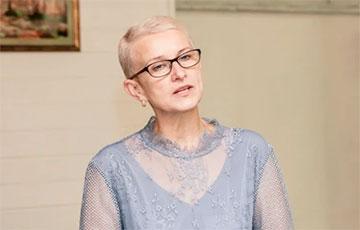
Irena Bernatska, a political prisoner in the Union of Poles case, now works as a teacher in Białystok.
Irena Bernatskaya was detained on the same day as Andrzej Poczobut. After two months in custody, she was taken to Poland without any documents.
She now lives in Białystok and works as a teacher in a kindergarten. MOST spoke with Irena about how difficult it is to find work in another country at her age and how Polish kindergartens differ from Belarusian ones.
Arrested for the first time for praying
Before moving to Poland, Irena lived in Lida and was the head of the Lida branch of the Union of Poles.
— We had a school affiliated with the Union of Poles. The children would come, learn the language, sing, show off their talents, and engage in creative activities. Although I’m an engineer by training, I’ve worked with children my whole life. For a while, I worked with children with disabilities. I’ve always enjoyed it, — she says.
In 2020, Irena was detained for the first time—she went to the church with other believers and prayed for those who had suffered from the actions of the Belarusian security forces.
— At my age, that was the only thing I could do—help through prayer.
Taken away without documents
In 2021, officials came to search the school affiliated with the Union of Poles and then Irena’s home. The woman was detained on March 25 as part of a criminal case regarding the rehabilitation of Nazism. Other representatives of the Union of Poles were also detained under the same article: Anżelika Boris, Andrzej Pochołat, Maria Tyszkowska, and Anna Panisheva.
On that day, Irena was taken for questioning to the Investigative Committee in Minsk, and from there she was transferred to a pretrial detention center. She spent two months in custody.
On May 25, Bernatskaya was ordered to pack her things and leave. She was told that she would be under house arrest and required to report to the Lida District Police Department and the Investigative Committee. The documents were not handed to her, but to a masked man who was accompanying her.
Then Irena was put into a car without license plates and driven off in an unknown direction. On the way, she feared they might take her out of town and kill her. However, the car headed toward Grodno and then toward the border.
There, she and the other women involved in the case—Maria Tyshkovskaya and Anna Panisheva—were handed over to the Polish side. All three were taken away without passports or any documents.
“It was hard to find a good job at my age”
Irena recalls her first months in Poland as very difficult. Despite her good command of Polish, finding a stable job was not easy.
— I went around, doing odd jobs—cleaning, sweeping. I had many acquaintances, and many wanted to help. But finding a good job at my age is hard.
Eventually, she was offered a position at a daycare center. Irena admits: this was only possible thanks to personal connections.
— I have a Soviet diploma, but the director accepted it. Kind people helped me a lot—I probably wouldn’t have found this job on my own.
“The children have a lot of freedom”
Although the job requires a lot of energy, Irena says she feels at home at the kindergarten—largely thanks to her relationships with colleagues and parents.
— The schedule here is probably the same as everywhere else. The children arrive as early as 6:30 a.m. and leave at 4:30 p.m. And I’m with them all day: dancing, feeding them, and playing. We have to decorate the room, get everything ready for classes, and change the classroom decor depending on the season.
The main difference from the Belarusian system, she says, is the approach to the children.
— Back home (in Belarus), we had a strict hierarchy—from oldest to youngest. But here, the children are given more love and affection. The children have a lot of freedom: if they want to sleep, they sleep; if they don’t, they don’t. No one forces them. If they want to, they rest; if they want to, they play. The children don’t want to go home.
Irena says that relationships with the children’s parents are going well.
“We know many of them personally or through mutual acquaintances. After all, Białystok is close to the Grodno region. There are a lot of people from there here.
Irena works at the daycare center under an employment contract—her employer pays all social contributions, and she has paid vacation and sick leave.
— My salary is the national minimum—about 4,600 zlotys. But my husband and I live just the two of us, and our children are already grown, so it’s enough for me.
Irena turned 60 in March and is now eligible to retire. A year ago, she managed to transfer her Belarusian work history to Poland—it will be taken into account when calculating her total work history.
— I can count on the minimum Polish pension—about 1,900 zlotys. In the future, I might switch to a contract of mandate (work assignment contract) and work only as a substitute at the daycare center—from time to time.

Bank's name: Bank Millennium S.A.
Address: ul. Stanislawa Zaryna, 2A, 02-593, Warszawa
IBAN: PL97116022020000000216711123
SWIFT: BIGBPLPW
Name of the account holder: Fundacja “KARTA ‘97”
Purpose/title of payment: Donation for statuary aims
You can contact us by the e-mail [email protected]