

Stunt Pilot Hunts Russian Shaheds Over Ukraine
- 26.05.2026, 12:04
- 2,036
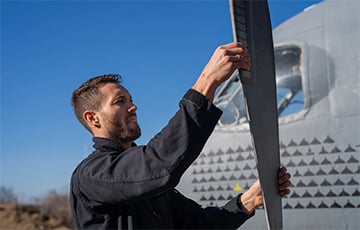
Photo: The New Yorker
The former aerobatics champion uses his acrobatic skills for a nighttime interception.
Ukrainian pilot and aerobatics champion Timur Fatkullin has turned his athletic skills into a defense tool. Today, he uses them in a nighttime hunt for Russian attack drones like Shahed, writes The New Yorker.
Fatkullin's story goes from international acrobatic aerobatics competitions to being part of an experimental air defense unit that operates at the intersection of civilian and military aviation.
Earlier in 2019, Fatkullin wowed judges and competitors with his unconventional style of flying at the World Aerobatic Acrobatics World Championships in the Czech Republic.
"He was absolutely phenomenal," recalled one of the participants, former military navigator Trevor Dugan.
Then the 25-year-old Ukrainian won one of the key stages of the competition by starting the flight program upside down. His team won gold, and the pilot himself cemented his reputation as an exceptionally technical and daring pilot.
From the sporting skies to war
After the pandemic and full-scale war broke out, Fatkullin retired from athletic performance. He is now 32, has five children, and lives a rhythm of constant readiness for sorties.
His coworkers describe him as a man who "lives in the sky." He himself often wears a flight jacket and military uniform and maintains discipline even in the home. Fatkullin says he switches to Russian in stressful situations in the cockpit, although he usually speaks Ukrainian.
Mission: shoot down Shaheds
After the massive drone attacks began, he tried to join the regular forces but ran into bureaucratic restrictions. Eventually, he and former military pilot Valery Slipkan formed a volunteer air defense unit.
Formally, it is a territorial defense unit under the control of the Air Force; unofficially, it is called Aerotim. Its task is to intercept Russian strike drones in the air using light aircraft.
Fatkullin ironically comments on his work on the An-28, which was used at the beginning of the project:
"I am a jet pilot who drives a 'bus'."
The main difficulty is finding the drone in the dark. This is where the team members say their sport piloting skills become crucial. Fatkullin and his crew use airplanes that can fly alongside the Shaheds, and sometimes even outrun them.
Slipkan calls Fatkullin a unique pilot:
"Timur feels better in the sky than some swimmers in the water."
Risks and Expectations
The unit operates in a constant state of readiness - crews can wait hours for a call while near an airfield or in the field. Despite the challenges, the team continues to expand its capabilities and is looking for new aircraft and equipment, including thermal imaging systems and weapons.
The intensity of Shahed attacks increased in the spring, and the need for these crews only increases.

Bank's name: Bank Millennium S.A.
Address: ul. Stanislawa Zaryna, 2A, 02-593, Warszawa
IBAN: PL97116022020000000216711123
SWIFT: BIGBPLPW
Name of the account holder: Fundacja “KARTA ‘97”
Purpose/title of payment: Donation for statuary aims
You can contact us by the e-mail [email protected]