Protests Erupted In Cuba
6- 14.05.2026, 16:34
- 8,480
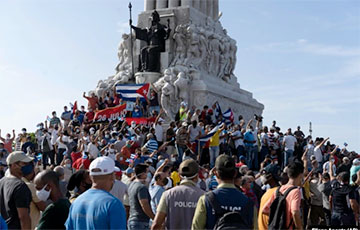
Outraged Cubans took to the streets of Havana.
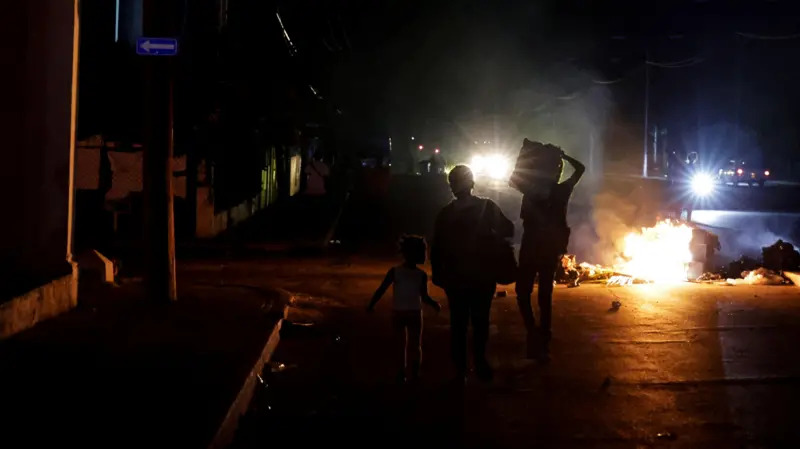
Hundreds of angry Cubans took to the streets of Havana to protest fuel shortages. People blocked roads with torched piles of garbage, banged pots, shouted anti-government slogans and chanted, "Turn on the lights!" and "The people, united, are invincible!" It is the largest wave of protests in Havana since the energy crisis began in January, writes BBC.
Cuban Energy Minister Vicente de la O Levy earlier said the island had completely run out of fuel oil and diesel, leaving the power grid in a "critical state."
Some neighborhoods in Havana have no electricity for 20 to 22 hours a day.
With this backdrop, the US on Wednesday again offered Cuba $100 million in humanitarian aid - in exchange for "substantial reforms to the island's communist system."
The situation deteriorated sharply after January, when US President Donald Trump, who has repeatedly stated his intention to seek a change in Cuba's communist government, strengthened the embargo and threatened duties on countries supplying fuel to the island.
Cuban President Miguel Diaz-Canel wrote on social media on May 13 that US actions were the cause of the energy crisis, while acknowledging that the situation on the island was "particularly tense."
"This dramatic deterioration has one cause: the genocidal energy blockade to which the United States is subjecting our country, threatening irrational tariffs on any country that supplies us with fuel," he said.
Often Cuba has depended on oil supplies from Venezuela and Mexico for its refineries. However, both countries have largely cut off supplies after U.S. President Donald Trump threatened duties on countries sending fuel to the island.
Two days ago, Trump announced that Cuba was "failing" and had asked for talks on its own, but gave no specific details.
Earlier this month, Trump said the United States would take control of Cuba "almost immediately" in a forceful conflict.
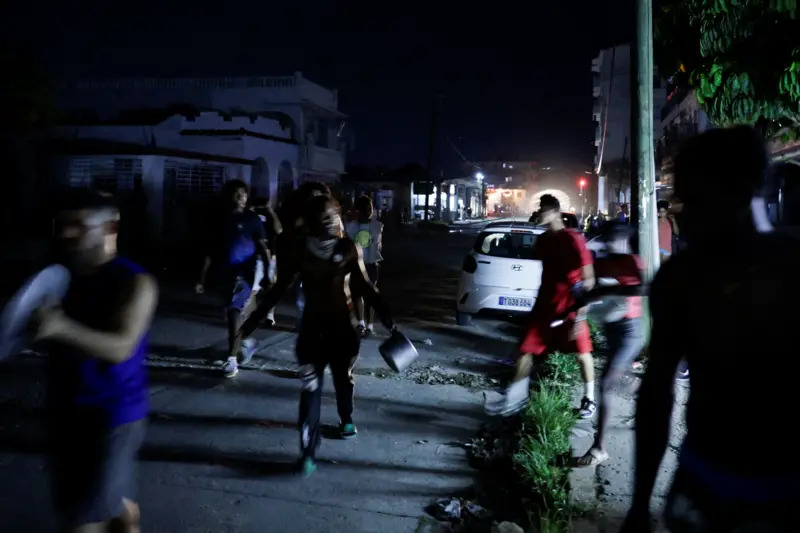
Protests erupted simultaneously in several neighborhoods in Havana.
"We have a lot of elderly people living here, many bedridden. Food is spoiling," Rodolfo Alonso, a resident of the capital who works in the public sector, told Reuters.
He said he decided to take action after his Playa neighborhood was left without electricity for more than 40 hours.
"We started banging pots just to be given at least three hours of light. We don't need anything else. This is not a political protest," he said.
Reuters reporters report that on several occasions they saw electricity returned to the very neighborhoods where the protests were taking place. Crowds of men, women and children then applauded and quickly dispersed.
There were heavy police presence at the sites, but security forces mostly watched from the sidelines and did not intervene.
Earlier in the day, Cuba's energy and mining minister made a statement.
"We have no fuel oil or diesel at all. There are no reserves left. The only thing we have is gas from our fields, where production has increased," Vicente de la O Levi said on state television.
The blackouts, which have lasted 20-22 hours a day, have further exacerbated tensions in a city already strained by shortages of food, fuel and medicine.
Hospitals in Cuba can no longer operate normally, and schools and government offices have been forced to close. The crisis has also hit tourism, one of the key sectors of the Cuban economy.
Last week, U.S. Secretary of State Marco Rubio said Cuban authorities had refused $100 million in U.S. humanitarian aid. Havana denied the accusation.
On Wednesday, the U.S. State Department reiterated its readiness to provide aid, specifying that it was planned to distribute it in coordination with the Catholic Church and "reliable" humanitarian organizations.
"The decision rests with the Cuban regime to accept our offer of assistance or to refuse vital support and ultimately be accountable to the Cuban people for obstructing critically needed aid," the statement said.
Washington's pressure on Cuba intensified in early May when the U.S. imposed a new package of sanctions against senior Cuban officials, accusing them of human rights abuses.

Bank's name: Bank Millennium S.A.
Address: ul. Stanislawa Zaryna, 2A, 02-593, Warszawa
IBAN: PL97116022020000000216711123
SWIFT: BIGBPLPW
Name of the account holder: Fundacja “KARTA ‘97”
Purpose/title of payment: Donation for statuary aims
You can contact us by the e-mail [email protected]