
"Mozyr Must Not Become Tuapse."
1- 30.04.2026, 17:04
- 1,998
For Lukashenko's regime, direct entry into the war could turn into a disaster.
Ukrainian President Vladimir Zelensky imposed a new package of sanctions against Lukashenko's regime: the dictator's sons Viktor and Dmitry Lukashenko, as well as 16 Belarusian citizens and 11 legal entities have fallen under restrictions for 10 years.
Why did Ukraine impose sanctions against Lukashenko's sons now? What do these restrictions mean for the dictatorial regime?
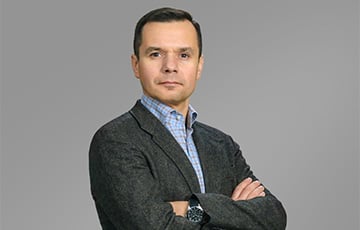
About this Charter97.org asked Maxim Pleshko, candidate of philosophical sciences, head of the Ukrainian Center for Belarusian Communications:
- Kiev's decision looks not situational, but strategically calibrated. There are several reasons why the sanctions are imposed now.
First of all, it is a response to the deepening military integration of Belarus with Russia. It has long been about more than just the provision of territory: Belarusian military-industrial complex enterprises (Olsa, Termoplast, KZTSh) directly produce ammunition for the Russian army, and the country's infrastructure is used to support attack drones, which increases Russia's ability to strike the northern regions of Ukraine, plus infrastructure for deploying Oreshnik missiles. All of this turns Belarus into an element of the Russian military machine - albeit not directly belligerent, but critical to the aggressor.
Second, it is a signal to international partners. Ukraine is actually pushing the West to synchronize pressure on Minsk. Especially against the background of discussions in the United States about a possible partial easing of sanctions in exchange for the release of political prisoners. Kiev demonstrates the opposite approach: the Lukashenko regime's participation in the war on Russia's side outweighs any humanitarian gestures.
Third, the symbolic and personalized nature of the sanctions is important. Inclusion of Viktor and Dmitry Lukashenko in the lists is a blow to the closest circle, which controls financial flows, logistics and key assets of the regime. In fact, it is an attempt to put pressure not only on the state, but also on the family architecture of power.
First of all, Ukraine's task is to make it as difficult as possible for Russia to produce weapons and logistics on the territory of Belarus. Any sanctions pressure can help in this regard.
- What are the next measures that may be taken against Lukashenko's regime?
- Most likely, we will see further expansion of the sanctions logic in several directions.
First - deepening of personal sanctions. Other members of Lukashenko's family, as well as a wider range of trusted persons who ensure the functioning of the regime - from officials to business intermediaries - may fall under the restrictions.
Second - synchronization with the European sanctions policy. It could be about joining the new EU packages, including restrictions in the areas of services, digital technologies, cryptocurrencies and circumventing financial schemes. The pressure on the so-called "gray zones" - logistics, insurance, consulting - may become especially sensitive.
Third - the fight against the circumvention of sanctions. Ukraine and its partners are increasingly active in the "shadow fleet," transportation companies and supply chains through which Belarus and Russia continue to trade in circumvention of restrictions.
A separate direction is the response to military threats. If further deployment of infrastructure for Russian missiles or use of the territory of Belarus for attacks is detected, it may lead to point sanctions against specific facilities, enterprises and even military structures.
- Is there a risk that Belarus will be fully involved in the war, as Zelensky says?
- At the moment, this risk remains, but it is moderate.
Russia continues to pressure Minsk, trying to draw Belarus into direct participation in the war. We cannot completely discard such a scenario, but Lukashenko has very limited room for maneuver. The direct involvement of the Belarusian army in hostilities carries serious internal risks for him - from a drop in the loyalty of law enforcers to potential destabilization inside the country.
But Belarus is already de facto involved in the war: its territory is used as a bridgehead, its infrastructure is used for attacks, and its industry is used to support the Russian army. But the transition to open participation is a qualitatively different level of escalation.
It is important that at the moment there is no formation of strike groups near the border with Ukraine. This indicates the preservation of pressure and threat as a tool rather than preparation for an immediate invasion.
And, finally, there is the factor of self-preservation. Lukashenko and a significant part of the Belarusian society are definitely not interested in turning the country into a full-fledged war zone. Simply put, Minsk understands perfectly well that "Mozyr must not become Tuapse". For the regime, direct entry into the war may turn out to be a catastrophe - even though the current form of participation is already causing serious damage to Belarus.

Bank's name: Bank Millennium S.A.
Address: ul. Stanislawa Zaryna, 2A, 02-593, Warszawa
IBAN: PL97116022020000000216711123
SWIFT: BIGBPLPW
Name of the account holder: Fundacja “KARTA ‘97”
Purpose/title of payment: Donation for statuary aims
You can contact us by the e-mail [email protected]