

Syrsky: If You Want Peace, Prepare For War
- 23.11.2026, 16:30
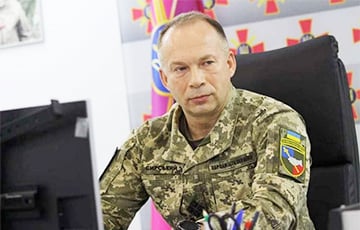
The former commander-in-chief of the Armed Forces of Ukraine identified three key lessons from the war for Europe.
Russia’s full-scale war against Ukraine has changed our understanding of what effective defense should look like and what practical steps must be taken to maintain genuine peace. Countries must be prepared for war even in peacetime in order to prevent it from breaking out in the future. As former Commander-in-Chief of the Armed Forces of Ukraine Oleksandr Syrskyi wrote in Telegram, he outlined these points during a speech at the International Security Forum in Halifax.
In particular, Syrsky believes that other countries need to learn three lessons from the Russia-Ukraine war. First, in his view, countries must prepare for defense during peacetime.
“Peace is fragile. Even where war seems impossible, political decisions can quickly change the situation. Today, Ukrainian soldiers are defending peace in Europe by holding back Russian aggression. The saying ‘If you want peace, prepare for war’ remains relevant because readiness for defense is one of the conditions for deterring an aggressor,” Syrsky emphasized.
Second, he said, the collective security system needs to be reformed, since existing international mechanisms failed to prevent Russia’s full-scale invasion and have still not stopped the war.
“The scale of hostilities in Ukraine demonstrates how many people, weapons, and resources a protracted defense requires. It would be difficult for many countries to bear such a burden alone. We need mechanisms that will allow partners to act jointly and in a timely manner—to deter aggression and stop it once it has begun,” Syrsky added.
Third, he is convinced that the army must continuously evolve.
“In this war, weapons from different generations are being used simultaneously, and new technologies are rapidly changing the nature of combat operations. Therefore, armies need to develop their own technologies, implement them quickly, and adjust troop training accordingly,” Syrsky stated.
Thus, in his view, the advantage goes to whoever learns and adapts faster.

Bank's name: Bank Millennium S.A.
Address: ul. Stanislawa Zaryna, 2A, 02-593, Warszawa
IBAN: PL97116022020000000216711123
SWIFT: BIGBPLPW
Name of the account holder: Fundacja “KARTA ‘97”
Purpose/title of payment: Donation for statuary aims
You can contact us by the e-mail [email protected]