
Natallia Radzina: Lukashenko Has Never Faced A Situation Like This Before
6- 16.11.2026, 11:00
- 12,214
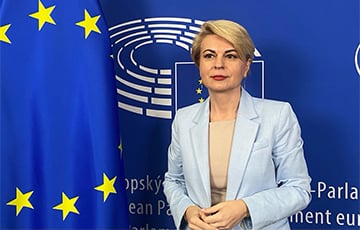
There are serious indications that the Kremlin and its ally are facing major problems.
After Lukashenko's departure, Belarus will quickly become a democratic country and begin moving toward the European Union and NATO, while the concepts “Finlandization” and neutrality for our country, as proposed by some political figures, are geopolitical barbarism.
She discussed this and more in an interview with the Ukrainian YouTube channel “Analyze”, Charter97.org editor-in-chief Natallia Radzina discussed this and other topics.
Europe’s Key Role
At the beginning of her conversation with Ukrainian host Alexandra Babenko Natallia Radzina made it clear that without democratic changes in Belarus, it is impossible to talk about any kind of security architecture in Europe—“any agreements will collapse like a house of cards”:
“Russia must be presented with very strict conditions: immediately end the war in Ukraine, liberate all illegally occupied territories, leave Belarus alone, and allow the Belarusian people to choose their own government. Lukashenko, meanwhile, is holding on to power by force; he is illegitimate and is not the real president of Belarus”, — commented on the negotiations with Russia the Belarusian journalist.
The editor-in-chief of the Charter97.org website emphasized Europe’s key role in ensuring that Ukraine continues its fight against Russia and that pressure on Lukashenko’s regime does not let up.
“Ukraine is holding its ground in this war, undoubtedly thanks to the Ukrainian army and the unprecedented courage of the Ukrainian people themselves. But we must realize that Europe is providing very significant assistance in the form of weapons and financial support, and without this aid, Ukraine would hardly have been able to hold out, despite all its courage. It is important to appreciate the contribution Europe is making to Ukraine’s victory: when the Americans abandoned you, the Europeans came to your aid.
Speaking of Belarus, I am pleased that the EU remains principled in its stance toward the Lukashenko regime and refuses to lift economic sanctions against it, despite the pressure that the administration of U.S. President Donald Trump has been exerting for several years now. This is now public knowledge—the Americans are pressuring Lithuania to open the port in Klaipėda to Belarusian potash, on which the U.S. has already lifted sanctions, because it is the shortest and most convenient route for transporting it to America. The Lithuanians are not going along with this, and they deserve credit and praise for that. I very much hope that Trump’s defeat in the midterm elections will prevent the Americans from continuing to exert this enormous pressure on Europeans to lift sanctions against the Lukashenko regime.
I’ve been thinking about this: on February 28, 2027, when the sanctions against the Lukashenko regime will need to be extended again, the Lithuanians might very well give in. There is now hope that this will not happen, given that Trump himself is a “lame duck” today and it is clear to everyone that his standing in America has weakened significantly.
Of course, I would like to see more. We’d like to see Europe block the Baltic Sea today and respond firmly to hybrid attacks and military threats emanating from the territories of Russia and Belarus. I wish it had already entered this war, because NATO’s Article 5 has been violated more than once over the years. But that isn’t happening, because Europeans truly do not want to go to war. This is a normal desire of any peaceful nation: they enter a war only as a last resort. Nevertheless, they are doing quite a lot, and that should be appreciated”.
Regime Change in Belarus
Alexandra Babenko noted that in Ukraine, people very often talk about Russia’s future after Putin, but pay little attention to Belarus. What awaits our country after a regime change? Who might become the new president? Natallia Radzina expressed confidence that Belarusians will choose the European path after Lukashenko’s departure:
“There will be no chaos in Belarus because it is a relatively compact European country with an educated, law-abiding population, and one that is European in mentality and history. A change of power in Belarus, in my view, could happen at any moment, and we simply need to be prepared for it.
Geographically, the country is heavily dependent on external actors, on its neighbors. Whether it likes it or not, Belarus will have to build normal relations with the European countries with which it shares more borders than with Russia: Lithuania, Latvia, Poland, and Ukraine—which I also consider a European country. Belarus will have to get on a democratic track, build a market economy, and become a true European state. Strategically speaking, we need to move toward the European Union and NATO and declare this from the very beginning. This is the only way to preserve sovereignty.
Besides, we have our own elites. Of course, many people today are forced to live in exile, but I am convinced that most of them will return. Even among today’s ruling class, there are quite a few Europe-oriented, educated people who will be able to continue working in government, provided they have not committed crimes against humanity or violated citizens’ rights. Therefore, a change in power will take place, and believe me, there will be a great many presidential candidates in Belarus’s first free elections, as well as candidates for parliament and local government.
This has never happened in Russia before
Speaking about Russia’s future, the Belarusian journalist noted the unprecedented processes set in motion by the war within the Russian Federation:
“We can see just how dire the situation is in Russia today, and all of this is having a ripple effect on Lukashenko’s regime.
According to the latest statistics, two-thirds of Russia’s population cannot make ends meet—they cannot survive on their wages. Two-thirds of the population. What can be said about Belarus, where people are forced to survive on meager pensions and pittance-like wages amid skyrocketing prices and inflation?
Inside Russia, they’ve stopped paying salaries to the military. This has never happened in the Russian Federation! Yes, the orcs on the front lines are still receiving some money, but the army inside the country will be left without pay before New Year’s. Can you imagine the mood there, the state of the economy?!
It seems to me that Russia’s defeat in this war is inevitable, no matter how the situation unfolds now, and it will seriously affect Russians’ worldview. I don’t believe that people are beyond redemption. Circumstances simply need to be created that will prompt them to change their view of the world, of their neighbors, of other people, and of themselves. That is why I believe that today we must do everything possible to ensure that Ukraine can win this war, defend its territories, and for Belarus to free itself from the total Russian influence we’ve seen over the past 30 years—and for Russians to experience firsthand what it means to cross a border and covet what belongs to others. They must feel this to the fullest extent. They’re already starting to feel it, because the trends are quite alarming for the Kremlin, and we can see that Russia’s economy is falling apart.
Despite rising oil prices, this has no effect whatsoever on the situation of Russians or on the country’s economy, because Ukrainians continue (and glory to Ukraine) to strike at oil refineries. Any revenue that may have increased is being spent on repairing refineries, oil, and gas storage facilities, which continue to be destroyed.
I am convinced that the situation will only get worse for the Kremlin from here on out. I don’t think Europe will lift sanctions against Russia. Trump’s position in the U.S. has been seriously weakened, which means we can expect a more principled stance toward Russia in the coming years, including from the Americans. The European economy will no longer be dependent on Russian oil and gas, because Europe understands very well that Russia is its potential enemy. Threats from Russia are palpable here, and everyone understands perfectly well that they have not gone away and will not go away as long as Putin and his ilk remain in power. Therefore, as I see it, Russia faces decline and, possibly, collapse. Because of this, their worldview will also change. It seems to me that this is an inevitable process.”.
Belarus Will Join NATO and the EU
Natallia Radzina responded harshly to supporters of Belarus’s “Finlandization” and “neutrality”:
“Together with Ukraine, we will build our European future. We have only one path: to join the European Union and NATO, without a doubt. I simply don’t see any other way for our countries, located next to Russia, to survive. I really dislike talk of some kind of neutrality, of Belarus being a ‘bridge between Russia and Europe,’ or of some sort of ‘Finlandization.’ This is utter nonsense and geopolitical barbarism. It is perfectly clear—and the history of independent Belarus confirms this—that it is impossible to preserve sovereignty next to Russia unless you are part of another, more powerful alliance. Such an alliance is the EU, built on democratic principles, where Belarusian sovereignty, culture, and history will be respected. This will help us build and strengthen democratic institutions, because there can be no dictatorships in the European Union. Hungary’s experience shows that even if certain tendencies emerge, the country does not turn into a dictatorship and ultimately shakes off that yoke.
Therefore, we have no other choice. And here it is very important that Ukrainians also understand: the Belarusian people—not the Lukashenko regime—are your main ally and partner on this path. Ukraine will not succeed in joining Europe while leaving Belarus to Russia as a consolation prize.
When it comes to security, Russian military personnel must be completely withdrawn from Belarusian territory, and Russian military bases must be closed. Belarus must terminate all military treaties signed with Russia and cease to be part of a regional military alliance. Today, the Belarusian army is, in essence, part of the Russian army and is controlled from Moscow. These are serious issues that must be discussed if we are to talk about any kind of security on Belarusian territory.”
Major Changes in the U.S.
A Ukrainian journalist referred to a book by American historian Yuri Felshtinsky "Natallia Radzina’s Belarus". The book mentions a meeting between the editor-in-chief of the website Charter97.org and former U.S. National Security Advisor Zbigniew Brzezinski. Natallia Radzina asked why his book *The Grand Chessboard* contained no mention of Belarus. Brzezinski replied that he “had not paid attention to our country.” The editor-in-chief of the Charter97.org website said she had read *The Grand Chessboard* several times:
“This is a book about U.S. national interests in the world. I think it was read very carefully in the Kremlin as well: there, they saw where to strike in order to pull the rug out from under the Americans, whom they fiercely hate. In my view, the book is, in some ways, even too candid.
When Trump took office, I already clearly understood that the U.S. always puts its national interests first. We, the Belarusian opposition—like all peoples living under dictatorships or in a state of war, such as Ukraine—appealed to the West, to Europeans, and to Americans, calling for solidarity when we spoke about what was happening in Belarus. We always hold out hope that we will be helped and heard. Belarusians were often not heard. I have always seen pragmatism prevail—while one set of goals is declared, but in reality, trade with the Lukashenko regime continued, and people turned a blind eye to human rights violations and to the utterly brazen, blatant rigging of presidential election results—which Lukashenko has been rigging since 2001.
What Trump is trying to do now with Lukashenko is a continuation of the deals—usually failed ones—that he has been striking throughout these two years in power. This deal will also fail, just as his deals with Putin have failed, even though he has promised countless times to end the war in Ukraine. The only positive is the release of political prisoners. Some of them have already been released from prison—several hundred people—and I’m glad they’re free and alive, even though they’ve been through hell: nearly six years of imprisonment have taken a serious toll on them.
Part of the Belarusian opposition today hopes that Trump will continue to release political prisoners and believes that sanctions should be sacrificed for this purpose—they must be lifted. Some opposition figures, such as Viktor Babariko and Maria Kolesnikova, are directly calling on Europe to participate in these negotiations and lift sanctions against Lukashenko in exchange for the release of these people. I oppose such a policy because, unlike these people, I have been in opposition to the Lukashenko regime not just for the past few years, but since 1996, and I know that this leads nowhere. Yes, some people will be released, but new hostages will be taken, and the system will not change. It will remain just as harsh and repressive and will continue to grind down people’s lives.
However, the editor-in-chief of the website Charter97.org urges us not to count the U.S. out, since major changes have taken place there:
“Undoubtedly, we are currently in a period of hegemonic wars, and the existence of a single hegemon is inevitable. Who will it be? Clearly, it won’t be Russia, but rather China, Europe, or the U.S. But it would be better to return to the Euro-Atlantic alliance so that the U.S. and the European Union can remain such a hegemon together. I very much hope that a Democratic victory in the midterm congressional elections will shift the balance of power in the U.S. and that, ultimately, in two years, a person who fully understands the responsibility owed to the democratic world will come to power. If that does not happen, Euro-Atlantic cooperation will be with Canada rather than with the U.S.
In any case, it is essential that the democratic world remain the hegemon. That is precisely the guarantee of our states’ survival.”.
At the end of the conversation, Natallia Radzina pointed out an interesting paradox: today, according to the German newspaper BILD, Russia is demanding that Moldova adopt a federal system so that, over time, Transnistria and Gagauzia can secede from it. However, this very scenario may await Russia:
“It seems to me that the collapse of Russia is inevitable. Once, at a conference , Mikhail Khodorkovsky said that a democratic Russia cannot be unified: the republics that make up the Russian Federation will, when changes occur in the country, inevitably assert their right to self-determination and may hold referendums on independence.”
Federalism will strike Russia at some point. An empire is unsustainable, especially one that holds onto people and territories by force.

Bank's name: Bank Millennium S.A.
Address: ul. Stanislawa Zaryna, 2A, 02-593, Warszawa
IBAN: PL97116022020000000216711123
SWIFT: BIGBPLPW
Name of the account holder: Fundacja “KARTA ‘97”
Purpose/title of payment: Donation for statuary aims
You can contact us by the e-mail [email protected]