

No One Rushed To Defend The Russian Corvette
- Igor Semivolos
- 23.11.2026, 15:42
- 2,800
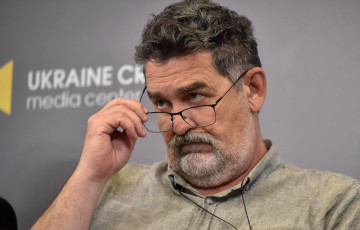
Photo: Facebook
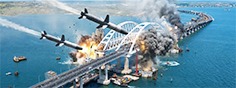
The attack in Benghazi served as a warning to all those who welcome Russian ships.
The Ukrainian side did not comment on previous incidents off the coast of Libya—involving the gas carrier Arctic Metagaz and oil tankers. This time, the name of the vessel and the number of drones are known, and there is video footage.
One detail worth clarifying: “off the coast of Libya” actually refers to the pier at the naval base in Benghazi—in territory controlled by General Haftar.
I see three reasons why we acknowledged the strike.
First is the type of target. A tanker is a civilian vessel; this raises environmental concerns and could lead to complaints to the International Maritime Organization. A corvette is an aggressor’s warship—that is, a legitimate target. It is safe to acknowledge the strike against it.
The second reason is that there was no longer any point in denying it. The government in Benghazi itself reported the drone attack, the Libyan military spoke with the AP, and video footage from a helicopter emerged. When silence hides nothing, it’s better to decide for yourself how to frame the event. A classic move.
The third point is the intended audience. For Russia, Tobruk and Benghazi have become a replacement for Tartus, where its position has been weakened since Assad’s fall, and supplies are now routed from the Baltic Sea via Gibraltar. The phrase “we are continuing operations in certain waters” is directed at anyone who hosts Russian ships.
Now, regarding the narrative that is already being promoted.
Benghazi states that Libya is not a party to the war, while the Russian ambassador accuses Kyiv of involving third countries in the conflict. But the war in Libya has been going on since 2011. Turkey, the UAE, Egypt, and that very same Wagner PMC have already fought there. Ukraine did not open a new front, but came after those who had long since entrenched themselves there.
A few words about “Haftar’s patrons.”
Egypt and the UAE have overlapping interests in Libya, but diverging ones in Somalia and Sudan. In Sudan, Cairo supports the army, whereas Russia has been cooperating with its opponents for years. Now Russia is also establishing a foothold on Egypt’s western border. For Cairo, this is a matter of being dangerously encircled, not of solidarity with Haftar. Egypt buys more grain from Russia, but Ukrainian wheat serves as an important counterbalance, preventing it from becoming fully dependent on Moscow: more than a quarter of its imports come from Ukraine.
We’ve already had discussions with the Egyptians about Ukraine’s goals in Africa. When we told them, “We’ve come for the Russians,” they were satisfied. This approach works because the goal is limited: Ukraine does not seek a permanent presence or influence.
Russia comes to stay. We’re coming for it.
The reaction so far is telling. Benghazi has spoken out about a violation of sovereignty and appealed to the UN Security Council. Tripoli has distanced itself: it expressed concern over the involvement of Libyan ports in foreign conflicts and, at the same time, reproached Benghazi for allowing the country’s sovereignty to become a hostage to internal divisions. Moscow is threatening a “response.” Cairo and Abu Dhabi remain silent.
No one rushed to defend the Russian corvette.
Igor Semivolos, Facebook

Bank's name: Bank Millennium S.A.
Address: ul. Stanislawa Zaryna, 2A, 02-593, Warszawa
IBAN: PL97116022020000000216711123
SWIFT: BIGBPLPW
Name of the account holder: Fundacja “KARTA ‘97”
Purpose/title of payment: Donation for statuary aims
You can contact us by the e-mail [email protected]