
Bloomberg: China And The EU Have Resolved Their Main Dispute Without A Trade War
- 9.10.2026, 18:54
- 2,060
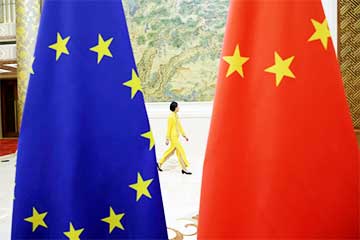
Beijing and Brussels held two days of talks.
China and the European Union have reached a mutual understanding on the issue of Chinese hybrid car exports to Europe following two days of trade talks in Beijing, according to Bloomberg, citing the Chinese Ministry of Commerce.
The Chinese ministry did not disclose the details of the agreement. The talks were held by Chinese Minister of Commerce Wang Wentao and European Commissioner for Trade Maroš Šefčovič.
The Chinese Ministry of Commerce also reported on agreements regarding export licensing. China will implement a “green channel” mechanism to streamline the issuance of export licenses for rare earth metals and permanent magnets to the EU. The European Union, in turn, will facilitate the issuance of export licenses to China for dual-use goods that can be used for both civilian and military purposes.
China and the European Union have agreed to hold new negotiations in March 2027.
One of the main points of contention between Beijing and Brussels has been the increase in shipments of Chinese hybrid vehicles, which are not subject to the additional EU tariffs imposed on electric vehicles. According to Bloomberg, Chinese-made vehicles accounted for about a quarter of hybrid sales in Europe in August.
Prior to the negotiations, the European Union had been considering the possibility of temporarily restricting imports of Chinese hybrids through tariff quotas, under which shipments exceeding a set volume would be subject to additional duties. The European Commission could also have extended this mechanism to other sectors. At that time, no final decision had been made.
Prior to the negotiations, China rejected the EU’s proposal to voluntarily limit exports of plug-in hybrid vehicles. According to the Financial Times, monthly shipments of such vehicles rose from approximately 3,800 in October 2024 to 50,000 in July 2026—more than a 13-fold increase.
The EU’s trade deficit with China exceeds €1 billion per day. Trade disputes between the two sides escalated in 2024 after the European Union imposed additional tariffs on Chinese electric vehicles. The European Commission justified the decision based on the results of an investigation, which concluded that Chinese manufacturers were receiving “unfair” subsidies. The tariffs amounted to 17.4% for BYD and 37.6% for SAIC.

Bank's name: Bank Millennium S.A.
Address: ul. Stanislawa Zaryna, 2A, 02-593, Warszawa
IBAN: PL97116022020000000216711123
SWIFT: BIGBPLPW
Name of the account holder: Fundacja “KARTA ‘97”
Purpose/title of payment: Donation for statuary aims
You can contact us by the e-mail [email protected]