

The Specter Of Putinism Is Leaving Europe
5- 29.10.2026, 8:59
- 4,864
The results of the election in Serbia shocked the country, the region, and many people in Europe.
Critics have called the right-wing populist regimes of Orbán in Hungary and Vučić in Serbia authoritarian, compared them to the Russian government, and even accused them of fascism. However, on Sunday, Vučić peacefully conceded defeat in the election; Orbán had done the same before him. What were their regimes really like—and what does their departure mean for Europe? The BBC explains.
The results of Sunday’s elections in Serbia shocked the country, the region, and many in Europe. Aleksandar Vučić and his “Serbian Progressive Party” (SNS) have dominated national politics for fourteen years. Opinion polls indicated that the “Student List”—a new political force unconnected to the discredited old opposition—would become the ruling party’s first serious challenger. Vučić himself acknowledged that the fight would not be easy. But virtually no one expected the former president to take the stage almost immediately after the polls closed, concede defeat, and congratulate the winners.
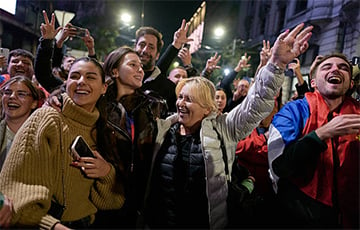
“I’ve never seen so much joy. It’s like New Year’s or Christmas,” Lily Lynch, a journalist who spent two nights in a row observing the festivities in downtown Belgrade, told me.
The jubilation was a reaction to the decisive victory of the “Student List,” which secured a parliamentary majority and received half a million more votes than Vučić’s bloc. But the scale of the celebrations can only be understood by looking back at how unlikely this outcome seemed just a few days ago.
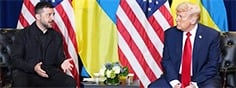
Vucic had a cohesive team, administrative resources, and a well-oiled media machine—including public television—as well as open support from Russia, close ties to the Trump administration in the U.S., and strong relations with China, Israel, and the UAE.
The opposition candidates had neither comparable experience nor external support. Despite this, Vučić accused the opposition of working for foreign intelligence services. Finally, Serbian authorities have previously demonstrated ingenuity in the event of an unfavorable election outcome: for example, in 2022, the announcement of the final results was delayed for several months due to a re-vote at a number of polling stations.
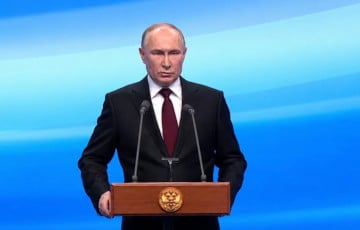
Given all this, Vucic was not expected to accept the results unequivocally and quickly in the event of a defeat. In recent years, critics have increasingly accused him of concentrating power and politicizing state institutions, as well as of violating judicial independence and freedom of speech. Liberal media outlets have described him not only as a right-wing populist but also as an authoritarian leader—and have increasingly compared him to Putin and even called him “Little Putin,” echoing the words of Kosovo’s Prime Minister Kurti.
“I could have predicted a victory for the ‘Student List,’ but I certainly didn’t expect such a decisive victory that Vučić would have no choice but to concede defeat. I’m also surprised that this election outcome didn’t lead to violence,” says Vuk Vuksanović, a lecturer in international relations at King’s College London.
A similar scenario had previously unfolded in neighboring Hungary, where the opposition won the parliamentary elections in April, ending the 16-year rule of Viktor Orbán and his Fidesz party. U.S. Vice President J.D. Vance even flew to Budapest to support Orbán; both Putin and Israeli Prime Minister Netanyahu spoke out in his favor. In its campaign, the ruling party used anti-Ukrainian rhetoric and even claimed that a Ukrainian plot to seize power was allegedly in the works. In the end, however, Orbán conceded defeat on election day and called opposition leader Péter Mályi to congratulate him on his victory.
Orbán has been compared to Putin even longer and more frequently than Vučić. In 2024, U.S. President Joe Biden accused the Hungarian leader of “striving for dictatorship”; and a full ten years before that, Senator John McCain called him a “neo-fascist dictator.” A renowned philosopher from Yale University, Jason Stanley, wrote about signs of fascism in Hungarian politics, and former U.S. Secretary of State Madeleine Albright accused Orbán of fascist tendencies. Moreover, she was referring not only to nationalism and anti-Semitism, but also to the political system itself. “Fascism is not an ideology, but a process of seizing and retaining power,” Albright said.
Most political scientists did not share such extreme assessments, but they did point to a serious threat to the rule of law in the country, restrictions on freedom of speech, and rising corruption. However, following the peaceful transfers of power in Hungary and Serbia—were they authoritarian?
“Authoritarian leaders are bad at relinquishing power,” notes Dimitar Bechev, a research fellow at the University of Oxford and the Carnegie Europe Foundation. He points out that political scientists coined the term “hybrid regimes” specifically for political systems that combine elements of democracy and authoritarianism. In theory, such regimes can be defeated through elections—but due to the manipulation of rules and the use of administrative resources, this requires far greater effort than in a classical democratic system.
In his view, the very fact of Hungary’s membership in the European Union and Serbia’s status as an EU candidate country grants them a certain degree of immunity from authoritarianism. For both countries, the EU is their main trading partner; both also receive funding from the EU and cannot afford to completely ruin their relations with it.
“These are hybrid regimes,” agrees Vuksanović of King’s College London. “The election results show that we’re not talking about European versions of North Korea—we’re talking about countries integrated into the framework of European politics and thus constrained in how far their leaders can go in the face of a serious challenge to their power.”
The accusations of “Putinism” leveled at Orbán and Vučić had a more prosaic aspect as well—their friendship with the Russian leader. But even here, a change in government does not mean a complete reversal in foreign policy. In Hungary, Magyar’s victory put an end to pro-Russian narratives in the ruling party’s rhetoric, as well as to ties between the Hungarian and Russian intelligence services. At the same time, the new government has no intention of giving up Russian gas, still does not sell weapons to Kyiv, and does not support Ukraine’s accession to the EU through a fast-track procedure.
Political scientist Vuksanović expects the same in Serbia. The new authorities can be expected to abandon pro-Russian narratives and close cooperation with Russian intelligence, but they will remain interested in Russian gas and good relations with Moscow—if only to secure continued support on the Kosovo issue, especially given Russia’s seat on the UN Security Council.
“Of all the areas that will change with the ‘Student List’ coming to power, foreign policy will change the least,” agrees Lily Lynch.
And while fascism and Putinism were poor comparisons for analyzing Central European populists, there is another—albeit extremely vague—ideology that helps explain both their style of governance and their willingness to concede defeat in elections.
This is Gaullism, named after General Charles de Gaulle, the founder and first president of the modern (Fifth) French Republic. De Gaulle was skeptical of parliament and preferred direct democracy and its manifestations, such as referendums. Like Orbán and Vučić today, he used the image of an external enemy in his campaign rhetoric to discredit the domestic opposition—in the postwar French context, these were the Soviet Union and the French Communists, respectively. At the same time, despite his fervent anti-communism, de Gaulle was skeptical of the United States and withdrew France from NATO’s military wing in 1966.
Orbán himself agrees with this comparison, having declared in 2015: “We Hungarians are the Gaullists of this continent!” Even earlier, a column in the newspaper *Le Monde* listed the “Gaullist aspects” of Orbán’s persona, such as fervent anti-communism paired with skepticism toward global capitalism and an emphasis on national sovereignty.
Rhetoric of national greatness, a passion for foreign policy, anti-liberalism, populism, and the desire to build a strong state—the figure of a charismatic leader—are the similarities between Gaullism and Orbán’s ideology, according to Hungarian political scientist Ester Petronella Shoosh.
Like modern leaders of “hybrid regimes,” de Gaulle was prepared to alter electoral procedures to prevent the opposition from coming to power, but he never resorted to vote manipulation or election fraud. In the 1958 elections, the French Communist Party received more votes than de Gaulle’s “Union for a New Republic” (UNR), but won only ten seats in parliament—compared to the UNR’s 189. This was the result of a new constitution, in which the proportional representation system was replaced by a first-past-the-post system.
Just as is the case today in Serbia, it was the mass student protests that began in Paris in May 1968 that marked the beginning of the end for de Gaulle. He temporarily lost control of the country, and after regaining it, he was unable to hold on to power. In 1969, he proposed a referendum on constitutional reform. Voters rejected it, and de Gaulle resigned, bringing his political career to an end.
But no matter how widespread a particular form of right-wing populism has been in Central Europe over the past decade, the defeats of Orbán and Vučić mean that voters have grown tired of it.
“In a global sense, the end of the Vucic era is yet another sign of fatigue with right-wing populism, which emerged as a response to the 2008 financial crisis. This does not mean that populism is not mutating into something new. But this particular version of populism seems worn out. It’s hard to portray yourself as a righteous fighter against the system when you’ve been in power for more than a decade and have grown substantially wealthier during that time. At some point, you yourself become the system,” says Lily Lynch.

Bank's name: Bank Millennium S.A.
Address: ul. Stanislawa Zaryna, 2A, 02-593, Warszawa
IBAN: PL97116022020000000216711123
SWIFT: BIGBPLPW
Name of the account holder: Fundacja “KARTA ‘97”
Purpose/title of payment: Donation for statuary aims
You can contact us by the e-mail [email protected]