


In The U.S., Production Of A New Hypersonic Missile Has Begun Following Testing
- 28.10.2026, 19:01
Flight range: 1,500 km.
The U.S. Air Force has begun mass production of the AGM-183A long-range hypersonic missile following the completion of testing. Designed for launch from bombers, the missile combines a rocket booster and a hypersonic glide vehicle. This is reported by Interesting Engineering.
The Air Force has not disclosed either the order volume or the delivery schedule. It is known only that the weapon, manufactured by Lockheed Martin, is intended for long-range strikes against high-value targets in well-defended areas.
The Pentagon signed a $694 million contract with Lockheed Martin on September 29 for the production and deployment of the AGM-183A Air-Launched Rapid Response Weapon (ARRW), and announced it in late October. With this, the program has moved beyond the prototype and flight test phase and entered production. The decision is intended to provide the U.S. military with a long-range strike weapon capable of flying at more than five times the speed of sound and striking targets beyond well-defended airspace.
“This is a turning point in our roadmap for developing advanced weapons,” said Air Force spokesperson Troy Maink. According to him, the program will give commanders the ability to launch high-speed strikes to overcome modern anti-access/area-denial (A2/AD) systems.
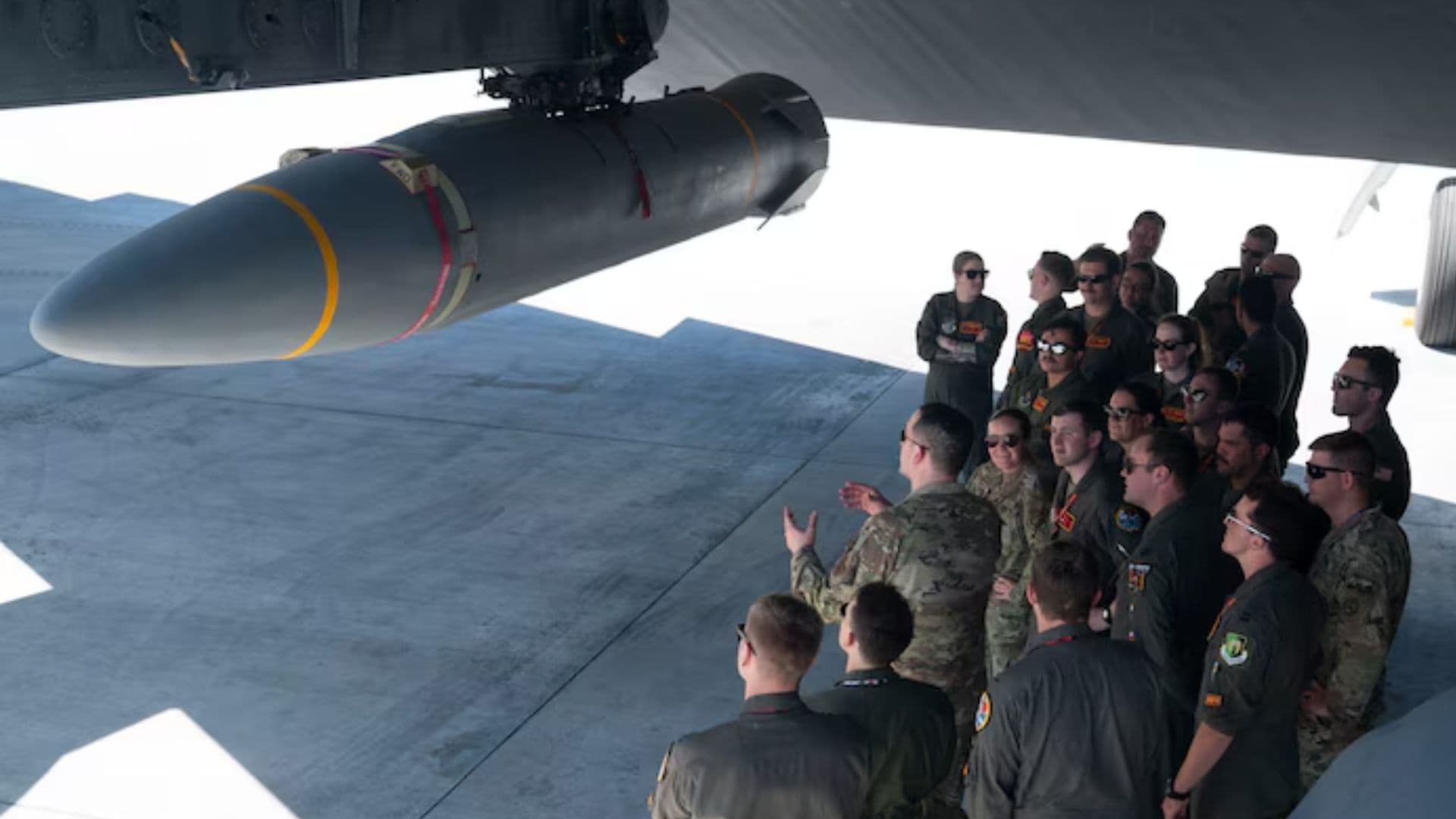
The AGM-183A is designed as a glide vehicle rather than a conventional cruise missile. A solid-fuel booster accelerates the missile to a hypersonic speed of over Mach 5, after which the glide body separates and flies toward the target.
According to Air Force estimates, the missile has a range of about 1,600 km (1,000 miles), allowing aircraft to launch it from a great distance without entering enemy territory. The speed and flight profile are designed to ensure the rapid destruction of critical targets in areas protected by sophisticated air defense systems.
Unlike weapons that primarily rely on a blast wave, the ARRW, as described by the Air Force, destroys targets with the kinetic energy of a high-speed impact. The system is designed for long-range non-nuclear strikes, although the exact specifications of the production model have not been publicly disclosed.
The path to production has not been easy. Lockheed Martin began work on the ARRW in 2018, and tests with the B-52 aircraft began a year later. There were setbacks in the early stages of flight testing, and in 2023, the Air Force indicated that it would focus on other hypersonic projects and abandon further ARRW procurements. Later, leadership changed its mind: funding for the procurement was included in the fiscal year 2026 budget, and a new contract officially confirmed the transition to production.

Bank's name: Bank Millennium S.A.
Address: ul. Stanislawa Zaryna, 2A, 02-593, Warszawa
IBAN: PL97116022020000000216711123
SWIFT: BIGBPLPW
Name of the account holder: Fundacja “KARTA ‘97”
Purpose/title of payment: Donation for statuary aims
You can contact us by the e-mail [email protected]