


Ukrainian Armed Forces Launch Counterattack: Expert Reveals Details Of The Successful “Veles” Underground Special Operation
- 24.10.2026, 21:07
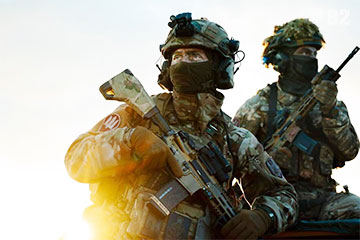
The Ukrainian Defense Forces are carrying out effective counterattacks.
Russian occupation forces are reducing the number of assaults along the front lines due to limited resources and an inability to conduct large-scale offensive operations on multiple fronts. Under these circumstances, the enemy has shifted to a “conveyor belt war” tactic. Ukrainian military expert Sergey GrabskyFREEDOM Ukrainian military expert Sergey Grabsky.
According to him, the decrease in the number of combat engagements to fewer than 200 per day indicates that the Russian Federation’s army is forced to concentrate on several key directions and cannot launch an offensive along the entire length of the front.
- We are seeing a situation in which the enemy is objectively reducing the number of assaults and the number of attempts to advance or capture our positions. Moreover, according to reports from the General Staff of the Armed Forces of Ukraine, there was no combat activity in some sections of the front compared to previous days. This suggests that the enemy is, after all, feeling the limits of its resources and is forced to concentrate on, let’s say, the traditional directions we always talk about—in part because it is forced to abandon any offensive operations in other sectors,” Grabsky noted.
According to him, this is precisely what characterizes this phase of military operations.
“You could call it a ‘conveyor-belt war’ because the enemy operates on the move and immediately sends fresh units into battle. “In other words, it’s no longer a matter of forming a task force, devising an offensive plan, providing covering fire, launching strikes, or attempting a breakthrough. They’re simply operating along the same traditional axes,” the expert commented.
The traditional directions where Russian troops are attempting to advance remain Pokrovskoye, Konstantinovskoye, and Gulyaypolskoye.
- But I would put it this way: given this trend, where the enemy is unable to conduct large-scale offensive operations or advance with reinforced groups along various axes, we are observing its attempts to push in, seep through, and infiltrate our defenses. Overall, this is a fairly costly method; nevertheless, at the cost of simply colossal losses, they manage to advance a couple of dozen meters and continue to put pressure on our positions,” Grabsky noted.
At the same time, the Ukrainian Defense Forces are carrying out effective counterattacks. In particular, the “Veles” (https://charter97.org/ru/news/2026/10/22/702748/) underground special operation in the Kupiansk direction was successful.
“We prepared thoroughly for this operation and used robotic systems. Not every system can squeeze through. In other words, we had to plan everything in great detail and anticipate all possible nuances to make our soldiers’ work as easy as possible. And this allowed our troops to advance through the pipes—or, more accurately, through the utility lines—to a considerable depth. 15 km is a significant distance. Imagine that it would take a person at least 3, or even 4, hours to walk 15 km under normal conditions, but if traveling through pipes, it would take as long as 5, or even 6, hours,” Grabsky said.
The sudden advance of Ukrainian fighters into the occupiers’ rear thwarted the enemy’s attempts to reinforce its units near Kupiansk.
- “Thus, we see here very thorough preparation, which enabled us to deliver a lightning-fast strike against the enemy while operating behind their lines and thwarting their plan to reinforce the groups attempting to advance on Kupiansk,” the spokesperson emphasized.
According to the guest on the program, the mass surrender of the occupiers became an important indicator of the operation’s success.
- For me, the number of prisoners is a very important indicator. You know, the Russian army is strong when it knows the commander’s whip is at its back, and when they know that artillery or other firepower is supporting them. When they begin to feel the absence of that commanding officer’s whip—when they realize there’s no one to cover them—the Russian defense collapses. We saw this during Operation “Veles,” just as we did earlier during Operation “Vivaldi,” when our troops captured large groups of Russian servicemen, including officers,” added Sergey Grabsky.
However, the military expert cautioned against excessive optimism, as there is no reason to believe that the intensity of combat operations will decrease significantly.
“The enemy will continue to operate in this assembly-line fashion, and our task is to contain and destroy the enemy, inflict maximum damage on them, and at the same time counterattack without delay as soon as the opportunity arises,” he concluded.

Bank's name: Bank Millennium S.A.
Address: ul. Stanislawa Zaryna, 2A, 02-593, Warszawa
IBAN: PL97116022020000000216711123
SWIFT: BIGBPLPW
Name of the account holder: Fundacja “KARTA ‘97”
Purpose/title of payment: Donation for statuary aims
You can contact us by the e-mail [email protected]