


"A Significant Number Of The Cars In This Sea Of Brazenly Parked Vehicles Have Russian License Plates."
20- 13.09.2026, 21:59
- 21,176
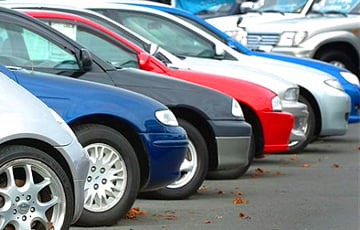
Belarusians responded to Lukashenko's order to remove cars from near residential buildings.
Residents of the capital and other cities told “Solidarnast” what they think about the overabundance of cars in their courtyards and how much it interferes with their daily lives. The names of all interviewees have been changed.
Lukashenko ordered to address the “ocean of cars” near residential buildings, which prevent people from “breathing in nature,” and to gradually move parking lots further away from courtyards.
Minsk authorities have promised to remove junk cars from the streets by October 1, as well as to make parking lots and parking spaces more attractive to car owners—for now, according to the head of the Minsk City Executive Committee Vladimir Kukharev, more than 20,000 parking spaces in paid lots are currently vacant.
It should be noted that the city authorities have been dealing with the problem of overcrowding caused by cars in Minsk’s courtyards for well over one five-year plan.
Hanna Vitaleovna, 76, a resident of the district center:
— It’s funny, though not at all surprising, that Lukashenko is once again talking only about Minsk. I live in a small town, and the problem is exactly the same: cars are parked right outside my window—trucks (there are two stores nearby), as well as cars belonging to tourists, locals, and shoppers from those stores.
And sometimes, even if you don’t open the windows, dust, dirt, noise, and loud music come flooding in until late at night. However, the city administration can’t—and won’t—do anything about it, because both the shops and the tourists bring in money. If they were to crack down on them, there might be a stir, but would it last long?
But here’s what I consider a more significant problem for Minsk—the ill-conceived planning of new neighborhoods. When I see the “Minsk-Mira” skyscrapers or the dense development in Kamenna Gorki, the question arises: why weren’t parking lots built here from the very beginning? Not even during the construction phase, but during the planning of the neighborhoods.
Now, however you decide to handle this—it’s just a matter of coming up with new fines, as we’re so good at doing. But this isn’t about caring for people—quite the opposite.
One conclusion: here, we act first and think later.
And by the way, another problem related to this is the lack of greenery—those very parks, trees, and bushes. People aren’t even allowed to create flower beds or plant trees on their own, without permission. In Minsk, they cut down what were, so to speak, the old trees. The new ones haven’t grown yet.
Well, if there’s nothing but concrete and glass all around, what kind of nature are you going to breathe in near your home? To put it bluntly, if you breathe it in, you’ll die. Lukashenko’s officials would do well to grapple with this issue.
Maksim, 45, Minsk:
— I can’t believe I’m saying this, but I largely agree with Lukashenko. The number of cars in the courtyards has exceeded all reasonable limits. It’s no longer just parking wars between neighbors and “guests”—it’s reached the point of absurdity.
If you recall, a couple of years ago there was an incident in Minsk where children were playing in the yard, drawing with chalk, and drew something on a car—and there were scratches, but this wasn’t covered by insurance. A major scandal erupted. Meanwhile, there’s a paid parking lot not far away in the same neighborhood, but the owner of this “horribly expensive” car apparently can’t bring himself to pay 90 rubles for a secure parking spot—he has to park right by the building entrance.
On the other hand, a significant number of cars in this vast sea of vehicles—especially those parked brazenly—have Russian license plates. How will the city officials deal with them? With fines? Yeah, right. Some will leave, others will come.
And even if they tow away the junk cars—what happens next? Where will they take them, if, by law, they have to keep them at the impound lot for another month and notify the owner? Although I’ve heard that, by decree of Lukashenko, the period for declaring a car abandoned will soon be reduced to 10 days. But anyway, there are so many of these “wrecks” in Minsk that no impound lot would be big enough.
And disposing of them properly is more expensive than just leaving them there. When I was a teenager, I saw plenty of graveyards of old city buses that people didn’t know what to do with for years. It’ll be pretty much the same here.
Right by the building entrance, where we’re supposed to “breathe in nature,” there’s less and less nature left. In my courtyard, there’s still a playground and a few birch trees, plus some rose hips. But on the other side of the building—withered bushes and trees artfully chopped down by “Zelenstroy,” which don’t have time to really grow enough to provide shade and freshness.
In my parents’ neighborhood, they opened “Cosmos” Park—such a ridiculous “improvement”: where there used to be a vacant lot frequented by homeless people, dog walkers, and drug dealers, they ran a grader over it, covered it with gravel, and installed lots of benches, exercise equipment, and a children’s rope playground. Does that mean there’s more nature now? Not at all—they just cut down the trees and the raspberry bushes.
Even the sign announcing that the park was opened in honor of the first Belarusian female cosmonaut disappeared within a week—I think some disgruntled drug addicts stole it and sold it for scrap metal.
Irina, 32, lives in a satellite town of Minsk:
— Since I work in Minsk, I see this scene every day: in the morning, the Tetris-like jumble of cars in front of apartment buildings breaks up, and in the evening, it reassembles into tight rows, getting in everyone’s way. There really is a problem, and it didn’t just pop up yesterday. And they’ve been trying to solve it for years now. But apparently, they’re approaching it from the wrong end, since the situation is only getting worse.
I don’t know what’s missing—whether it’s accessible and affordable parking in residential areas, or a sense of responsibility among our people, who park in courtyards in such a way that ambulances or fire trucks can’t get through. Or perhaps the problem is that Belarusians see that no matter what rules and regulations are put in place, there are always those who can get away with breaking them?
And if the Lukashenko family and top officials are driven by chauffeurs from their front gates to work, while their cars sit in government garages—how would they know what it’s like to commute from the “sleeping districts” or from my town to the city center on an overcrowded minibus? They could just point a finger and say: “It’s unsightly to have so many cars right outside the windows; let’s move them farther away.” Everything is for the people—and we know who those people are.
I think they’ll do what they always do: at the end of the month, they’ll make a show of reporting how many unused cars they’ve removed, and the traffic police will conduct a couple of raids with fines. And that’ll be the end of it—until the next order.
Lyubov Sergeevna, 70, a resident of the capital:
— We live in an older neighborhood, but we don’t have any problems with parking in the courtyards. First, there’s a very large secure parking lot across the street where there are always spots available. And second, the sidewalks near the buildings were built half a century ago; they’re so narrow that there’s only a single lane—there’s simply nowhere to park—and people only come to load or unload.
Another thing is that there’s really nowhere to go out and get some fresh air either. Yes, there’s a little park with blue spruce trees right by our building (a couple of years ago, they wanted to cut them down and start some construction project—the neighborhood residents barely managed to fight it off!), but it’s very small and surrounded on all sides by the road, so you end up walking and breathing in exhaust fumes—just great.
Inside the complex, there are a couple of kindergartens; their grounds are beautiful and well-maintained, but they’re closed off. And nearby, there are only run-down playgrounds that have been repaired and updated—if that—maybe twice in half a century. The only ones who can play in the sandbox there are moms with toddlers under three; older children, teenagers, and even the elderly can’t sit there or take a walk.
In general, they’ve started cutting down trees very aggressively all over Minsk. It’s unpleasant and extremely annoying. Where there used to be green spaces, there are now clearings; sometimes chemicals waft over from the industrial zone, and during the farming season, they fertilize the land near the city with something—and, excuse me, it certainly doesn’t smell like roses. Because as soon as the higher-ups order to clean up and improve yet another neighborhood—they just jump to it without a second thought.
Alexei, 39, from Minsk:
— I’m “thrilled” by these administrative decisions. To think things through and do the right thing right away—building new roads and developing new neighborhoods—no, why bother? To allow the construction of “human-sized” buildings in Minsk with insufficient parking spaces, and then get upset about the abundance of cars and try to solve the problems we’ve created—yes.
I have absolutely no idea how the authorities plan to clear courtyards of cars if not through orders and bans. I think they’re preparing us for new fines. And they’ll pad the budget while they’re at it. After all, they even have a plan for fines, and the amounts go up every year.
And as for Minsk’s new courtyards—they’re for no one. Not for drivers, not for the elderly, not for dog owners, not for gardeners, and not for children. It’s not even comfortable to just sit on a bench there, because there are cameras everywhere—you feel like you’re in a zoo enclosure.
On the other hand, the buildings in the neighborhood where I live now are built so close together that the windows face right into each other’s. And you can keep track of your neighbors’ lives: who’s wearing what, who’s cooking porridge, who’s dancing topless.
Nadezhda, 64, a resident of a small town:
— There’s a grocery store in our building, and another retail store right next door. So the cars in the courtyard are a nuisance. Both our neighbors’ and strangers’.
The courtyard is meant for sitting, relaxing, and taking a walk with your kids or grandkids. But in the end, everyone drives in and revs their engines. It’s a big building—60 apartments. Can you imagine what it would be like if everyone had a car and everyone had to park…? But not everyone has a car, even though there are already enough. Plus, the grocery store’s delivery trucks pull in, turn around, and unload. And then there are the shoppers coming to the stores.
Of course, if I had a car, I might think differently. After all, it’s so convenient: you step out of the building, get in, and drive off. This problem annoys those who don’t have cars.
But if you do have one, where do you park it? If there’s no parking lot, then what—along the road?
So I think that before “removing all cars from the courtyard,” we need to figure out how to make it convenient for everyone. For example, a parking lot could be set up—one for every three buildings.

Bank's name: Bank Millennium S.A.
Address: ul. Stanislawa Zaryna, 2A, 02-593, Warszawa
IBAN: PL97116022020000000216711123
SWIFT: BIGBPLPW
Name of the account holder: Fundacja “KARTA ‘97”
Purpose/title of payment: Donation for statuary aims
You can contact us by the e-mail [email protected]