


"Lukashenko Is Trying To Walk A Fine Line"
3- 5.08.2026, 14:26
- 2,620
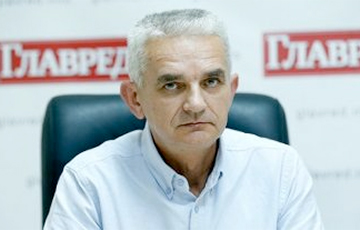
Photo: Glavred
A military expert revealed the purpose behind the formation of a new brigade near the Ukrainian border.
The Lukashenko regime is forming the 37th Separate Airborne Assault Brigade near Gomel. It will consist of airborne, artillery, anti-aircraft, and reconnaissance units.
Why did the Lukashenko regime need to significantly strengthen its Special Operations Forces? Who is the dictator preparing to attack?
The website Charter97.org asked military expert Oleksiy Melnyk, co-director of foreign policy and international security programs at the Razumkov Center in Kyiv, for his comments:
— Lukashenko has recently has been actively using rhetoric claiming that an attack is allegedly being planned against him. Generally speaking, there’s nothing new about this. Any aggressor always claims that they are forced to defend themselves.
In this case, if we’re talking about Belarus as a potential source of aggression, I think that would be a significant exaggeration. Until the end of March 2022, Lukashenko may indeed have had some plans to jump on this bandwagon—into the victor’s last car. When Russia invaded Ukraine, including from Belarusian territory, he may have considered the option of joining the victor—whom he saw at the time as Putin.
But by the end of March 2022, the Russians were forced to retreat from Kyiv. From that moment on, in my view, Lukashenko has been trying quite successfully to walk a fine line: not to offend Putin, not to anger him too much, but at the same time not to get involved in this war.
Therefore, if we try to understand why this brigade is being formed, it is most likely being done for the same purpose: to show Putin that Lukashenko, too, is trying to build up his military power. But it is absolutely certain that Lukashenko has no intention of taking any action against Ukraine.
As for whether Lukashenko genuinely fears a threat from Ukraine and is seeking additional border protection, it’s hard to say. In this case, it is not so much a matter of assessing a potential adversary’s strategic plans, capabilities, and other objective factors, but rather what is known as perception. And perception, as we know, is formed in the mind of a political leader or military commander and is not necessarily based on objective data.
— Near Gomel is the Zyabrovka military airfield, which has come under the control of the Russian military and has been used to station equipment and launch missiles at Ukraine. Does this mean that the new brigade is being created to support the Russian Federation’s army and will effectively become part of it?
— If we consider the scenario of a new invasion from Belarusian territory into the Chernihiv region, with Kyiv as the target—which is currently being discussed—then yes, such an assumption is possible.
Russia has not directly used Belarusian territory for aggression against Ukraine for quite some time now, except for relay stations and “suicide drone” flights through Belarusian territory. For quite some time now, neither missile launches nor the stationing of Russian aircraft have taken place from there.
Why might a brigade be stationed near an airfield? As a rule, permanent deployment sites for mobile brigades are established either on airfield grounds or nearby. The very word “mobility” implies that transport aircraft must be located somewhere within a short distance. Furthermore, establishing a brigade from scratch entails additional costs. Most likely, the necessary infrastructure is already in place there. Therefore, I think we need to consider precisely these factors: the availability of infrastructure and the link to mobility.
— Indeed, as you mentioned, Ukrainian intelligence anticipates an attempt by Russia to invade the Chernihiv region. Could the formation of a new brigade near Gomel be linked to these plans?
— What our intelligence and independent analysts—who are trustworthy and aren’t trying to sensationalize this issue—are saying indicates that, at the moment, there is no activity that would suggest the possibility of such an invasion in the near future.
Of course, a certain danger does exist. We have the unfortunate experience of Belarusian territory having already been used for an attack. But no group that would pose a significant threat to Ukraine and be capable of carrying out a large-scale invasion has been detected there yet.
The second point is that Ukraine hasn’t been sitting idly by all this time either. Such a threat, even if it is not as pressing right now, still exists. Therefore, if such an attempt is made, it will not be a repeat of 2022, when it was possible to drive peacefully into Ukrainian territory via highways through border checkpoints.
— What kind of response can we expect from Ukraine in light of the deployment of a new assault brigade near its border?
— It’s hard to say. I don’t have access to classified information. What we’re discussing right now is based on information from open sources.
Purely theoretically speaking, it’s clear that the Ukrainian Armed Forces need to set aside some additional reserves. However, if military intelligence and our operatives conclude that the creation of this brigade does not significantly alter the balance of power—neither at present nor in the coming months—then no additional measures may be necessary. It is possible that the forces already deployed to secure the border, along with existing engineering structures, will be sufficient to avoid redeploying the Ukrainian Defense Forces’ scarce reserves from other, more critical fronts.
It should also be understood that the formation of even a single unit—let alone a large military formation—requires a considerable amount of time before it becomes operationally capable. Simply recruiting personnel, training them, and reporting: “Here are the personnel, here are the tanks, and here’s the brigade”—is a very simplistic approach.
The personnel who are recruited—unless they are being redeployed from other units—still need to be trained. They must undergo combat coordination at the platoon, company, and battalion levels, as well as conduct several exercises at the formation level. Under normal conditions, this process takes approximately one year. Until then, the new brigade’s level of readiness will be equivalent to that of a unit with no combat experience.

Bank's name: Bank Millennium S.A.
Address: ul. Stanislawa Zaryna, 2A, 02-593, Warszawa
IBAN: PL97116022020000000216711123
SWIFT: BIGBPLPW
Name of the account holder: Fundacja “KARTA ‘97”
Purpose/title of payment: Donation for statuary aims
You can contact us by the e-mail [email protected]