
A Belarusian Woman On Her Trip Through Russia: No Internet And No Gasoline
10- 12.07.2026, 14:09
- 6,560
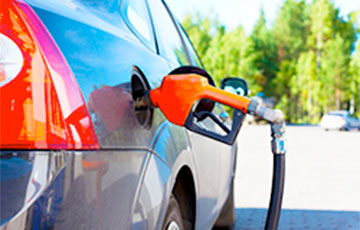
Many gas stations are closed.
Ekaterina, a Belarusian woman, set out by car from Minsk to Tbilisi, expecting the trip to take about two days. Aware of the fuel shortages in Russia, she decided to play it safe and bring gasoline with her—according to her calculations, 80 liters should have been enough to get her to the Georgian border.
The rules allow you to take up to 100 liters of fuel out of Belarus in metal canisters, but buying the canisters turned out to be a real challenge:
“There are NO canisters at gas stations—the Russians bought them all up. I drove around to every ‘Belorusneft’ station I came across on my way—none of them had any canisters; they were expecting a delivery of a couple of them a week, but they sell out quickly,” she writes on Threads.
The young woman gathered the necessary jerry cans piece by piece: she found two only on the fourth day of her search, and managed to get another one the next day near Chizhovka. In Orsha, she filled up her tank and three 20-liter canisters.
After crossing the border into Smolensk, she had no trouble finding gasoline at Lukoil and Gazprom stations. But further on, the situation began to deteriorate: between Vyazma and Kaluga, over a distance of about 200 km, the traveler encountered neither open gas stations nor any fuel at all. In Tula, the same pattern repeated itself—in some places there was no gasoline at all, in others there were long lines, though she did manage to find one station with a shorter line.
The real difficulties began on the M4 highway from Tula to Rostov:
“Private stations were empty; Lukoil and Gazprom stations were either closed, out of gasoline (offering only diesel or natural gas), or had huge lines that took hours to get through. The gas cans in the trunk were a real lifesaver.”
In Rostov, the situation wasn’t any better: gas stations were either closing or had run out of fuel. According to Ekaterina, it was practically impossible to fill up on the M4 in either direction—only a handful of stations were open, and the lines stretched on for hours. We were saved by finding fuel at a gas station off the highway, on the road to Vladikavkaz—though they were selling it in limited quantities, 30 liters per car.
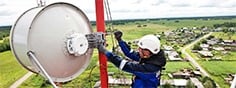
Another challenge was the lack of cell service. Mobile internet was unavailable for almost the entire journey through Russia, and we relied solely on pre-downloaded Yandex maps to find our way.
In total, the trip to Georgia took 150 liters of fuel and 45 hours, including stops and an overnight stay. Despite the difficulties they faced, Ekaterina says she would be willing to take this route again—but not anytime soon.

Bank's name: Bank Millennium S.A.
Address: ul. Stanislawa Zaryna, 2A, 02-593, Warszawa
IBAN: PL97116022020000000216711123
SWIFT: BIGBPLPW
Name of the account holder: Fundacja “KARTA ‘97”
Purpose/title of payment: Donation for statuary aims
You can contact us by the e-mail [email protected]