
"Tears Streamed Down My Face, My Legs Gave Out": Moscow Got Its First Taste Of War
6- 27.06.2026, 14:22
- 7,966
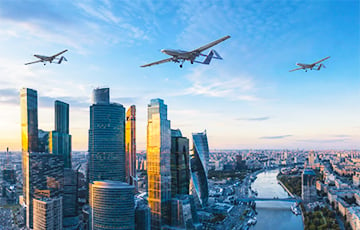
The Kremlin was unable to protect its capital.
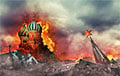
This spring, Ukraine stepped up its blitz campaign against Moscow, and residents of the Russian capital felt for the first time the consequences of the full-scale war unleashed by Russian leader Vladimir Putin. According to the Financial Times reports, they took shelter in basements, watched fires in stores, and found cars splattered with toxic “oil rain”—signs of a conflict that the Kremlin had long tried to keep away from the capital.
As noted by Konrad Muzyka, director of the Polish analytical group Rochan Consulting, the Russian capital has become noticeably more vulnerable to drone strikes, which since spring have increased in both “frequency and effectiveness.”
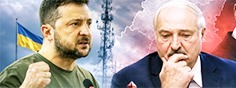
“If Ukraine is burning, so is your Moscow,” declared Ukrainian President Volodymyr Zelenskyy on June 18, when Moscow’s main oil refinery was set ablaze.
“I dreamed that we were being bombed. Then I woke up at half past three, realizing it wasn’t a dream,” recalls Amalia, a resident of Kotelniki, a suburb in southeast Moscow, referring to the attack.
She added that she had received no warning from the authorities. Similar complaints were posted in the comments section of the Moscow Region governor’s Telegram channel.
“We hear a drone approaching, run into the hallway—and an hour later, a warning comes in on the mayor’s Telegram channel,” wrote Olga, a resident of Khimki, a Moscow suburb.
In addition, Ukraine’s strikes on Russian oil refineries have exacerbated the fuel shortage, sparking outrage online over official statements claiming that supplies remain unchanged.
“Some people say there’s a fuel shortage in Russia. It’s all fake news,” Moscow blogger Mikhail Witte remarked sarcastically in an Instagram video. “Look, it rained oil! We have so damn much of it that we don’t know what to do with it,” he added.
The fire at the oil refinery also spread to “Sadovod,” Russia’s largest wholesale market, destroying rows of stores and several months’ worth of inventory. Merchants estimate the losses at millions of rubles.
“We saw what we had built turn to ashes. Tears streamed down our faces, and our legs gave way,” – wrote the co-owner of a clothing store on Instagram.
Meanwhile, a resident of Russia’s Belgorod Region, which borders Ukraine, said: “I’m not ashamed to say this, but I’m partly glad that people in Moscow will finally be able to experience the kind of life our regions have been living for years.”
This did not affect Putin
Andrey Kolesnikov, a political analyst and Moscow resident, believes that it is “impossible” to ignore the attacks. But for many, they have become “simply the new reality,” unless they are directly affected.
“Moscow is huge—the western and eastern parts of the city are almost like different countries,” Kolesnikov said.
Nevertheless, there are no signs that this wave of discontent will have any effect on Putin.
Kolesnikov noted that the drone attacks have only strengthened the position of those opposed to the war, as well as supporters of a nuclear strike. “For Putin, this pressure is an incentive to escalate,” he believes.
Strikes on Russia
A wave of strikes by Ukrainian drones—which have struck Russian oil refineries at least 40 times since the beginning of the year—has created the risk of a gasoline shortage in Moscow.
Attacks by Ukrainian drones have put the Moscow Oil Refinery out of commission for at least six months. This month, the refinery was struck twice by Ukrainian drones, forcing the facility to halt operations.
Advertisement
Media reports indicate that Russian “hawks” are outraged by the Ukrainian strikes on Moscow and by the fact that the U.S. has failed to fulfill its promise to force Ukraine to capitulate. They are calling on the Kremlin to abandon diplomacy once and for all and resort to escalating the conflict.

Bank's name: Bank Millennium S.A.
Address: ul. Stanislawa Zaryna, 2A, 02-593, Warszawa
IBAN: PL97116022020000000216711123
SWIFT: BIGBPLPW
Name of the account holder: Fundacja “KARTA ‘97”
Purpose/title of payment: Donation for statuary aims
You can contact us by the e-mail [email protected]