

Kazakhstan Is Looking For An Alternative To Jet Fuel From Russia
4- 26.06.2026, 19:01
- 3,018
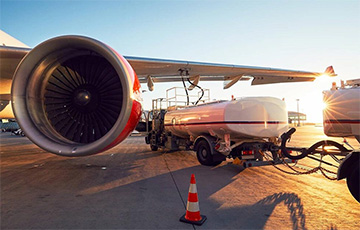
Astana is in talks to import jet fuel from Azerbaijan, Turkmenistan, and China.
Due to a reduction in Russian jet fuel supplies, Kazakhstan is exploring options to purchase it from other countries. As Kazakhstan’s Minister of Energy Erlan Akkenzhenov reported on Friday, June 26, Astana is “exploring imports” from Azerbaijan, Turkmenistan, and China, and is also conducting negotiations with countries outside the former Soviet bloc, which Akkenzhenov did not name.
According to the minister, plans called for 300,000 metric tons of jet fuel to be supplied from Russia, but only 186,000 metric tons were actually purchased. At the same time, Kazakhstan’s domestic production fully covers the needs of domestic airlines, special services, and the Ministry of Defense: Russian and other imported fuel was used exclusively to refuel foreign aircraft.
The day before, Deputy Minister of Trade Zhanel Kushukova announced plans to eliminate import duties on gasoline, diesel, and jet fuel from third countries, primarily China. The government explained this decision by citing a fuel shortage in Russia, which until now had remained one of Kazakhstan’s key suppliers.
Alexey Chigadaev , a China expert at the NEST analytical center , suggested in an interview with The Insider that Chinese fuel would not replace Russian fuel immediately but could become an important backup source. According to him, under normal conditions, Russian fuel is more logistically advantageous: short transport distances, well-established rail logistics, and duty-free trade within the EAEU.
“Imports from China won’t necessarily offer a price advantage, but they provide Kazakhstan with important insurance against disruptions from Russia,” the expert noted. Such shipments can be launched relatively quickly: jet fuel is transported by rail tank cars or road transport. The first trial shipment from China to Kazakhstan was sent in December 2025. The main constraints are not infrastructure, but China’s export quotas, fuel certification, and the availability of tankers.
Chigadaev emphasized that the elimination of duties formally opens the market to various third countries, not just China, so one should not speak of a sharp increase in Astana’s dependence on Beijing. 2Taken together, these factors do not undermine Russian influence in Kazakhstan, but they do push Astana toward more actively developing non-Russian supply channels. “China may turn out to be one of the main beneficiaries here,” the expert concluded. He described the political effect as “rather indirect—through the gradual strengthening of Beijing’s role as a reliable backup supplier.”
Meanwhile, Russian jet fuel is becoming more expensive: according to the Telegram channel “Aviatorshchina,” Azimut Airlines has complained of an acute fuel shortage—its supplier suggested it reduce consumption by about a third due to “force majeure situations” at refineries, while other suppliers were unable to provide the necessary volumes. At Russian airports, jet fuel prices have risen by an average of 17%.
According to Reuters, Moscow is discussing the purchase of about 50,000 metric tons of AI-92 gasoline from Kazakhstan to cover the shortage caused by Ukrainian strikes on oil refineries. The plan involves an exchange: Kazakhstan would supply Russia with gasoline in exchange for Russian jet fuel.
At the same time, Kazakhstan is considering expanding the transit of Russian oil to China through its territory—specifically, the construction of a loop (an additional section of pipeline laid parallel to the main line) and new oil pumping stations. This would allow for an increase in transit of approximately 2.5 million metric tons, but no growth is expected this year: the project still requires calculations, a feasibility study, and construction work.

Bank's name: Bank Millennium S.A.
Address: ul. Stanislawa Zaryna, 2A, 02-593, Warszawa
IBAN: PL97116022020000000216711123
SWIFT: BIGBPLPW
Name of the account holder: Fundacja “KARTA ‘97”
Purpose/title of payment: Donation for statuary aims
You can contact us by the e-mail [email protected]