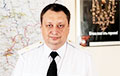


"Lukashenko Says He Has Found The Repeaters, But Doesn't Know Who Installed Them"
16- 26.06.2026, 11:09
- 7,962
How a dictator is helping Russia attack Ukraine.
Following the shutdown of relay stations in Belarus, Russia will be unable to attack Kyiv and western Ukraine with “Shaheds” under remote control. He stated this in an interview “Suspilne” by Sergei Flesh Beskrestnov, an advisor to the Ukrainian Minister of Defense .
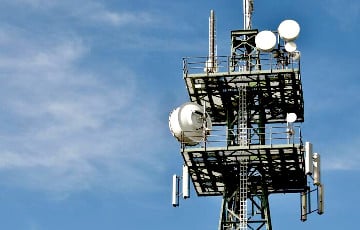
Beskrestnov explained that the repeaters are installed on towers approximately 45–70 meters high. Mobile operator towers, TV towers, or virtually any type of tower can be used for this purpose. An internet-connected transceiver and an antenna pointed toward Ukraine are installed on them.
— Each such location allows for controlling the “Shahed” from a distance of up to 200 km. However, there are places that towers in Russia cannot reach. For example, Lviv, Kovel, and other regions in western Ukraine. “To control the strike and reconnaissance UAVs launched over these territories, the Russians used four towers equipped with signal repeaters located in Belarus,” says Beskrestnov.
According to him, one of these towers was located right on the border, not far from the city of Slavutych.
— Belarus is now saying that they found these repeaters but don’t know who installed them. In other words, they’re trying to play the game that some people installed the devices, connected them to the internet, and disappeared,” said Beskrestnov.
— How did we detect these repeaters?
— It’s relatively simple. If we see that a “Shahed” or “Gerbera” (Russian drone models. — Ed. note) is operating on the airwaves with a mesh modem, we can activate direction-finding devices installed at a high altitude or launch them into the air on a UAV to determine that the control radio signals are being transmitted from Belarusian territory. We can also perform triangulation—that is, take several bearings and determine with reasonable accuracy the area where the tower with the repeater is located. The tower can be visually identified from an aircraft. It’s important to understand that the mesh network that has been built may not be in use right now, but it can be activated at any moment. In other words, this is ready-made infrastructure that poses a threat to us. It’s like an airfield for “Shaheds”—there aren’t any there right now, but we understand that for us, it’s a ticking time bomb.
Such towers, Flash explains, are typically installed right at the border, and Ukraine has already had to destroy them. It’s more complicated when Russian UAVs use Belarusian mobile networks.
— Every “Shahed” is equipped with an LTE modem containing a SIM card from the Russian company T2 (known as “Tele-2 Russia” until 2024). And when Russian “Shaheds” and “Gerberas” fly near the Belarusian border, they can “latch onto” Belarusian mobile networks and use them to transmit information from Ukrainian territory. In other words, this constitutes the use of commercial mobile networks for military purposes. And Belarus is aware of this. Belarusian operators could stop this, restrict roaming for these SIM cards, or block them, but they are not doing so. And we, too, want to prevent this from happening.
Beskreznov says that in May, when Russia launched a massive attack on the western regions of Ukraine, its UAVs flew near the Belarusian border and used roaming services provided by Belarusian mobile operators.
“I believe this also constitutes Belarus’s complicity in Russian attacks on Ukraine. One could say that they have nothing to do with it, that they don’t know what’s going on. But our radio monitoring equipment confirms that the “Shahed” modem is connected to the Belarusian network,” he noted.
The advisor to the Ukrainian Minister of Defense adds that even after the repeaters on Belarusian territory are shut down, Russian drones will not stop attacking Kyiv and western Ukraine. However, these attacks will not be as effective.
“These will be standard attacks based on GPS coordinates. There will be no reconnaissance. This is very important because the Russians are not only attacking us online via these networks—they’re also conducting extensive reconnaissance to locate our infrastructure, our air defense systems, and so on. There will be no online attacks on train locomotives or, again, on air defense systems. Because that requires a mesh network and a control radio channel. Also, the Russians won’t be able to identify corridors where our interceptors aren’t present.
— What would you say to sum up this conversation?
— We don’t want Belarus to help the Russians kill us.

Bank's name: Bank Millennium S.A.
Address: ul. Stanislawa Zaryna, 2A, 02-593, Warszawa
IBAN: PL97116022020000000216711123
SWIFT: BIGBPLPW
Name of the account holder: Fundacja “KARTA ‘97”
Purpose/title of payment: Donation for statuary aims
You can contact us by the e-mail [email protected]