

"Manilovshchina": Political Scientist Harshly Responded To The Proposals To "finlandize" Belarus
2- 25.05.2026, 9:17
- 1,794
Our country will only be saved by the European choice.
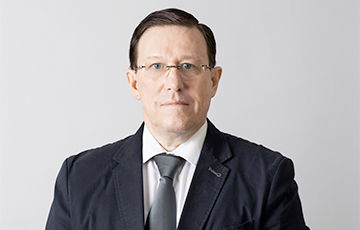
Director of research programs on Russia, Eastern Europe and Eurasia at the Finnish Institute of International Relations Arkadi Moses wrote for "Salidarnastsi" his reaction to the article by Sergei Tikhanovsky about the model of "Finlandization" for Belarus.
- I did not think that I would have to speak again about the possibility and even more desirability for the countries of Eastern Europe to try on themselves the model of the so-called "Finlandization".
I have repeatedly had to discuss this issue in relation to Ukraine. For a long time it was pushed in this direction by European "good people" who did not want to aggravate relations with Russia.
Unfortunately, as a result of this "good advice" Ukraine could not decide its place in the modern geopolitical structure of the world and Europe for too long, could not make a choice.
But all the attempts to maneuver did not save it from war with Russia. It seemed to me that if lessons are to be learned, it is hard to think of an example more illustrative than the Ukrainian one.
The more surprising for me was to see an article by Sergei Tikhanovsky, in which he calls for "Finlandization" of Belarus (published in EU Observer on May 22). Unfortunately, this article demonstrates a basic misunderstanding of the fact that any model is unique and applicable - and therefore should be considered - only in the specific historical circumstances in which it emerged.
In the case of Finland, these circumstances are as follows. First of all, "Finlandization" was not a free choice of the Finnish people, and the term is still regarded by Finns with resentment and bitterness because it is largely unfair. The model was imposed on Finland by the Soviet Union, a victorious country to a defeated country. The alternative would have been occupation, as it happened to the Baltic States and Eastern Europe.
Maybe Sergei Tikhanovsky perceives the choice of today's Belarus in this way, as a choice between the refusal of foreign policy independence and Russian occupation, but here, I think, many of his compatriots, who have linked their personal destiny with Europe and see the future of their country in integration with Europe, will be ready to argue with him.
I repeat that for Finland "Finlandization" was not a complete defeat, if not a victory. To do so, it had to endure two wars, 1939-40 and 1941-44.
In the first, the so-called "Winter War," the modern Finnish nation was born out of a society split into Reds and Whites. The second, known as the "Continuation War," ended on harsh but honorable terms. Even Joseph Stalin realized that withdrawing Finland from the war, having obtained its agreement to declare war on Germany and pay reparations, was far preferable for the USSR than continuing the war.
It was September 1944, and it was necessary to move towards Berlin, not Helsinki, losing thousands and thousands of soldiers. With whom, in Tikhanovsky's view, should Belarus wage its "Winter War" in order to get similar respect from the Kremlin?
Already in the interwar years Finland was a parliamentary democracy and valued it. Therefore, limiting foreign policy sovereignty in exchange for preserving the domestic political system was a painful but acceptable choice for Finns. Democratic institutions became the basis that allowed Finns to remain integrated into the West. First of all economically, of course, but to a certain extent also politically.
That is why, as soon as after the collapse of the USSR, the country had the opportunity to become a member of the EU, it seized this opportunity. And even before that, in the 1970s, it joined the European Free Trade Association (EFTA). Not in the CMEA, we should note.
No transition periods or market reforms were needed. And most importantly, there was no need to explain to anyone inside the country where and together with whom Finland would be natural and organic, and where - not.
Try to ask the question where and with whom Lukashenko's Belarus would be comfortable, and you will immediately realize the difference and inapplicability of Finland's experience for Belarus. And what will be natural for Belarus after Lukashenko, it is pointless to guess now.
If you take your mind off history, all those analysts, and Tikhanovsky is not the first, who like to discuss the neutrality of Belarus, I would like to ask - did Moscow ever offer such an option?
It seems to me that everything developed in the opposite direction, from the status of a country that declared its desire to become neutral at least in the future, to the status of not just a formal member of military alliances with Russia at the head, but the only post-Soviet state that became Russia's coaggressor in Ukraine.
To think that Moscow will give up control over Belarus, its territory and airspace, its training grounds and military production facilities, its human resources, finally, in exchange for a promise not to join NATO, is called "manilovshchina", good wishes, "wishful thinking" in Russian. All this - unlike "Finlandization" in its time - will have nothing to do with practical policy.

Bank's name: Bank Millennium S.A.
Address: ul. Stanislawa Zaryna, 2A, 02-593, Warszawa
IBAN: PL97116022020000000216711123
SWIFT: BIGBPLPW
Name of the account holder: Fundacja “KARTA ‘97”
Purpose/title of payment: Donation for statuary aims
You can contact us by the e-mail [email protected]