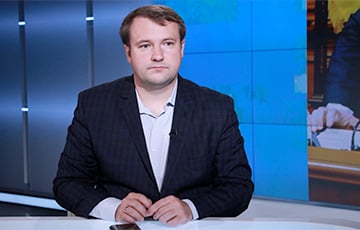

Oleksandr Kovalenko: It's A Fiasco On Live TV
12- 18.05.2026, 13:16
- 29,230
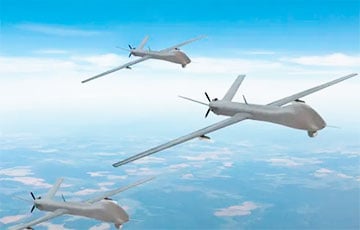
The "air defense ring" around the Russian capital turned out to be holey.
Ukrainian drones attacked Moscow and the Moscow region: on May 17, it was reported that a technology park, refineries, factories, oil pumping stations, and a fire near Sheremetyevo airport were hit. The Kremlin tried to silence the scale of the strike, but Z-bloggers openly talked about the failure of Russian air defense even around the capital.
How did Ukrainian drones manage to penetrate the "air defense ring" which Putin was building around Moscow? The website Charter97.org talked to Ukrainian military and political observer of the group "Information Resistance" Alexander Kovalenko about it:
- How did Ukrainian drones manage to break through the "air defense ring" that Putin was building around Moscow?
-The fact that an air defense ring, an echeloned and the most saturated air defense system in all of Russia, has been created around Moscow does not mean that it is really effective and can provide a sufficient level of protection.
Moscow and the Moscow region are as protected as possible, but the breach of at least three echelons of air defense shows that the Russian air defense system has some very important problems. They have been mentioned before, but it was in Moscow that they became especially apparent.
The first problem is quantitative. There are not enough air defense means to completely and reliably close the airspace over Moscow and Moscow region. And this is despite the fact that air defense assets from other regions have been pulled there.
The second problem is the lack of ammunition. Even the so-called Z-war correspondents openly talk about it. We are talking about the shortage of anti-aircraft guided missiles.
The third problem is the ineffectiveness of some systems, for example, the Pantsir-S1 SAM system. These systems have long demonstrated an extremely low level of interception of small-sized, low-flying subsonic targets.
They have been demonstrating this since 2015 in Syria, but at that time they somehow managed to keep it quiet. Now the ineffectiveness of the Pantsires is very clear. They even have to be placed on towers, on the roofs of houses, but this does not help to increase their effectiveness.
And today it is one of the most mass-produced short-range systems - if it can be called that at all. Because its "mass" and serial production is about three units of finished products per month. This is for a general understanding of what is "mass" production of air defense systems in Russia.
The fourth problem is that Russia's overall number of air defense systems is not increasing, but, on the contrary, decreasing. Ukraine's unmanned systems forces are conducting a targeted hunt just for short-range complexes. These are the same Pantsir-S1 SAMs, Tor-M2 SAMs, Buk SAMs.
That is, the systems that cover objects from drones are being purposefully destroyed. And they are destroyed not only in the temporarily occupied territories of Ukraine. They are also being hunted in the near rear zone of the Russian Federation. That is why Russia's monthly losses in air defense equipment significantly exceed the production capacity and, consequently, compensation.
There are four main points that affect the fact that air defense in Russia is becoming weaker and less effective. Accordingly, Ukrainian drone strikes and raids on Russian facilities are becoming more effective. Not only the effectiveness of the raids themselves is increasing, but also the number of launches, as well as the number of drones that successfully reach their targets and that Russia has failed to intercept.
- Why is the Kremlin keeping silent about the attack on Moscow and trying to reduce its importance, although Z-bloggers are already openly talking about the failure of the air defense system?
- And what can the Kremlin comment on today? After all, indeed, we can say that the failure, the complete fiasco of Russian air defense means was shown and verified on live TV.
It is about protecting the center of Russia, the capital of the Russian Federation, the "heart of Russia". They failed to defend it. On May 9, in order to hold a parade on Red Square, Putin and his entourage (let's speak directly, without exaggeration) begged Ukraine not to shoot at Moscow. They did so through Donald Trump and through all sorts of official statements.
But what accompanied these requests? Statements: "If something flies into Red Square on May 9 or strikes Moscow, we will respond with a massive strike on Ukraine." What happened from May 13 to May 14? Ukraine was hit with the most massive drone strike ever in a full-scale invasion, plus a combined missile attack that lasted more than 36 hours.
That is, Ukraine went down on May 9, 10, 11. We didn't strike Russia, we let them hold their parade. And what was the response? And in response, literally 24 hours later, there was a massive strike. Basically, we already knew that Russia was not to be trusted. But it was more important for us to get a thousand-for-thousand exchange of our prisoners. That was more important to us than strikes on Moscow, which could be launched any day. But we saw that there is no point in trusting Russia at all. It has confirmed this once again. Terror remains a priority for it.
The AFU demonstrated just on May 17: if our strike on May 9 had been concentrated not on Zelenograd, not on technology parks, refineries, oil storage facilities and so on, but if all these drones had flown in a coordinated manner, as a group, to one point - Red Square - there would have been hell there on May 9. Fireworks, sound accompaniment and a bloody mess - that's what would have been on Red Square on May 9. We didn't do that, but we showed what could have been.
So it's a difficult dilemma for Russia right now. Officially they can't comment on anything. They have shown that they could not have protected anyone on May 9 if there had been a raid and if Ukraine had not gone along.
And there is a very important nuance here. Next year on May 9, they will make the same request to Donald Trump, and to Si Jinping, and to Kim Jong-un to convince Ukraine not to strike Moscow on May 9.
They will appeal to anyone, perhaps even to the Annunaki from the planet Nibiru. But Ukraine is already unlikely to go along. And next year the parade of the so-called victory on May 9 may be completely disrupted.
That is why Russia cannot comment on anything and react to this situation either from the position of strength or from the position of confidence in its future. Hence such silence.
-Will the attacks on Moscow continue and what targets could be next?
-I think that in the near future we will concentrate more on the European part of Russia and the deep rear area. We will leave Moscow alone for a while. That is, the AFU has demonstrated its capabilities. Now let them expose their areas and regions for our strikes. And we will deal with Moscow some time later, when the air defense system is even more depleted, both in terms of numbers and the provision of ammunition.
Now we are primarily occupied with the depletion of the Russian air defense system, if we are talking about raids on the European part of Russia. Depletion happens on the battlefield - through the destruction of units. It also happens through pressure on the production capabilities of Russian air defense systems.
And, of course, all of this in combination leads to the fact that at some point even Moscow will be weakened even more than it is now.
I think that more attention will be paid to Moscow in the second half of 2026. Most likely, it will be the fall and winter period.

Bank's name: Bank Millennium S.A.
Address: ul. Stanislawa Zaryna, 2A, 02-593, Warszawa
IBAN: PL97116022020000000216711123
SWIFT: BIGBPLPW
Name of the account holder: Fundacja “KARTA ‘97”
Purpose/title of payment: Donation for statuary aims
You can contact us by the e-mail [email protected]