
The ISW Reveals Putin's True Territorial Ambitions
9- 24.10.2026, 9:59
The Kremlin is not willing to compromise.
The Kremlin continues to make territorial claims against Ukraine, citing “shared history.” Moscow does not limit its claims to the Donbas alone.
This was reported by Institute for the Study of War (ISW).
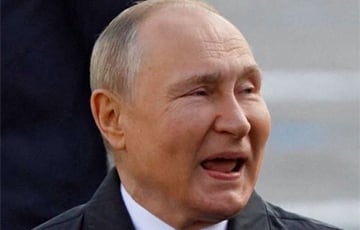
Analysts noted that Russian dictator Vladimir Putin continues to assert territorial claims against Ukraine that extend beyond the Donbas. To justify his claims, he cites his own interpretation of history and asserts that Ukrainians and Russians are supposedly “one people.”
For example, on October 22, Putin stated that the occupied Ukrainian territories are allegedly “part of historic Russia.” On the same day, he rejected a proposal by Ukrainian President Volodymyr Zelenskyy to freeze hostilities along the current front lines as part of a ceasefire agreement.
According to the ISW, by the term “historical Russia,” Putin likely means the so-called “Novorossiya.” This is a fictional and vaguely defined concept of a region in southern and eastern Ukraine that Russian authorities are attempting to portray as an integral part of the Russian Federation.
The territories that the Kremlin includes in this concept are Crimea, as well as the Luhansk, Donetsk, Zaporizhzhia, and Kherson regions. However, the list does not end there: Russia’s conception of “Novorossiya” also includes the Kharkiv, Dnipropetrovsk, Mykolaiv, and Odesa regions.
Thus, Moscow’s claims of “historical rights” pertain to a significantly larger territory than the one the Russian army is attempting to seize in the Donbas.
What Russia Demands from Ukraine
Currently, the Kremlin insists on the annexation to Russia of territories that remain under Ukrainian control, including those in three regions.
Moscow demands that Ukraine cede:
20.5% of the Donetsk region, which is under Ukrainian control;
24.5% of the Zaporizhzhia region, including Zaporizhzhia. Before the full-scale invasion, the city had a population of over 700,000;
30% of the Kherson Oblast, including Kherson. Before the war, the city’s population was approximately 300,000.
Putin’s statements indicate that Russia’s territorial claims may extend beyond these demands. According to the ISW, they are not limited to Ukraine’s so-called “fortress belt” in the Donetsk Oblast and could potentially encompass the entire territory of the country.
Why the Kremlin Is Not Ready to Compromise
Putin continues to insist on achieving all of Russia’s stated military objectives. Among them are demands that effectively call for Ukraine’s complete surrender.
The ISW believes that this stance indicates the Kremlin’s unwillingness to pursue a compromise-based peaceful settlement. According to analysts, Moscow views negotiations with Kyiv primarily as a means of forcing Ukraine to accept Russia’s terms, rather than as an opportunity to find a mutually acceptable solution.
Putin’s refusal to support a proposal for a ceasefire along the current front lines also demonstrates that Russia is not prepared to simply freeze the current situation on the battlefield. Statements about “historic Russia” suggest that the Kremlin’s territorial ambitions may be significantly broader than those Moscow has articulated in its demands regarding specific regions.

Bank's name: Bank Millennium S.A.
Address: ul. Stanislawa Zaryna, 2A, 02-593, Warszawa
IBAN: PL97116022020000000216711123
SWIFT: BIGBPLPW
Name of the account holder: Fundacja “KARTA ‘97”
Purpose/title of payment: Donation for statuary aims
You can contact us by the e-mail [email protected]