
How A Russian Officer Helped The Ukrainian Armed Forces Eliminate Hundreds Of Occupiers: New Details
1- 20.10.2026, 11:52
- 2,210
The media are calling his move “one of the most high-profile in history.”
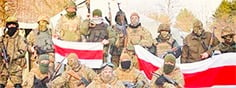
A 26-year-old Russian lieutenant Lev Stupnikov passed information to Ukraine that was used to launch strikes against Russian troops. Thanks to him, hundreds of occupiers were killed: according to various estimates, between 200 and more than 300. On October 15, The Wall Street Journal on October 15, calling him “one of the deadliest saboteurs in recent military history.”
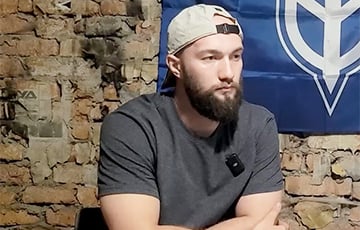
Stupnikov emerged from the shadows in September 2025. In an interview with Ukrainian vlogger Dmytro Karpenko, he admitted that while fighting in the war in Ukraine, he began passing information to the Ukrainian Armed Forces and spent more than half a year helping to target his own comrades. Only the name “Lev” was mentioned in the interview, but Stupnikov did not conceal his face or personal details, so RT propagandists quickly figured out who he was and tracked down his family. RT, citing Russian military sources, claimed that Russian Armed Forces casualties from strikes directed by Stupnikov exceeded 200 people. According to the WSJ, the number was over 300.
The Story of Stupnikov
Lev Stupnikov is 26 years old. His father left the family when he was very young. His mother, Tatyana Yantsen, raised Lev and his younger sister, Alisa, on her own. As a teenager, Stupnikov enrolled in a cadet corps in Omsk and then moved to St. Petersburg to study at the Military Academy of Communications.
In the summer of 2023, he graduated from the academy with the rank of lieutenant and was assigned to the 36th Guards Motorized Rifle Brigade. In November, he was sent to fight in the war in Ukraine.
From the very beginning of the invasion, Stupnikov was horrified by the occupiers’ actions and did not want to participate in the war. “They were dropping bombs on innocent civilians. It was evil,” the WSJ quotes him as saying.
By that time, his mother had long since lost faith in the Russian government, and the war shocked her no less than it did her son. She took her daughter out of school to shield her from pro-war propaganda and sought ways to get Lev out of the army.
In February 2024, Jansen contacted Ukrainian blogger Dmitry Karpenko, who posted interviews with Russian prisoners of war and defectors on YouTube. He also gathered information from agents in Russia for Ukrainian military intelligence and paid them a fee. Karpenko and Stupnikov agreed to collaborate. Over time, Stupnikov began regularly passing military intelligence to Ukraine, but he refused to accept any payment for it.
Strikes Against the Occupiers
As the battalion communications officer in the 36th Motorized Rifle Brigade, Stupnikov had access to critical information: the deployment of units, the operations of reconnaissance drones, and the command’s plans.
The very first strike he directed in February 2024 resulted in the mass deaths of his fellow soldiers. Stupnikov passed on the coordinates of the training ground near Volnovakha to his handler; there, soldiers from the 36th Brigade had been lined up awaiting the arrival of Major General-Major Oleg Moiseev, the BBC News Russian Service reported. “The commanders lined us up in an open field,” one of the survivors recounted.
The missile strike killed 68 people and wounded another 60. Among the dead were 10 officers, including the brigade commander, Colonel Husein Musaev. Stupnikov himself had left the strike zone beforehand, claiming he urgently needed to use the restroom. After the attack, he helped load the bodies of his fallen comrades onto trucks.
In May 2024, the lieutenant transmitted the coordinates of a hotel in Nikolskoye, Donetsk Oblast, in whose basement two assault units were hiding. According to the publication, 20 soldiers, including a captain, were killed in the strike. Stupnikov also reported on the positions, combat plans, and movements of Russian units and disabled their equipment. His actions slowed the occupiers’ advance on Ugledar.
Once, he made a mistake: he accidentally transmitted the coordinates of his own hiding place and drew fire upon himself, but survived.
Stupnikov was extremely nervous; at night, he dreamed of the explosions he had orchestrated. “It was constant, endless tension. Real spies undergo special training. I didn’t have that kind of training,” he recalls.
At the same time, he insists that his actions were in line with the oath he took at the military academy nearly 10 years ago. “Did I betray my oath? I swore to defend freedom, independence, and the constitutional order,” he said. “But Putin destroyed all three.”
Defecting to the Ukrainian Side
The more successful the operations were, the more Stupnikov feared being exposed. He remained the only battalion officer among those who had been in the unit when he arrived there in November: the rest had been killed, wounded, or transferred to another sector of the front. The brigade was losing soldiers at an astonishing rate, “even for the Russian army, which was already suffering heavy losses,” notes the WSJ. The Russian command began to suspect that there was an informant among their ranks.
In July 2024, Stupnikov crossed the front line along a prearranged route. Under the watch of a Ukrainian drone, he made his way to Ukrainian troops, gave the password “Peanut Shop,” and surrendered.
He handed over a smartphone containing passwords that allowed the Ukrainians to view live feeds from a dozen Russian drones and cameras for several months. He then joined the Russian Volunteer Corps. He was told he had to stay there until the end of the war, and Stupnikov agreed.
He considered starting a new life in another country, but realized that might be more dangerous than staying in Ukraine and continuing to fight. The WSJ recalls the story of another defector, pilot Maxim Kuzminov: he flew his Mi-8 attack helicopter to Ukraine and received a $500,000 reward for doing so, but was killed in Spain six months later.
Stupnikov’s collaboration with Ukraine came to light in September 2025 following an interview with Karpenko. In Russia, he was placed on the wanted list, and two criminal cases were opened against him: for “abandoning his unit without permission” and “treason.” Chechen special forces declared a “hunt” for him.
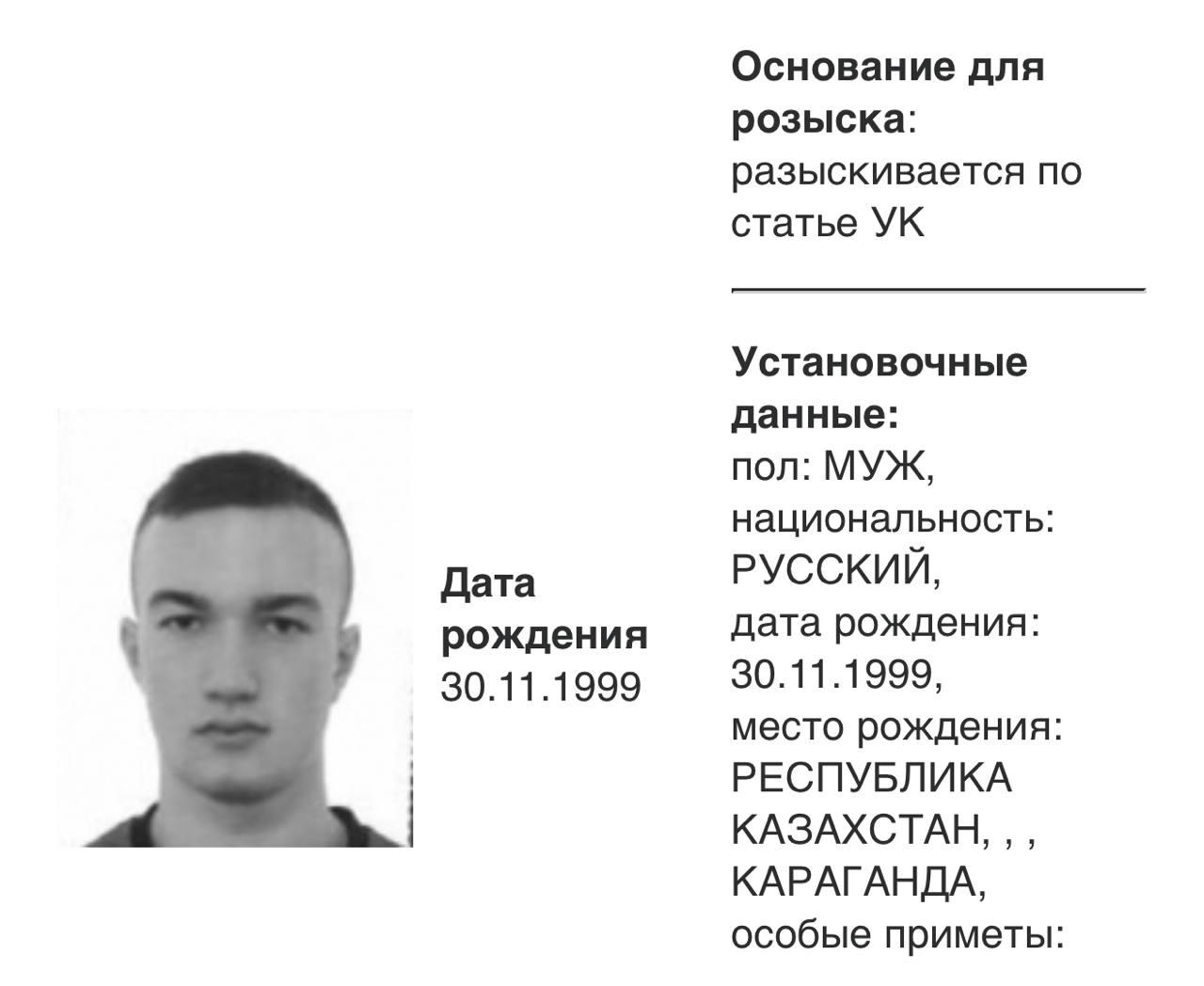
Prior to this, the Russians had no evidence that Stupnikov was alive: he was listed as a deserter, presumed dead. Now prosecutors have visited his relatives in Omsk, but by that time his mother and half-sister had already left the country. Stupnikov’s wife refused to travel to be with him and remained in Russia. In an interview with Russian state media, she called her husband’s actions “a betrayal.” “I didn’t know that he was passing information to the Ukrainian Armed Forces. He betrayed me, too,” she said.
Stupnikov’s story is inspiring others, the WSJ notes. Earlier this year, a Russian drone pilot threw a combat grenade into a barracks before fleeing across the front lines. Another defector who has been assisting Ukraine said he would like to beat Stupnikov’s record of 300 Russians killed. Karpenko’s intelligence network operates around the clock.

Bank's name: Bank Millennium S.A.
Address: ul. Stanislawa Zaryna, 2A, 02-593, Warszawa
IBAN: PL97116022020000000216711123
SWIFT: BIGBPLPW
Name of the account holder: Fundacja “KARTA ‘97”
Purpose/title of payment: Donation for statuary aims
You can contact us by the e-mail [email protected]