


Scientists Captured An Incredible Underwater Scene
- 29.09.2026, 13:32
- 3,798
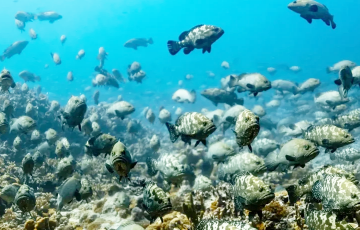
Photo: Shutterstock
Thousands of fish gathered together on the night of the full moon.
Researchers captured something incredible underwater—the spawning of thousands of groupers that gathered together during a full moon.
The ocean covers most of the Earth’s surface, and, as we know, some very strange things happen there. Especially when it comes to reproduction during a full moon: it is at this time that one of the most spectacular sights of wildlife in the ocean can be observed—the spawning of giant groupers, writes IFLScience.
Thousands of predatory fish gather together to release their reproductive fluids en masse under the light of the full moon, which raises the question: what do lunar cycles have to do with it? According to scientists, this timing offers many advantages: it helps them survive and increases their chances of successful reproduction.
Previous studies have shown that grouper spawning occurs at different times of the year depending on the species and geographic location, but the largest gathering is observed near the Fakarava Atoll in French Polynesia. It is estimated that about 18,000 camouflaged groupers gather here annually—it might seem that such an event would be easy to capture on camera, but scientists note that this is not entirely the case.
However, wildlife photographer Laurent Ballesta is well acquainted with all the challenges of photographing grouper spawning. In 2021, a photo titled “Creation” won the top prize in the “Wildlife Photographer of the Year” competition.
It is noted that the photo was the result of five years of work. It captures the birth of a new generation of groupers in the form of a swirling cloud of sperm and eggs rising upward and resembling a question mark. A highly symbolic conclusion to one of the most mysterious annual natural phenomena on Earth.
Balesta notes that capturing this incredible moment proved extremely difficult for a number of reasons, including:
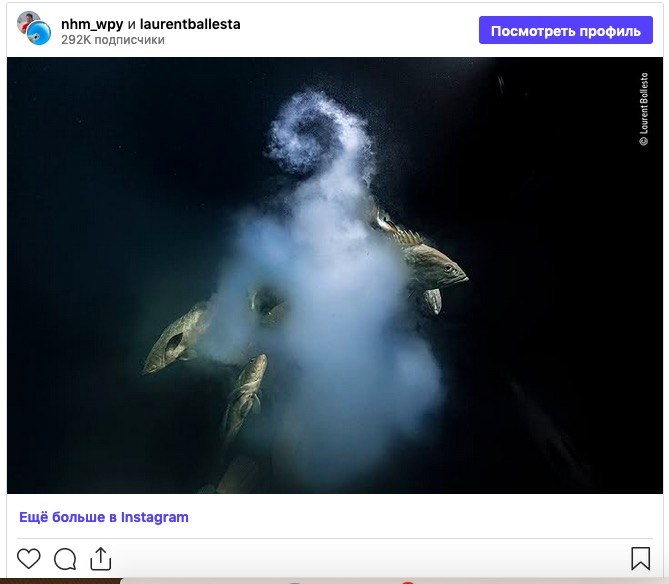
The spawning of a single fish lasts only a few seconds.
It is known that the phases of the lunar cycle are linked to the tides, as the Moon’s position affects the Earth’s gravitational field. According to the Natural History Museum in London, it is the tidal phenomena during the full moon that create optimal conditions for grouper spawning: currents carry the fertilized eggs out to the safe waters of the open ocean.
How do the fish manage to determine the right moment? In previous studies, scientists identified biological mechanisms that allow changes in light intensity associated with the phases of the Moon to regulate spawning activity.

Bank's name: Bank Millennium S.A.
Address: ul. Stanislawa Zaryna, 2A, 02-593, Warszawa
IBAN: PL97116022020000000216711123
SWIFT: BIGBPLPW
Name of the account holder: Fundacja “KARTA ‘97”
Purpose/title of payment: Donation for statuary aims
You can contact us by the e-mail [email protected]