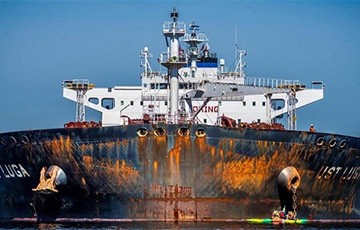


In Russia, Gas Prices Have "skyrocketed"
26- 30.06.2026, 20:51
- 16,110
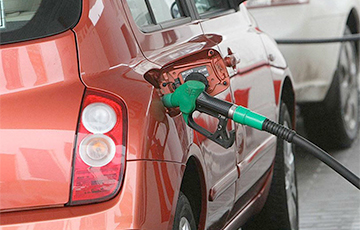
For the first time, the price has surpassed 100 Russian rubles per liter.
Private Russian gas stations not affiliated with major oil companies have begun selling gasoline at retail prices of 120 and even 140 rubles per liter, according to The Moscow Times reports, citing Reuters.
Price tags at some gas stations first approached the 100-ruble mark two weeks ago, but did not cross it because the software simply did not support three-digit prices—fuel had never been sold at such prices in Russia before, sources in independent chains told the agency.
By the end of June, however, the situation on the fuel market had worsened, and independent gas stations, after making technical adjustments to their software, began offering gasoline at 100 rubles per liter and higher. “High fuel prices aren’t deterring customers at all; they keep coming to fill up even when they see closed VINK stations nearby,” one trader told Reuters.
At independent gas stations in the Central Federal District that still have fuel in stock, AI-92 is selling for 115 rubles per liter and higher, AI-95 at around 120 rubles, and diesel at 130–140 rubles per liter.
Even after raising prices, independent gas stations cannot operate smoothly—just like the oil companies’ stations, whose prices are roughly half those of private operators, while their sales volume is higher. At VINK gas stations where gasoline or diesel becomes available, lines form and fuel sells out much faster than usual, after which the stations suspend operations while waiting for the next fuel truck.
Prices at VINK’s chain gas stations differ little from pre-crisis levels: AI-92 costs between 63 and 66 rubles per liter, and AI-95 costs between 70 and 73 rubles per liter. Even amid shortages, oil companies are adhering to an unspoken agreement with regulators to limit price increases to the rate of inflation, according to Reuters sources.
However, on the exchange, sales volumes of wholesale batches of Ai-92 gasoline and diesel fuel are less than half of the corresponding figures from June of last year, while Ai-95 sales are about half as much. Demand significantly exceeds supply—most purchase orders remain unfilled, according to Reuters sources. At the same time, the purchased volumes do not reach the market immediately and are unable to alleviate the severity of the crisis: exchange-traded lots are increasingly rarely unloaded within the contractually stipulated 30-day period.
According to exchange traders, sellers regularly postpone shipments, and delays of one to two months are now the norm for most volumes currently in the shipping stage, and some traders still have not received shipments for which prepayment was made back in February.
Traders say that spot fuel supplies are available only at oil depots that were able to receive wholesale shipments purchased on the exchange or still have volumes in stock from the winter.
The price of such small-wholesale shipments with immediate shipment by tanker truck is currently twice as high as the average wholesale prices on the St. Petersburg Mercantile Exchange (SPbMTSB).
For example, spot truckloads of AI-92 gasoline can currently be purchased for about 155,000 rubles per metric ton, AI-95 for 170,000 rubles, and diesel fuel for 135,000–150,000 rubles.
Converted to liters, the cost of AI-92 at oil depots is 114–118 rubles per liter, AI-95—125–128 rubles, and taking into account minimal retail costs, the price at the pump will reach 125 rubles per liter and 135 rubles per liter, respectively.
Diesel fuel in small-scale wholesale is sold at 112–125 rubles per liter; factoring in retail costs, the price at the pump should be at least 120–130 rubles per liter.

Bank's name: Bank Millennium S.A.
Address: ul. Stanislawa Zaryna, 2A, 02-593, Warszawa
IBAN: PL97116022020000000216711123
SWIFT: BIGBPLPW
Name of the account holder: Fundacja “KARTA ‘97”
Purpose/title of payment: Donation for statuary aims
You can contact us by the e-mail [email protected]