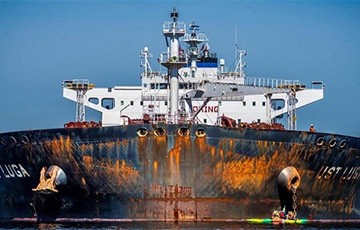


The Price Of Russian Oil Plummeted To $50
4- 25.06.2026, 20:05
- 5,960

Oil prices are falling following the deal between Trump and Iran.
The agreement between the U.S. and Iran, which opened the Strait of Hormuz and allowed tankers carrying dozens of barrels of Middle Eastern oil to enter the global market, caused Russian oil prices to plummet, reports The Moscow Times.
Based on Dated Brent quotes—the price benchmark to which the value of physical shipments of 80% of the world’s oil is pegged—the price of Urals crude has fallen to $50 per barrel, writes Yegor Susin, managing director of Gazprombank Private. On Thursday, the Dated Brent price fell to $72, and the Urals discount is currently hovering around $22 per barrel, he explains.
From their April peak, when Russia’s main crude grade was sold for export at Western ports for $116 per barrel, Urals prices have more than halved. As a result, the price of oil has once again fallen below the level set in the budget, which was drafted based on an estimate of $59 per barrel.
The average Urals price for June, which will be used to calculate oil and gas taxes for the budget, will be about $63 per barrel, according to Susin’s calculations. This is 27% lower than in May ($86.52 per barrel) and 33% lower than the average price in April ($94.87), which was the highest since 2014.
Oil prices have returned to pre-Iran war levels: the price of Brent fell to $72 on Thursday. “This means we should expect the Russian budget’s problems to intensify in August–September,” warns Andrei Zatsepin, an analyst at Alor Broker.
In May, following the surge in oil prices, the treasury’s oil and gas revenues rose by 70% compared to January–February, and by 38% year-over-year. Despite this, the deficit for the first five months reached a record 6 trillion rubles, 1.6 times the target for the entire year.
To cover the deficit, the authorities “will have to increase the money supply, and after the State Duma elections in September, we cannot rule out the adoption of unpopular measures such as a ‘windfall profit’ tax,” Zatsetin believes.
A critical budget indicator—the price of oil in rubles—has returned to pre-war levels, according to analysts at Vector Capital. Record crude oil exports are somewhat mitigating the situation, they emphasize. Due to attacks on refineries, oil companies are left with many unprocessed barrels, and they are shipping the crude at the maximum capacity of their ports: According to Reuters, the planned volume of shipments via the Baltic Sea for June reached 2.8 million barrels per day—1 million more than initial estimates.
The question remains, however, as to how much of this oil is actually being sold rather than processed and subsequently imported back into Russia as gasoline, writes “Vector Capital.”
The Ministry of Finance initially projected 8.8 trillion rubles in oil and gas revenues in the 2026 budget law. However, over the past five months, it has recorded a 30% year-over-year decline in these revenues. The Accounts Chamber estimates that the budget could fall short by about 1 trillion rubles in resource rent over the course of the year. According to its forecast, oil and gas revenues will total 7.8 trillion rubles.

Bank's name: Bank Millennium S.A.
Address: ul. Stanislawa Zaryna, 2A, 02-593, Warszawa
IBAN: PL97116022020000000216711123
SWIFT: BIGBPLPW
Name of the account holder: Fundacja “KARTA ‘97”
Purpose/title of payment: Donation for statuary aims
You can contact us by the e-mail [email protected]