

Nabiullina Warned Of Accelerating Inflation In Russia
4- 19.06.2026, 20:26
- 8,574
Due to the fuel crisis and the explosive growth in budget expenditures.
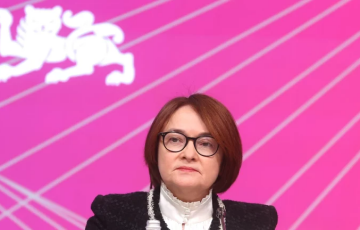
Inflationary risks in the Russian economy have “increased significantly” in the near future, said Elvira Nabiullina , head of the Central Bank of the Russian Federation , at a press conference on Friday, according to The Moscow Times.
According to her, the threat of inflation stems from rising fuel prices, as well as the budget situation, with expenditures this year likely to be significantly higher than planned. According to Bloomberg, additional spending will be required for the war, which will cost the treasury 4–5 trillion rubles more than was stipulated in the budget law.
The budget risk “is already materializing,” but “uncertainty remains regarding its scale,” Interfax quotes Nabiullina as saying.
In addition, inflation in June will be affected by “the recent spike in fuel prices,” the Central Bank head added. According to Rosstat, retail gasoline prices have been rising at a rate of nearly 1% for two weeks in a row and have increased by 6.6% since the beginning of the year—twice as much as during the same period a year earlier. “The rise in gasoline prices may also affect inflation expectations, as this is a fairly sensitive commodity for both individuals and companies,” said Nabiullina.
According to the Ministry of Economic Development, inflation has begun to accelerate again since the start of summer after a nearly uninterrupted slowdown throughout the year. From 5.31% at the end of May, the year-over-year growth rate of the consumer price index rose to 5.63% by June 15.
“This trend may limit the scope for further cuts to the key rate,” Nabiullina warned. At its meeting on Friday, the Central Bank lowered the rate to 14.25% per annum—a cut of 0.25 percentage points, marking the smallest reduction in the last nine meetings during which the Central Bank has eased monetary policy.
In its forecasts for the current year, the Central Bank projected an average rate of 14–14.5%; for 2027, 8–10%; and for 2028, a return to a neutral level of 7.5–8.5%. Given the new circumstances, the transition to a neutral rate may take place later, Nabiullina said.
The rate cut from 14.5% to 14.25% resolves the dilemma between “loyalty” and “normality,” notes economist Kirill Rodionov: The Central Bank cannot make a significant cut amid heightened risks of fiscal policy easing, but at the same time, it cannot ignore the “request from above,” which was explicitly articulated at a meeting with Vladimir Putin.
In essence, Elvira Nabiullina has made it clear that the rate-cutting cycle may be over, according to Alexei Tretyakov, founder of Aricapital. Analysts at Renaissance Capital and T-Bank predict that the Central Bank will continue to ease policy, but at a slower pace—to 13% or a level above 13% by the end of the year.
In any case, “the risks of a further increase in the budget deficit will make the Central Bank’s task even more difficult,” Rodionov emphasizes.

Bank's name: Bank Millennium S.A.
Address: ul. Stanislawa Zaryna, 2A, 02-593, Warszawa
IBAN: PL97116022020000000216711123
SWIFT: BIGBPLPW
Name of the account holder: Fundacja “KARTA ‘97”
Purpose/title of payment: Donation for statuary aims
You can contact us by the e-mail [email protected]