Drone Attack On Moscow: ISW Pointed Out An Important Detail
21- 18.05.2026, 13:16
- 23,772
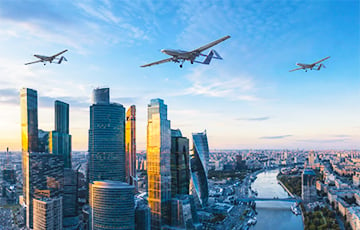
The Kremlin's reaction speaks volumes.
The Ukrainian Defense Forces' strikes on Moscow and the Moscow region on May 17 demonstrated Russia's inability to reliably defend even the capital region. The realization of this has already caused noticeable discontent among members of the Z-community.
Russian state media barely focused on the attack and its aftermath, limiting themselves to brief mentions, while Kremlin officials made only a few vague statements. The Institute for the Study of War (ISW) believes that such reactions indicate an attempt to minimize the perception of the seriousness of what happened.
Kremlin softens rhetoric, Z-bloggers demand tough measures
One of the main conclusions after the massive attack was the realization that Russia's air defense system is unable to effectively repel strikes even on key sites around Moscow.
This triggered a wave of criticism on ultra-patriotic Russian channels, with bloggers demanding stronger air defense and calling for large-scale retaliatory strikes.
At the same time, the Kremlin's official response was noticeably more restrained. ISW notes that such a stance is probably aimed at downplaying the significance of the strikes and contrasts with the harsh rhetoric of pro-war bloggers.
Thus, Russian Foreign Ministry spokeswoman Maria Zakharova criticized the Ukrainian strikes, focusing on the topic of alleged damage to the civilian population, but did not mention hits on defense industry and oil infrastructure.
Kremlin spokesman Dmitri Peskov, responding to questions about Moscow's possible harsh response, said Russia's very existence as a nuclear power was not under threat. In fact, this was a signal that strikes on Moscow are not seen as a reason to use nuclear weapons.
Analysts believe that such a statement indirectly confirms the seriousness of the incident and at the same time serves as an attempt to lower the Russian audience's expectations regarding the Kremlin's possible response.
GosTV silences the topic
The independent publication Agency has recorded a de facto silence on the topic of the Ukrainian attacks on central Russian TV channels.
First Channel, Russia-1 and NTV devoted no more than a minute of airtime to the topic, limiting themselves to statements about alleged attacks on civilian targets and reports of some kind of Russian "response" without specifying its essence.
Z-bloggers admit air defense failures
Russian military bloggers reacted quite differently to the situation. They spoke openly about the weak effectiveness of air defense, especially in the Moscow region, and acknowledged the increasing range and intensity of Ukrainian attacks.
They suggested creating a unified multi-level air defense system around Moscow, as well as improving early warning mechanisms.
Some bloggers called for the use of tactical nuclear weapons, and called Peskov and Zakharova's statements insufficiently harsh. The shutdown of mobile internet was also criticized as an ineffective measure to counter drones.
The ISW stresses that it is not the first time Russian pro-war writers have pointed to chronic problems in the air defense system and accused the Kremlin of failing to protect rear regions.
According to Ukrainian and Russian sources, the attack hit the Angstrem microelectronics plant, facilities at the Elma technology park, the Solnechnogorskaya and Volodarskaya oil pumping stations, and the Moscow oil refinery in Kapotna.
A fire was also reported on the runway at Sheremetyevo airport. The work of the capital's airports was temporarily suspended, and a significant part of flights were delayed for more than two hours.

Bank's name: Bank Millennium S.A.
Address: ul. Stanislawa Zaryna, 2A, 02-593, Warszawa
IBAN: PL97116022020000000216711123
SWIFT: BIGBPLPW
Name of the account holder: Fundacja “KARTA ‘97”
Purpose/title of payment: Donation for statuary aims
You can contact us by the e-mail [email protected]