


Lukashenko's Farewell Promises
16- 25.04.2026, 8:57
- 18,386
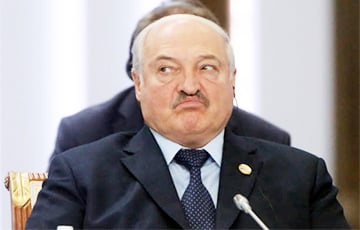
The dictator panicked because of the words of the head of Shklou district.
Thirty years ago, Alexander Lukashenko made a lot of promises. He was especially generous in his promises to Belarusian peasants, who had been his main electoral support for many years. In thirty years, Lukashenko has fulfilled one of all these promises - to preserve collective farms. And by many parameters the Belarusian village turned out to be in a worse situation than it was in the dashing nineties.
Promises for farewell
While visiting the church on Easter on April 12, Alexander Lukashenko was given a letter found in the archives, which he wrote to the newspaper 26 years ago, when he had not even started his way into big politics, but was just the director of the state farm "Gorodets".
"You wrote this when you were running for deputy. You wrote what you turned into life. It's to preserve villages, settlements, to give equal conditions for rural and urban residents," said chairman of Shklou District Executive Committee Sergei Bartosh.
Lukashenko didn't let Lukashenko talk, so Sergei Bartosh didn't have time to announce the whole list of promises. But judging by what he had time to announce, this list did not differ much from the slogans and promises with which Lukashenko went to his first presidential election. To revive the village, to eliminate price disparity, when food prices were artificially kept low, to ensure an equal standard of living in the city and the countryside, to preserve collective farms.
And Lukashenko interrupted the chairman of the Shklou district executive committee for a reason. Because it's better not to remember about the promises of thirty years ago. Of all the promises Lukashenko has fulfilled only the promise to preserve collective farms. And all the rest of the inheritance he got from the USSR somehow failed to preserve it.
Although in the 90s, Belarus had better starting conditions than others. Including starting conditions in agriculture.
Was - became
Belarus was both an assembly plant and a breadwinner republic for the USSR. The volume of products exported from the Belarusian SSR far exceeded the volume of imports. In 1991, products worth 2.5 billion rubles were exported from Belarus to other republics, and imported for a little more than 500 million rubles.
In 2000, after six years of Lukashenko's rule, the grain harvest in Belarus amounted to 4.6 million tons. In the 90th year, with which the Belarusian authorities are so fond of comparing, Belarus harvested 7 million tons of grain.
In meat production, Belarus finally reached the 1990 figures only in 2017. As for milk production, it was possible to surpass 1990 only in 2020. But in terms of potato production it was not possible to return to the level of 1990.
But Lukashenko, as promised, did not let the unique Soviet system of collective and state farms be destroyed. He left it practically untouched since the Soviet times. The share of private farms in agricultural production is still less than 3 percent.
And these three percent by the mere fact of their existence spoil the picture of prosperity of the collective farm organization of agricultural production. As of 2020, the profitability of production in collective farms amounted to 4.7%. In farmers it was 21.4%. The profit of farms was 350 dollars per hectare. Collective farms made about forty dollars.
But after 2000, oil prices began to rise, and Belarus received a flood of Russian subsidies. Lukashenko had a chance to finally prove the total superiority of large-scale commodity production over primitive farms.
From 2000 to 2013, state investment in the industry amounted to 50 billion dollars. The next seven years added another equal amount. That is, the average annual state subsidies to agriculture amounted to $5 billion.
Agriculture was somehow not helped by this. Starting the revival of the village, Lukashenko promised that in ten years the average yield in Belarus would rise to 45 centners per hectare. Last year we managed to get as close to this indicator as possible. But even then the average yield was still lower and amounted to 43 centners per hectare. And all other years it fluctuates around 35.
At the same time in Lithuania and without pathos programs, the yield has grown from 19 centners per hectare in 1992 to 47 in 2020. Last year Belarus was proud of an unprecedented record harvest. 10.7 million tons of cereals were harvested. If we count corn and rapeseed. If rape and corn are not counted, it will be less than 9 million tons. In Lithuania, whose population is three times smaller, the harvest was 8 million tons without rapeseed and corn.
Belarusian food exports last year amounted to $10 billion. Lithuania, with a population, once again, three times smaller, sold 8 billion dollars worth of food.
So it is not surprising that the Belarusian authorities like to compare everything with the nineties. And they don't like to compare it with their neighbors. But even the comparison with the nineties does not always work in favor of modern Belarus.
Preserved
In 1995, the profitability of grain production was 71%. By 2020, it had fallen to less than 10%. In 2020, when it was still possible to talk about it out loud, Belarusian officials admitted that 70 percent of Belarusian agricultural enterprises could not function without constant state support.
The total debts of agricultural enterprises to banks are about 20 percent higher than their annual output of agricultural products.
The notorious price disparity, which Lukashenko promised to eliminate, has become even uglier in thirty years. If in 1991 to buy a MTZ tractor you had to sell 16 tons of first-class wheat, now you need 190 tons.
The differences between the city and the countryside have not been erased either. In February 2026, the average salary in Belarus amounted to Br2700. The average salary in agriculture is Br2,200.
Revival and development
In 2005, Lukashenko announced the launch of a program to revive and develop the countryside. A key element was the construction of agro-towns. The point of the program was to make life in the village no worse than in the city. There would be water supply, sewerage, heating. There should be not only a store, but also a school, kindergarten, sports club. So that people would want to live there.
For twenty years, grandiose promises have been devalued to minimal household needs.
"In these houses - in agro-towns, kolkhoz houses or presidential houses, as they are called - well, you don't need to go to the street in winter, everything is built there," they boasted in the CheZ program on Channel One.
That is, the sports clubs didn't work out, so you'll have to make do with a warm latrine. But even with a warm toilet, in fact, not everywhere worked out. According to a study conducted by the ThinkTanks project, at the end of last year only 60 percent of the housing stock in rural areas was connected to the water supply. Half of the dwellings were provided with hot water and central heating.
There are, of course, exemplary agro-towns. But you just have to try hard to find them. In 2016, ten years after the start of the program, the State Control Committee did its best. The agency conducted a large-scale inspection of how people live in agro-towns in general. It turned out that in some places they didn't live at all. Out of the 300 agro-towns checked, almost half of them, 130, were found to have empty houses.
That is, they built them, but they did not find anyone willing to live in them. Because very often these identical beautiful houses were built without taking into account the real need. They built them where there is no social infrastructure, where there is no work, where there is no regular communication with the nearest settlement. That is, the authorities thought that it would be enough to build houses and people would fly there like starlings, move in and live. What could have gone wrong?
Not without Lukashenko's personal merits, the rural electorate, which he has always considered his own, has shrunk considerably over the past three decades. In 1990, about a million people were employed in Belarusian agriculture. In 2023, 250 thousand remained. In 2024 already 236 thousand.
In 1996, three million two hundred thousand Belarusians lived in the village. By 2024 there are less than two million left. Vitebsk and Grodno regions have lost half of the rural population for thirty years. In total, 1800 villages have completely disappeared in Belarus over these years.
And it will get worse. Because according to this ThinkTanks study, which I've already mentioned, one third of rural residents are pensioners. Young people, meaning people under 30, make up only 17 percent of the rural population. In 23 years, 13,000 babies were born in the village. 37,000 died. So, if it goes on like this, very soon there may be no peasants left in the country to "save the country" once again.
Alexei Mazartov, "Belarusians and the Market".

Bank's name: Bank Millennium S.A.
Address: ul. Stanislawa Zaryna, 2A, 02-593, Warszawa
IBAN: PL97116022020000000216711123
SWIFT: BIGBPLPW
Name of the account holder: Fundacja “KARTA ‘97”
Purpose/title of payment: Donation for statuary aims
You can contact us by the e-mail [email protected]