


"I Believe We'll Be Back In 2027"
6- 7.11.2026, 17:30
- 10,380
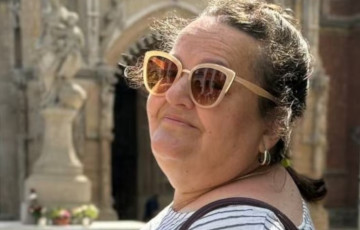
How a Belarusian Woman Living Abroad Unexpectedly Made Five of Her Wishes Come True.
How can a Belarusian retiree survive in a foreign country — without a pension or health insurance, because they lack work experience? 65-year-old Natalia Malets told “Radio Svaboda”, on life in forced exile.
For the past 14 years, Natalya Malets has worked at the Academy of Public Administration. She says that during the 2020 protests, she refused to lead faculty members to rallies in support of Lukashenko. As a result, she was fired before the end of her contract on the grounds that she “did not support the actions of law enforcement agencies.”
In 2022, Natalya, then 62 years old, was sentenced to one and a half years of so-called “house arrest” under Article 369 of the Criminal Code—“for insulting a representative of the authorities.” And in September 2023, she was charged with “financing extremist activities” (Article 361-4 of the Criminal Code) for transferring money from her own pension and sending packages to political prisoners.
On August 8, 2024, Natalia was sentenced to 3.5 years in prison. She served her sentence at Women’s Correctional Colony No. 4 in Gomel. On December 13, 2025, Natalya Malets was released along with a large group of 250 political prisoners and taken out of Belarus.
The “extremists” with yellow tags were first taken to Ukraine; from there, some went to Poland, and others to Lithuania. Along with other people of retirement age, Natalya Malets ended up in Wrocław, Poland.
“Passports have been revoked, pensions are not being paid”
Natalia Malets says that at first she lived in a Belarusian shelter in Wrocław. She received financial assistance, applied for international protection, and a positive decision on her case came fairly quickly.
Natalia is currently participating in the IPI (Indywidualny Program Integracji) individual integration program. This is a special government social support program in Poland designed to help foreigners adapt to life in the country.
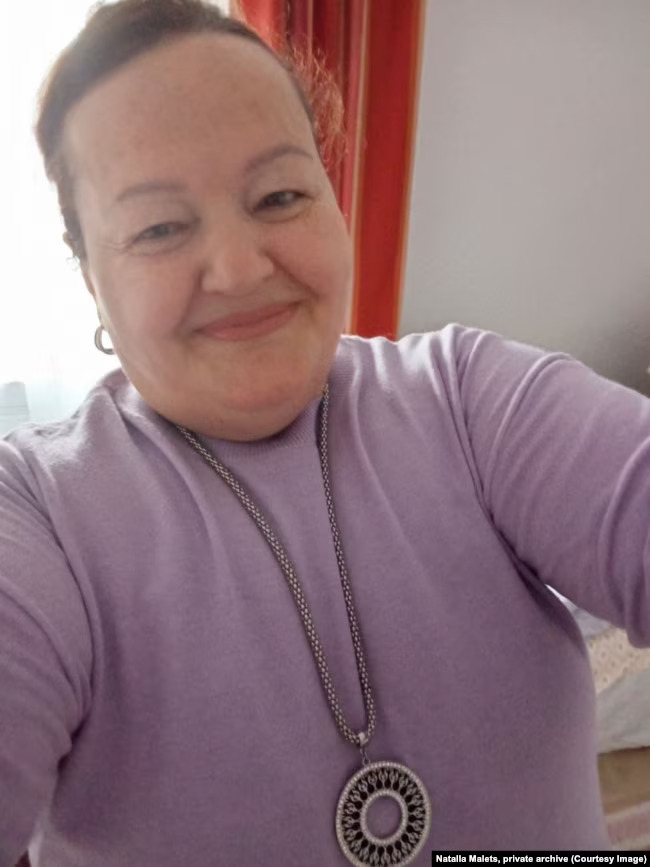
Natalia Malets rents a room and is trying to make ends meet on her own. She believes she is in a fairly favorable situation. Especially compared to other political prisoners who were forced to emigrate.
“We’re talking now about those who were ‘kicked out’ of the country. Because there are retirees who left on their own, and there are people a bit younger who are working, but they’re also concerned about their pensions. Even if they’re still receiving their pensions in Belarus, their passports will soon expire.
For the deported members of our group, their Belarusian passports were revoked and declared invalid. Pensions for the elderly have not been paid since January.
“At our age, the Poles won’t hire us for regular jobs—after all, we’re ‘unpromising’ workers. That’s why the issue of Belarusian retirees needs to be resolved one way or another,” Natalia explains.
Even in such an uncertain situation, she remains optimistic. After all, Natalya jokes, during her time in the pretrial detention center and the penal colony, the Belarusian authorities “saved up” her pension for her.
“When I was in the Brest pretrial detention center (and I spent 13 months there!), the Frunzensky Social Security Department in Minsk, where my pension is processed, wrote that they didn’t have a program allowing them to transfer my money to Brest.
In the penal colony, they only deducted money from me for my uniform and utilities, and I could only spend a certain portion of my money at the prison store. It’s a good thing I have friends, a husband, a brother, and children—they helped me.
And I didn’t spend a single kopeck of my pension while I was in pretrial detention. So I arrived in Poland with a substantial amount of Belarusian rubles. It sounds cynical, but I actually saved my pension while behind bars. Besides, I’m from the older generation, and I had a ‘stash’ of foreign currency back in Belarus,” the woman admits.
Thus, after being deported abroad, she used her Belarusian money—including the pension she had “saved” during her imprisonment—to pay for three months’ rent and the security deposit, which had to be paid in cash.
“Money has a way of running out quickly”
Natalia worked at the Academy of Public Administration for a long time. She says that her students loved and respected her. Upon learning that their former professor had been forced into exile, the Academy’s alumni helped her with money transfers and packages.
“I’m not even talking about the funds that helped me at the very beginning. Plus my friends, husband, and children. So I had support—it was actually an ideal situation compared to other retirees who were expelled from Belarus and arrived here with me. But money has a way of running out quickly,” says Natalya, who describes herself as a realist.
She recalls her first days of freedom, when, after being released from prison, she wanted to try and buy everything. Now she restricts herself in some ways, convincing herself that she can easily do without certain temptations: “I don’t need that,” she says.
Natalia rented a room in a three-bedroom apartment where a family of Polish retirees lives.
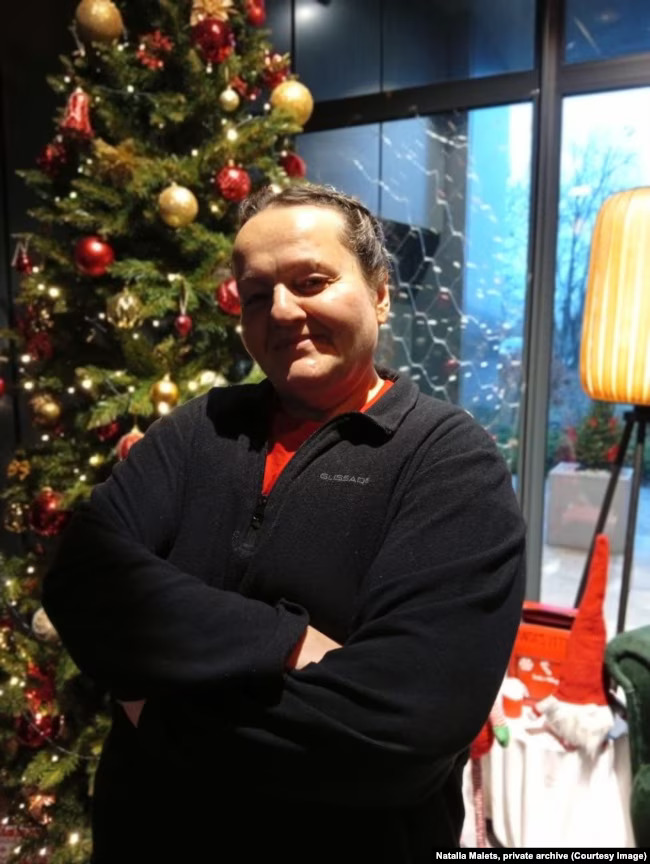
“They’re 20 years older than me. We communicate in a mix of Polish, Belarusian, and Russian. When I say ‘dziękuję’ (thank you), Mr. Leszek replies, ‘please’—he used to study Russian.
But, of course, finding myself in this situation at my age isn’t easy. Right now, I’m renting a small guesthouse in a private home on the outskirts of Wrocław from a Polish family of retirees. It has one small room—a sort of “studio apartment” (a small one-room apartment).
Given my age and health, I long for peace and quiet. In the camp, I grew tired of living in a single room with so many people.
“Thank you—as long as I’m participating in the integration program, I’ve been receiving assistance since May—1,690 zlotys a month (about 340 euros—RS). “But the program will end in a few months,” says Ms. Natalia.
She adds that there is no stability in the current situation. It’s impossible to get by even on the minimum benefits, she notes. I need to find a permanent job, even if it pays only the minimum wage.
Natalia is convinced that no one is interested in “retirees” at all. That’s how it was in the penal colony, and that’s how it is in exile.
“In my 13th work detail, there was a housekeeper named Nadezhda—she hated pensioners and turned the whole detail against us. If anything happened, it was ‘the pensioners’ fault.’”
She forced us to do things that were even prohibited by law. Some people were really upset about it. But I didn’t care. I tried not to pay any attention to it.
I found my niche: studying the Belarusian prison system, observing what goes on there, and how people on both sides behave. Like Miklouho-Maclay among cannibals—and I survived,” — the woman says.
Natalia considers herself a sociable, hardy person. But she adds that people are all different.
“None of us are getting any younger. And no one is immune to illness. That’s why I feel very sorry for women who find themselves abroad at this age.
I can cook. I can care for an elderly person, but only during certain hours—not around the clock. However, my Polish isn’t great yet.
I could look after children, but not very young ones—not under three years old—because I’m not as quick on my feet as I used to be.
The ideal work-from-home job for me would be assembling boxes or putting labels on jars. I look at ads on Facebook and other social media: there are jobs in Poland, even ones that older people can handle. You can stay at home and assemble boxes or stick labels on them.
But how do you get a job like that? These are Polish companies, so knowledge of Polish is required.
“This Friday, my social worker, Ms. Edita, is coming to see me; I’ll talk to her about helping me find some kind of work I can do from home,” the Belarusian woman says, still holding onto hope.
Ms. Natalia is very grateful to the many foundations and volunteers who helped her in the early days. And although the official support and volunteer assistance have ended, she can always turn to responsible, kind, and responsive people.
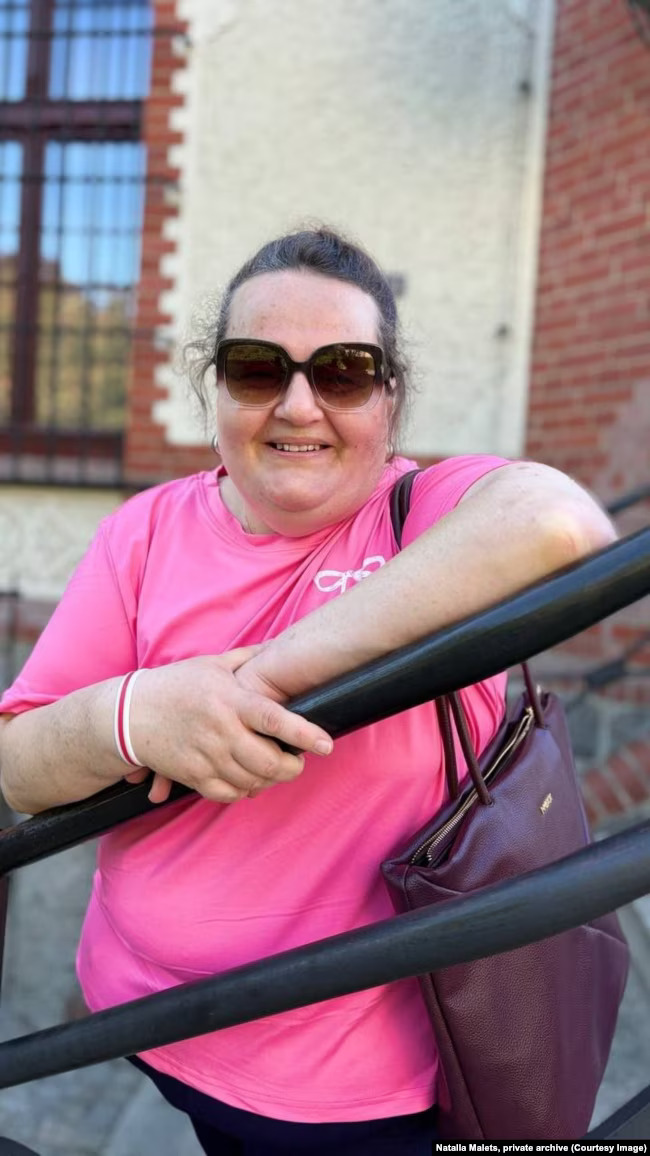
“At least here in Wrocław, they help a group of former political prisoners (not just retirees). Here, we don’t feel abandoned.
The volunteer support and mentoring have officially ended, but you can always turn to them for help. In terms of social integration, you feel emotionally supported.
We’re still invited to many places and given free tickets: when the Kupalovsky Theater comes to town (actors from the former Kupalovsky Theater troupe. — RS), or for stand-up comedy shows,” says Natalya gratefully.
But what concerns everyone most of all is the financial issue: how to continue paying for housing, and what will happen in a few months when the IPI program ends.
“It’s purely a financial issue—how to earn enough to pay rent and make ends meet. But then I start to withdraw into myself, to dwell on my own problems.
That’s why I’m currently planning only a week ahead. I mark circles on the calendar to indicate where I need to be and at what time: Polish language classes, the ‘Golden Age University,’ and various events.
I got up this morning and planned out my day.
There’s a small garden next to the house where I rent a room. Back when I first moved in, I said I needed some physical activity. And now, raking leaves is my responsibility.
“When I’m raking leaves, I think about my own things—it calms me down. And I push aside the question of what will happen a year from now: I only think about what will happen a week from now!” Natalya says emotionally.
Five previous wishes came true “perfectly”
Belarusians don’t know how to reflect, Natalya is convinced. They call reflection “self-absorption,” but it’s not the same thing at all.
“Reflection is when I calmly assess my shortcomings, think about how to deal with them, and find a way to turn my weaknesses into strengths. Who among us does that?
We engage in self-flagellation and call it by the fancy word ‘reflection,’ the woman argues.
Ms. Natalia convinces herself that in 2027, changes will take place in Belarus and forced emigrants will finally be able to return home.
She spoke about her five wishes, which she planned to fulfill after 2020—and which, in her opinion, came true “perfectly.”
“After the 2020 protests, my employment contract at the Academy of Public Administration wasn’t renewed. I traveled from Minsk to Brest to be with my mother, who was seriously ill.
“During the day, I take care of my mom; until 3 a.m., I watch YouTube and scroll through Facebook; then I sleep for a couple of hours, have some coffee…” she recalls of that difficult time.
Then my mom passed away. Natalia realized that her life was “going off the rails.” So she decided to make a plan for herself, as psychologists advise.
The first item she wrote down was: go to bed at 10:00 p.m., wake up at 6:00 a.m.
“I jinxed it… I was detained, and for almost three years I lived on a schedule of going to bed at 10:00 p.m. and waking up at 6:00 a.m.
Once I was free, I couldn’t stick to it, so I asked the Universe—and it replied: ‘Here, take this routine.’
The second item on the list was to establish a healthy diet. Because at night—excuse me—I’d stuff myself (I’m not exactly skinny to begin with)—on dry bread, sandwiches.
So the second item was to learn to eat porridge in the mornings. “Eat your porridge!” the Universe replied, and for almost three years I was forced to eat porridge in the mornings,” the woman continues.
The next item on the plan, as Natalya herself admits, was “crazy.”
She’d seen plenty of videos on YouTube and social media showing people being beaten in police vans, but she couldn’t imagine what kind of strange vehicle it actually was.
“I even pictured a wooden floor in my mind, because people are ‘thrown onto the floor in a police van’ or ‘put in a glass’—and I realized that a ‘glass’ must have some kind of edges.
So, for my third item, I wrote: ‘See how a police van is set up.’
As a result, I rode in a police van seventeen times while being transported to court hearings.
My fourth item was—to travel. “Here you go!” the Universe said, and after being expelled from Belarus, I started traveling from Ukraine, then went to Poland. I even went to Innsbruck, Austria, for my birthday recently.
The fifth item on my list was to start learning a foreign language. Now that I’m in exile, I’m taking Polish classes.
“Tell me, which of those wishes didn’t come true?” Natalya asks rhetorically.
Once she arrived in Poland, recovered a bit from all the turmoil, and settled in, she bought herself a beautiful lilac-colored notebook (because she loves all shades of purple and lilac).
And she began writing down new wishes—ones that were more thought out, not as “superficial” as those she’d had since 2020.
“I wrote in my new lilac notebook that I’m looking forward to 2027, when changes will take place and Belarusians will return home.
Although the landlord of my apartment in Wrocław, Mr. Leszek, wrote in the lease agreement that I would first live there for six months and then indefinitely.
But I believe in change in 2027—I believe we’ll return,” says Natalya.

Bank's name: Bank Millennium S.A.
Address: ul. Stanislawa Zaryna, 2A, 02-593, Warszawa
IBAN: PL97116022020000000216711123
SWIFT: BIGBPLPW
Name of the account holder: Fundacja “KARTA ‘97”
Purpose/title of payment: Donation for statuary aims
You can contact us by the e-mail [email protected]