

A Triple Blow To Putin's Influence
- 7.11.2026, 11:50
- 2,140
The defeat of the Kremlin's allies in Serbia, Hungary, and Romania has deprived Moscow of its foothold in Europe.
Russia is losing influence in the Balkans and other regions of Europe: following political defeats suffered by the Kremlin’s allies in Serbia, Hungary, and Romania, it is becoming increasingly difficult for Moscow to maintain its former positions. These changes are weakening Putin’s ability to influence European politics and complicating diplomatic support for Russia’s invasion of Ukraine, writes expert Michael Ghetto in an article for Atlantic Council.
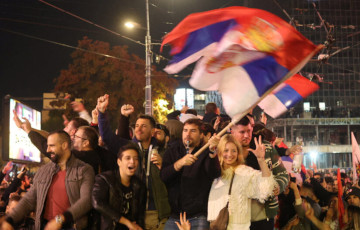
In Serbia, the student protest movement scored an unexpected victory over longtime President Aleksandar Vučić, who for nine years represented one of the main pro-Russian forces in European politics. The new government is unlikely to actively support Kyiv, but Moscow has lost an important political ally.
In Romania, after five months of political crisis, parliament approved a new pro-European government. This came after the Romanian Air Force shot down Russian drones over the country’s territorial waters in the Black Sea. Bucharest now anticipates a period of political stability and continued support for Ukraine, including military logistics and energy supplies.
Another blow to the Kremlin was the defeat of Viktor Orbán, who, after 16 years in power, lost the Hungarian election in April 2026. His successor took a tougher stance toward Moscow and began a pragmatic dialogue with Kyiv.
Russian influence has also waned in the South Caucasus. After Moscow refused to intervene effectively in the conflict between Azerbaijan and Armenia, relations with Yerevan deteriorated sharply.
At the same time, Putin retains key partners—China, Iran, North Korea, and Belarus. However, rather than restoring Russia’s status as a world power, the war against Ukraine has led to a further decline in its international influence.

Bank's name: Bank Millennium S.A.
Address: ul. Stanislawa Zaryna, 2A, 02-593, Warszawa
IBAN: PL97116022020000000216711123
SWIFT: BIGBPLPW
Name of the account holder: Fundacja “KARTA ‘97”
Purpose/title of payment: Donation for statuary aims
You can contact us by the e-mail [email protected]