

If Putin Dies In January 2027
2- 16.11.2026, 12:01
- 1,032
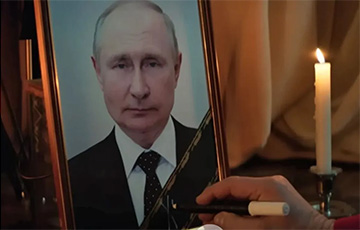
And this isn't some far-fetched scenario.
A report on this topic was prepared by one of the most influential American think tanks — the RAND Corporation, whose annual budget exceeds $460 million. The organization conducts research commissioned by the U.S. government and the Pentagon.
It’s worth noting right away that RAND Corporation analysts are not science fiction writers; they have a completely different profession. To model answers to the questions posed, they calculate probabilities and apply specialized methodological approaches. In fact, scenario planning is one of the long-established analytical techniques, alongside game theory and other tools of strategic analysis.
Instead of predicting a single version of the future, researchers model several possible scenarios, assess their consequences, and look for solutions that will remain effective under various circumstances. Even when reality writes its own script (which is usually the case).
So, if Putin dies of natural causes in three months, it is highly likely that a high-ranking intelligence official—let’s call him “FSB General”—will seize power in the swamps.
In April 2027, under Russia’s new president, the war against Ukraine enters a stalemate. However, the conflict does not end.
Until January 2028, the new Kremlin leader focuses primarily on “domestic issues”: he carries out personnel reshuffles in the corridors of power, strengthening his own position.
And then—another act of aggression against European countries, which begins with a hybrid campaign. The likely target is Estonia.
According to the RAND scenario, the “Estonian special operation” begins in May 2030. The aggressor organizes protests in Narva. They escalate into riots, and the Estonian authorities attempt to restore order. Russia’s new leader, under the slogan “They’re beating our people,” sends troops into Narva.
Now, regarding NATO’s role in the assessments of American analysts. Contrary to the Kremlin’s calculations, the Alliance responds to the aggression, invokes Article 5 of the North Atlantic Treaty, and sends troops to defend Estonia. As early as June, full-scale combat operations begin involving Russian forces and NATO troops.
After occupying Narva, the new Russian dictator declares the operation complete and offers the Alliance a ceasefire.
Until January 2031, the war is effectively “put on hold,” and so-called “peace talks” continue throughout this period.
The general conclusion of American analysts: the future of European security is in question, even if “Putin dies in January.”
This is a correct conclusion. In fact, Ukrainians as a nation have long realized that Russia is our age-old enemy. The land of Kyiv has been facing all forms of “swamp” aggression—from hybrid to open military—since the time of Yuri Dolgoruky.
The threat from the East will disappear only when the world’s last colonial pseudo-empire ceases to exist. For us, this has long been no secret, but for some Western elites, framing the issue in this way remains a real revelation.
There is another conclusion that does not follow directly from the American study, but which Western observers should draw.
The key to preserving democratic civilization lies in the resolute unification of military and economic efforts and in jointly standing up to the aggressor. Together, we must create a new security architecture and ensure peace for future generations.
Together, we can do anything. Glory to Ukraine!
Yuriy Fedorenko, Facebook

Bank's name: Bank Millennium S.A.
Address: ul. Stanislawa Zaryna, 2A, 02-593, Warszawa
IBAN: PL97116022020000000216711123
SWIFT: BIGBPLPW
Name of the account holder: Fundacja “KARTA ‘97”
Purpose/title of payment: Donation for statuary aims
You can contact us by the e-mail [email protected]