
Ales Belyatsky Called On The European Parliament To Maintain Sanctions Against The Lukashenko Regime
2- 13.11.2026, 12:38
Until the repression in Belarus comes to an end.
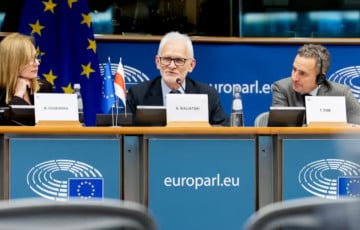
On November 12, at the European Parliament in Brussels a meeting of the Delegation for Relations with Belarus took place. The keynote speaker was Nobel Peace Prize laureate Ales Beliatski, according to "Radio Svaboda".
Parliamentarians from Poland, Lithuania, Austria, Sweden, and Portugal participated in the discussion. The session was held to mark the International Day of Solidarity with Belarus.
MEPs honored the memory of the slain peaceful protester Roman Bondarenko, the sixth anniversary of whose death fell on November 12.
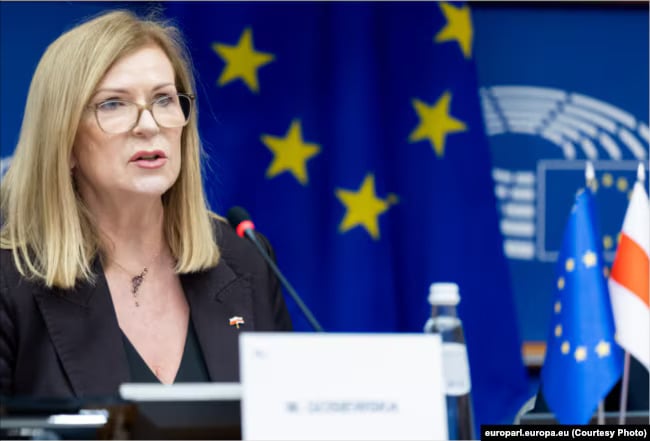
Opening the session, the head of the Delegation for Relations with Belarus, Malgorzata Gosiewska, described the human rights situation in Belarus as catastrophic:
“Despite the release of some political prisoners, a great many people remain in prison. More than 800 political prisoners are behind bars. Since 2020, at least 10,201 people have faced politically motivated criminal prosecution, and at least 8,807 of them have been convicted, including in absentia.
These figures show that, despite the periodic release of political prisoners, politically motivated repression in Belarus remains systemic and widespread. Independent political activity has been stifled. Human rights organizations have been shut down or forced to leave the country. And journalists and political figures are either in prison, intimidated, or forced to flee the country.”
Gosevskaya called for continuing sanctions against those responsible for political repression, demanding an end to the repression and the release of all political prisoners. The MEP also called for support for Belarusian civil society.
The European Parliament’s goal is a democratic and independent Belarus, Goshevskaya stated.
Ales Beliatski attributed his second release to the sanctions regime: “Without sanctions, I would still be behind bars today.”
“As for the human rights situation in Belarus, it remains consistently poor, and repression continues. As of today, we have documented 900 political prisoners—this is the minimum number of people we know about. Several hundred more people are in detention, and nothing is known about them. The authorities are doing this deliberately, especially in recent years, to conceal the true scale of the repression.
The true scale of the repression is enormous. We haven’t experienced anything like what has been happening in Belarus over the past six years since the days of Stalinist repression; we’ve never faced such pressure on the entire society since then.”
In his speech, Belyatsky called for maintaining the European Union sanctions imposed on the Lukashenko regime until all political prisoners are released and the repression ceases, and also expressed support for the case against the Lukashenko regime at the International Criminal Court in The Hague:
“This year, the Prosecutor of the International Criminal Court launched an investigation into crimes committed by the Lukashenko regime following a request from Lithuania regarding cross-border crimes against humanity—deportations and politically motivated persecution.
This investigation deserves support both politically and on its merits. The parliaments and governments of other states party to the Rome Statute should join the Lithuanian request. Alongside the ICC’s international mechanism, support for national investigations would also be effective, provided that jurisdiction permits it.”

Bank's name: Bank Millennium S.A.
Address: ul. Stanislawa Zaryna, 2A, 02-593, Warszawa
IBAN: PL97116022020000000216711123
SWIFT: BIGBPLPW
Name of the account holder: Fundacja “KARTA ‘97”
Purpose/title of payment: Donation for statuary aims
You can contact us by the e-mail [email protected]