
The State Duma Blamed Russians For The Latest Gasoline Shortage
2- 10.11.2026, 17:42
- 2,526
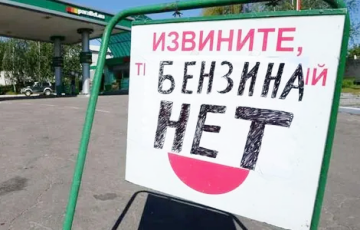
A strange statement by a Russian lawmaker.
Igor Ananskikh , a State Duma deputy from “Fair Russia” and a member of the Energy Committee , commented on the new wave of gasoline shortages in the country, comparing them to “lines for sausage.” Ananskikh downplayed the significance of Ukrainian strikes on Russian oil refineries and attributed the restrictions on fuel sales to alleged panic buying among consumers, which he said was forcing retailers to take countermeasures, according to the deputy’s remarks RTVI.
“I’ve heard that Rosneft has imposed restrictions on fuel sales in some regions; this is precisely to curb the panic buying. Unfortunately, this happens just as it does with gasoline in the summer—and quite often with buckwheat, sausage, and so on,” Ananskikh said. He added that “the situation is, after all, different from the summer” and assured that “the necessary conclusions have been drawn and reserves have already been secured.” The lawmaker also effectively acknowledged that the Russian military is unable to protect the country’s oil refineries. “When 150 drones attack, unfortunately, damage is possible,” Ananskikh stated.
At least five plants affiliated with Rosneft—in the Republic of Bashkortostan and the Ryazan, Samara, Saratov, and Yaroslavl regions—were subjected to new attacks by Ukraine between October 30 and November 7 alone. These facilities, which are critical to the industry, sustained extensive damage, exacerbating the gasoline supply situation in several Russian regions, including the city of Moscow, according to The Moscow Times.
Starting November 10, Rosneft’s gas stations in the capital began limiting fuel sales to no more than 50 liters per vehicle. Even before that, similar measures had been introduced in several other regions of the Russian Federation, stretching from the Republic of Karelia to the Trans-Baikal Territory. Moreover, officials at the Trans-Baikal Territory’s operational headquarters explained the problem by stating that “Rosneft is imposing restrictions in all regions of the country.”
Previously, Russian government officials had consistently attributed gasoline shortages in the country to panic buying by residents. Several regional governors attributed the restrictions at gas stations or their closures to the surge in demand in 2025–2026, as well as the head of the Russian Ministry of Energy Sergey Tsivilev and Deputy Prime Minister Alexander Novak, who oversees the fuel and energy sector of the economy. “We have enough fuel on the market. We are currently restructuring the system’s logistics networks to meet demand. It will take some time to balance the market,” Novak stated in June 2026.
At the same time, Rosneft itself—which controls about 30–35% of the country’s oil production and refining—holds a more pessimistic view amid the war. The state-owned corporation acknowledges that another two months of hostilities could cause it long-term damage, Bloomberg reported in late October, citing its top executives and internal documents. According to the data obtained, Rosneft is experiencing mounting financial and technical problems due to Ukrainian strikes, and it is becoming increasingly difficult for the company to repair damaged refineries.

Bank's name: Bank Millennium S.A.
Address: ul. Stanislawa Zaryna, 2A, 02-593, Warszawa
IBAN: PL97116022020000000216711123
SWIFT: BIGBPLPW
Name of the account holder: Fundacja “KARTA ‘97”
Purpose/title of payment: Donation for statuary aims
You can contact us by the e-mail [email protected]