

Politico: Russia's Claims About The Plague Failed To Convince The West
4- 9.10.2026, 11:24
- 2,362
The Kremlin did not provide a clear response to the WHO's request.
The death of a 28-year-old employee of the Irkutsk Anti-Plague Institute has sparked international concern. Russian authorities claim that the woman died of pneumonia of unknown origin, but the lack of detailed information about the incident has fueled suspicions of a possible laboratory accident, according to Politico (translation by Charter97.org).
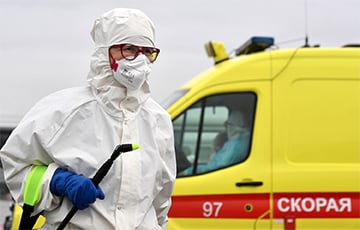
According to Russian authorities, the plague pathogen was not detected in the deceased woman. About 200 people who had contact with her were placed under observation, and quarantine measures were implemented in some hospitals.
The World Health Organization requested additional information from Moscow in accordance with the International Health Regulations. Russia’s response was delayed, and without data on laboratory tests, the possible cause of death, and the deceased’s contacts, the WHO cannot fully assess the situation.
The European Union and the United States are also calling for greater transparency. The State Department has urged Russian authorities to share information, and Donald Trump intends to discuss the situation with Vladimir Putin.
The Kremlin insists that there is no “epidemic risk” and accuses the media of stirring up panic.
However, the current situation is reminiscent of Soviet and Russian practices of concealing information about major disasters and epidemics. Among such cases are the Chernobyl nuclear accident, the anthrax outbreak in Sverdlovsk in 1979, and the underreporting of mortality statistics during the COVID-19 pandemic.
The problem lies not only in the threat itself, but also in the lack of reliable information. When authorities do not disclose the circumstances of an incident, suspicions grow, and it becomes more difficult for international organizations to assess the risks and prepare for possible consequences.

Bank's name: Bank Millennium S.A.
Address: ul. Stanislawa Zaryna, 2A, 02-593, Warszawa
IBAN: PL97116022020000000216711123
SWIFT: BIGBPLPW
Name of the account holder: Fundacja “KARTA ‘97”
Purpose/title of payment: Donation for statuary aims
You can contact us by the e-mail [email protected]