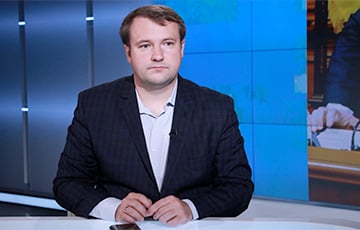


"The Kremlin May Use Lukashenko Against The Baltic States"
4- 7.10.2026, 11:00
- 2,028
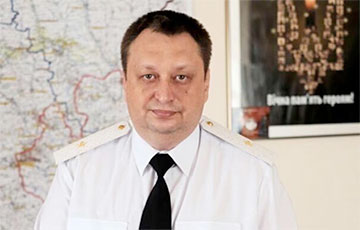
An SBU general called on the West to respond to hybrid attacks by the Kremlin and Minsk.
Intelligence agencies from several countries are warning: Russia may intensify hybrid attacks against NATO and attempt to test the Alliance’s resilience. Against this backdrop, Bloomberg reported that NATO is developing a strategy for a swift victory over Russia in the event of an invasion, relying on drones and artificial intelligence.
What elements of hybrid warfare might Russia employ against NATO countries in the near future? The website Charter97.org discussed this with Major General (Res.) of the SBU Viktor Yagun:
— I wouldn’t expect a single large and obvious move. The point of Russia’s hybrid strategy lies precisely elsewhere: to create a series of relatively small crises. Each one on its own may not seem like sufficient grounds for a strong NATO response, but together they are intended to undermine the Alliance’s sense of security and unity. First and foremost, these are acts of sabotage against critical infrastructure: energy facilities, transportation, railway hubs, ports, undersea cables, and defense industry facilities.
The second area involves cyberattacks and electronic warfare: interference with GPS and communications, as well as attempts to disrupt the operation of government systems, banks, and power grids.
The third element is drones. They are a very convenient tool for testing NATO’s response. A drone can enter airspace, approach an airport or a military facility, and the question immediately arises: Is this a mistake, a provocation, reconnaissance, or the start of a more serious operation? It is precisely this uncertainty that benefits Moscow. NATO already acknowledges that the number of such incidents on its eastern flank is increasing. Another dangerous tactic involves operations carried out through intermediaries: recruited operatives, arson, sabotage, and attacks on individuals or facilities.
An information campaign will run in parallel: stoking internal conflicts, supporting extreme political forces, discrediting aid to Ukraine, and attempting to convince the public that a confrontation with Russia is “too costly.” Limited military provocations should not be ruled out either, especially in the Baltic region. Their objective may not be to seize territory, but rather to determine where NATO’s actual red line lies and whether all allies are prepared to respond with equal speed.
This poses a particular danger for Belarus. The Kremlin could use Belarus’s territory, airspace, and military and intelligence infrastructure to exert pressure on Poland, Lithuania, and Latvia. In such a case, the Lukashenko regime would effectively make Belarus part of Russia’s military infrastructure, thereby increasing the risks for Belarus itself. NATO explicitly takes the deployment of Russian military capabilities in Belarus into account in its threat assessments.
— What should Alliance countries do to neutralize these threats from the Kremlin?
— The key is to undermine Moscow’s confidence that a hybrid attack allows it to act with impunity.
Tanks and aircraft alone are not enough for this. The state itself must be resilient: secure power grids and communications, backup command-and-control systems, protection of ports and railways, cybersecurity, civil defense, and the ability to quickly restore critical infrastructure. Within NATO, this is already viewed as part of collective defense under Article 3 of the North Atlantic Treaty.
The second point is intelligence. Information must be shared between countries not over the course of weeks, but effectively in real time. If the same Russian tactic is used today in Poland, tomorrow in Lithuania, and the day after tomorrow in Germany, this must be viewed as a single operation, not as three separate criminal cases. NATO is already strengthening this exchange of intelligence.
Third—counter-drone defense. Europe cannot shoot down a cheap drone with a missile that costs tens or hundreds of times more. A multi-layered system is needed: electronic warfare, low-cost interceptor drones, automated detection systems, and artillery and missile systems. The experience of the war in Ukraine, in particular, should become one of NATO’s main sources of knowledge.
And one more important point: the response does not necessarily have to be symmetrical. If Russia carries out sabotage, that does not mean NATO must respond with sabotage. The response could include the arrest of agents, the dismantling of intelligence networks, cyber operations, sanctions, the freezing of financial channels, and the strengthening of the military presence. NATO Secretary General Mark Rutte has already noted that the Alliance has options for responding, and they will not always be public, symmetrical, or mirror responses.
— NATO is banking on drones and a swift victory in the event of a Russian invasion. Can the Alliance take preemptive action—even while an attack or provocation is still in the planning stages?
— It can, and, in my view, it should. But we need to understand the term “preemptive” correctly.
Preemption does not necessarily mean striking first. It is far more important to detect preparations for an operation before the enemy does and deprive them of the element of surprise: redeploy forces, strengthen air defense, mobilize the air force, secure vulnerable facilities, expose spy networks, take control of cyberinfrastructure, warn allies, and publicly demonstrate to Moscow: we are aware of your plan. This is especially important in hybrid warfare. If we wait until everything becomes completely obvious, we may already have lost the initiative.
But there is a fundamental distinction between preventive deterrence and preventive war. NATO remains a defensive alliance. Suspicious activity by Russia alone does not automatically justify strikes against its territory.
It is a different matter if there is a direct and obvious threat of attack or if aggression has already begun. In that case, military logic requires not only shooting down missiles and drones, but also depriving the enemy of the ability to continue the attack.
According to Bloomberg, the new concept of the Supreme Commander of NATO’s Allied Joint Forces in Europe, General Alexus Grinkevich, the so-called “Theory of Victory,” is based precisely on a combination of traditional forces with low-cost drones, minimally crewed systems, and target acquisition using artificial intelligence. Once the invasion has been halted, NATO must gain freedom of maneuver and strike the enemy’s command and control system to prevent the war from turning into a protracted war of attrition. At the same time, the document emphasizes the Alliance’s defensive nature.
But I would be cautious about the very phrase “quick victory.” Drones and artificial intelligence are tools, not miracle weapons. The war in Ukraine has shown that victory depends not only on technology, but also on the quantity of ammunition, the resilience of logistics, electronic warfare, air defense, the training of personnel, and, most importantly, the speed of political decision-making. Therefore, the true formula for deterrence should look like this: Russia must know in advance that it will not be able to create a “minor crisis,” drive a wedge between allies, and present NATO with a fait accompli. For Moscow, any act of aggression must mean not a protracted haggling over how to respond, but a swift and predictable collective response. This is precisely the key condition under which a war can not only be won but also prevented.

Bank's name: Bank Millennium S.A.
Address: ul. Stanislawa Zaryna, 2A, 02-593, Warszawa
IBAN: PL97116022020000000216711123
SWIFT: BIGBPLPW
Name of the account holder: Fundacja “KARTA ‘97”
Purpose/title of payment: Donation for statuary aims
You can contact us by the e-mail [email protected]