
Poland Is Developing Medical AI To Reduce Wait Times For Doctor's Appointments
1- 7.10.2026, 21:27
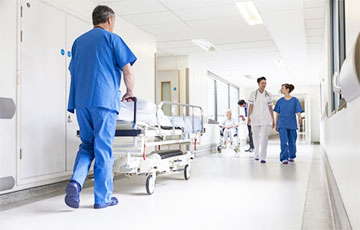
The new tools are expected to speed up diagnosis and improve the effectiveness of treatment.
Wrocław University of Technology and the Lower Silesian Center for Oncology, Pulmonology, and Hematology are launching a joint effort to develop Polish artificial intelligence models for medicine. The initiative aims to create safe solutions and pilot them in oncology, according to “Polish Radio”.
The developers expect that the new tools will help reduce wait times for appointments, speed up diagnosis, and improve treatment. As the university’s rector, Professor Arkadiusz Wuis, explained, AI should support doctors at every stage of patient care.
“This isn’t just about working with language, like in a chat. The system must also analyze images, be familiar with all Polish legislation, and understand, for example, which medications are available in Poland, which are prescription-only, what is available at a given hospital, where the necessary specialists work, how diseases progress, and what their symptoms are. In other words, practically everything a doctor currently has to keep in mind. “It’s important to bring all of this together, ensure data protection and proper anonymization, so that patient care becomes more effective,” said Professor Wuis.
The project’s first priority will be to support patients with lung cancer. Professor Adam Maciejczyk, director of the Lower Silesian Center for Oncology, Pulmonology, and Hematology, noted that the center’s initial efforts to apply artificial intelligence have already yielded results.
“We’ve managed to increase the number of patients who move through the system more quickly and are referred to a surgeon sooner. We’ve increased the number of patients undergoing surgery, and as a result, we’ve improved their survival rates,” he said.
Professor Maciejczyk emphasized that participation in the project allows Polish doctors to create new tools themselves, tailored to the needs of medical practice, rather than having to adapt to solutions provided by external vendors.
The first results of the project are expected within a timeframe ranging from several months to a little over a year. It is still difficult to estimate the total cost of development.

Bank's name: Bank Millennium S.A.
Address: ul. Stanislawa Zaryna, 2A, 02-593, Warszawa
IBAN: PL97116022020000000216711123
SWIFT: BIGBPLPW
Name of the account holder: Fundacja “KARTA ‘97”
Purpose/title of payment: Donation for statuary aims
You can contact us by the e-mail [email protected]