

Alexey Melnik: The Ukrainian Armed Forces Are Depleting Russia's Reserves
2- 5.10.2026, 15:24
- 12,776
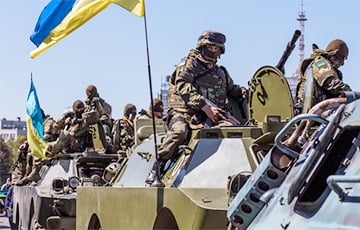
Operation "Vivaldi" is of operational and strategic importance.
Russian casualties on the front lines are rising again. In September, they approached record levels, and over the past 24 hours, the Russian army has lost more than 2,000 soldiers.
What is behind the sharp increase in losses among the Russian occupiers? The website Charter97.org asked military expert Oleksiy Melnyk, co-director of foreign policy and international security programs at the Razumkov Center in Kyiv, for his comments:
— There is another interesting source of information—the Unmanned Systems Forces, which publish the results of their operations practically in real time. Late yesterday evening, it was reported that 600 occupiers had been eliminated and another 300-plus wounded. This means that, just a few hours before the end of the day, there were already about a thousand casualties.
This shows that one of the priorities of the Unmanned Systems Forces is the destruction of enemy manpower. If this continues, it will deprive Russia of one of the advantages it has long held—its advantage in manpower.
The number of personnel taken out of action must be significantly greater than the number they recruit in a month. For several months in a row now, based on various estimates, with a recruitment capacity of 30,000+ people per month, casualty figures have been approaching 40,000. That is, a deficit of 10,000 per month. This deprives Russia not only of the ability to replenish these resources but also to build up reserves.
— The Ukrainian Armed Forces continue active operations as part of Operation “Vivaldi.” What has been achieved recently?
— Information is currently limited, and this is due to a change in the information policy of the Ukrainian military command. There is a certain temporary delay—approximately one month—during which the Ukrainian Defense Forces do not publish data on territories liberated or cleared of occupiers, nor on enemy positions that have been captured.
One of the authoritative sources, DeepState, included a disclaimer when publishing statistics for September, stating that this data should be treated with caution. For operational security reasons, information will be published with a significant delay. Therefore, it is important to keep in mind that the most recent information—for example, as of the end of September—may, and most likely will, be revised in the coming months.
The overall picture is as follows: starting sometime around April of this year, the balance between territory captured and territory lost by the Russian army has been, at best, zero—or even negative. In some areas, the Russians are still advancing, but at the same time, the Ukrainian Defense Forces are defending and liberating territories in other areas.
And this is not just about statistics. The operation, especially in the Lyman sector, has clear operational and operational-strategic objectives. Russian plans—such as creating encirclements—are being thwarted. It’s not just a matter of recapturing territory, but of regaining positions that allow us either to block the Russian offensive or to set the stage for a counteroffensive—even if only a limited one—in other sectors. Operation “Vivaldi” began about half a year ago. The first reports about it emerged several months ago, and the results are also being published with a delay. Therefore, I think we’ll see new data soon.

Bank's name: Bank Millennium S.A.
Address: ul. Stanislawa Zaryna, 2A, 02-593, Warszawa
IBAN: PL97116022020000000216711123
SWIFT: BIGBPLPW
Name of the account holder: Fundacja “KARTA ‘97”
Purpose/title of payment: Donation for statuary aims
You can contact us by the e-mail [email protected]