

"Well, Your Time Has Come, Sasha."
5- 6.07.2026, 7:44
- 10,394
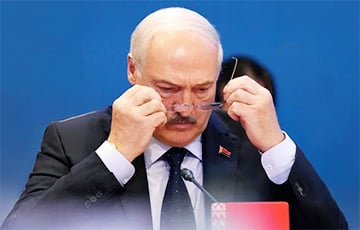
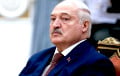
Lukashenko was lured into a trap.
How did Putin lure Lukashenko into a trap at Valdai, and what was the Belarusian leader actually being pressured to do? Analyst Sergey Chaly offers his take on the situation.
— Why did Putin summon Lukashenko? You can figure it out by listening to the interview the Russian president gave to propagandist Zarubin—specifically the part that was ultimately cut out, — notes Sergei Chaly on the “Belsat” channel.
Specifically, the part where Putin mentioned that he had invited Russian Prime Minister Mikhail Mishustin to join this two-day conversation—in order to “discuss economic issues”.
— That’s what this is all about! He essentially lured Lukashenko into a trap. Lukashenko thought the talks would be one-on-one. And right away, an image from the movie *Option Omega* pops into my head, where a Soviet intelligence officer, played by Oleg Dal, was supposed to be tortured by the Gestapo, but all they showed was a doctor coming in and laying out his instruments. Mishustin played roughly the same role.
The analyst is certain that the meeting with Mishustin came as a surprise to Lukashenko. After all, just the day before the trip, Lukashenko had spoken with Belarusian Prime Minister Turchin and asked him to relay the results of his conversation with Mishustin. For this very reason, he did not take Turchin with him on the trip.
— So why did Mishustin show up there (at Valdai)? Precisely to explain: “Sasha, you do realize what will happen to you if, for example, you don’t agree to what we’re all trying to persuade you to do right now?”
I can just picture that conversation: “Remember, Sasha, how happy you were that we deployed nuclear weapons at your base, how you said they were, in a way, even yours? How you kept saying you were right there with us. Well, your time has come, Sasha.”
“You’ve probably noticed that I had only one condition for Putin: we in Belarus will determine the targets, not the Russians. But you’ll help operate them—we don’t know how to yet. In other words, we’ll press the button together, God forbid it should ever be necessary, but we’ll be the ones to determine the targets. “He agreed,” Lukashenko said in 2024.
That’s exactly why, the analyst is certain, Mishustin was needed at that meeting—to explain more eloquently what the consequences of refusal might be.
— And now, when the very same analysts who once claimed that Putin wouldn’t attack Ukraine—since it would be unreasonable and irrational—are now saying that it’s irrational to demand that Belarus join this war—arguing that these 50,000 poorly trained conscripts won’t make a dent—it’s worth looking at the Russian army’s monthly casualty rate. 30,000. In other words, roughly speaking, you could practically stretch things out for two months with this “biomaterial,” notes Sergey Chaly.
If the logic is that it’s unreasonable to throw new people into this war’s furnace, then wait a minute—isn’t that exactly what Putin is doing right now with his own people? Why don’t you tell him that it’s unwise to keep throwing his own people into the furnace at a rate of 30,000 a month? And here there’s even more—and you don’t even have to pay for it.
Guys, this argument doesn’t hold water! This is exactly the kind of situation where a dictator, having backed himself into a corner and finding himself at the very moment when his deal with the devil didn’t go as planned, resorts to human sacrifice.
That’s exactly what they were pushing him toward. And Putin’s words—that Lukashenko isn’t panicking—mean that everything is the exact opposite. And a scenario of escalation—possibly even a nuclear one—was being considered,” says Sergey Chaly.

Bank's name: Bank Millennium S.A.
Address: ul. Stanislawa Zaryna, 2A, 02-593, Warszawa
IBAN: PL97116022020000000216711123
SWIFT: BIGBPLPW
Name of the account holder: Fundacja “KARTA ‘97”
Purpose/title of payment: Donation for statuary aims
You can contact us by the e-mail [email protected]