

US War With Iran Has Boosted Global Demand For The Dollar
- 4.03.2026, 20:25
- 1,408
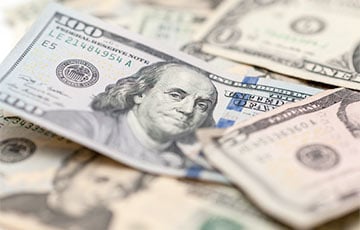
The dollar index against other world currencies rose about 2% in two days.
The military conflict in the Middle East has sharply increased demand for the U.S. currency. As Reuters writes, investors began to actively move into the dollar after the U.S. and Israeli military operation against Iran. Amid rising geopolitical risks, market participants began to seek protection in the most liquid asset of the global financial system. According to the agency, the index of the dollar to other world currencies rose by about 2% in two days.
Founder of the analytical company Satori Insights Matt King notes that the jump in the dollar rate is primarily due to the redistribution of cash flows of capital. Investors are quickly closing speculative positions that have supported many markets in recent months and moving into liquid assets. As a result, many global markets are declining - in particular, South Korea's KOSPI index has lost nearly 20% in just two days.
Before the escalation in Iran, the dollar was under pressure. The dollar index fell about 2% in January and hit a four-year low, it also lost more than 10% over the past year. According to investor Jeffrey Gundlach, this trend could be long-term, so investors were advised to increase the share of real assets and emerging market stocks.
The weakening dominance of the U.S. currency has been going on for nearly a quarter century - since the euro's emergence in 1999 and China's accession to the WTO in 2001. According to the International Monetary Fund, the dollar's share of global foreign exchange reserves has fallen from more than 70 percent in the early 2000s to about 57 percent today. Nevertheless, the process has been smooth and the dollar is actively used in trade.
According to the Bank for International Settlements, the U.S. currency is involved in about 89% of all foreign exchange market transactions, the highest in 25 years. By comparison, the euro is present in about 29% of transactions. In the oil market, the dollar remains the key settlement currency. Only 20% of global oil trade is conducted in other currencies, such as the euro or Chinese yuan. About 80% of all transactions are still denominated in dollars.
A professor at the University of California at Berkeley and expert on international monetary systems Barry Eichengreen believes that the dollar still does not have a full-fledged alternative in international trade, financing and foreign exchange reserves. However, he believes the pace of its weakening role could accelerate. "I'm much more concerned than I was before. There is no obvious alternative to the dollar, and we can only hope that the transition will be gradual and smooth. But the world is moving far from that smoothly," the economist noted. Federal Reserve Economic Data also shows a long-term decline in the purchasing power of the U.S. currency. It has declined about 52% from January 1996 to December 2025, and about 83% since January 1976.
At the beginning of the year, many analysts were talking about the sunset of the dollar. Economist Peter Schiff predicted a gradual end to the era of U.S. currency dominance and a shift by central banks to gold as a key reserve asset. In his opinion, this could lead to the fall of the dollar and long-term economic problems for the US. The statistics of the World Gold Council does show a steady demand for the metal from central banks. The price of gold on this background exceeded $5500 per ounce for the first time, and silver approached $120 per ounce, which reflected the increased interest of investors in protective assets. But amid the outbreak of war in Iran, gold and silver began to fall - yesterday the price of gold fell by 3% and silver by 6%.

Bank's name: Bank Millennium S.A.
Address: ul. Stanislawa Zaryna, 2A, 02-593, Warszawa
IBAN: PL97116022020000000216711123
SWIFT: BIGBPLPW
Name of the account holder: Fundacja “KARTA ‘97”
Purpose/title of payment: Donation for statuary aims
You can contact us by the e-mail [email protected]