
Ukraine Has Rewritten The Rules Of Naval Warfare
1- Hikmet Javad
- 16.03.2026, 19:38
- 2,206
Kiev is actively using maritime drones.
US President Donald Trump's statement that "kamikaze marine drones don't exist" and that videos circulating online are allegedly created by artificial intelligence doesn't just sound bizarre. It sounds like an outright denial of reality. And a reality that has been observed by the whole world for several years.
The Iranian regime can and should be criticized. It is an authoritarian system that systematically suppresses its own population, supports radical armed groups and actively destabilizes the situation in the Middle East. But criticism should not turn into absurdity. Denying Iran's possession of kamikaze marine drones is about as ridiculous as denying the existence of drones at all.
Iran has long been developing asymmetric warfare technologies. This includes naval drones designed to attack enemy ships. They have been repeatedly demonstrated at military exhibitions, featured in analytical reports and discussed by the expert community. Their development logically fits into Tehran's strategy: to compensate for the technological lag behind the world's leading powers with relatively cheap but effective means of defeat.
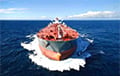
But it is not just Iran. The very fact that kamikaze drones exist today is beyond doubt. And the main proof of it was Russia's war against Ukraine. Ukraine has literally rewritten the rules of naval warfare by actively using just such drones. Ukrainian maritime drones - small, fast, explosive-laden unmanned boats - have become one of the most effective tools against the Russian Black Sea Fleet.
It was with their help that a number of key targets were struck. In October 2022, naval drones attacked ships in Sevastopol Bay. In 2023, unmanned boats participated in attacks on Russian warships and infrastructure in Crimea. In the fall of that year, Ukraine launched a series of strikes against Black Sea Fleet ships, including large landing craft and patrol vessels.
As a result, Russia was forced to effectively withdraw a significant portion of its fleet from Sevastopol. Ships began to be moved to Novorossiysk and other ports, and the Black Sea Fleet itself, once considered a powerful instrument of pressure on the region, became a significantly weakened flotilla with no freedom of action.
This was not due to major naval battles or battleships or aircraft carriers. It happened largely because of a new technology - naval drones. Which is why claims that such systems "don't exist" seem particularly absurd. We live in an era where warfare is rapidly changing, where small drones are capable of striking multi-billion dollar military systems. And to deny this is simply to ignore the obvious.
But the problem is not even just Donald Trump's specific statement. Ukraine today has to confront not only the bloody empire called Russia, which unleashed a full-scale war and continues to kill civilians on a daily basis. Ukraine has to exist in an international environment, where sometimes statements are made that objectively play into the hands of the Kremlin. We can list Donald Trump's steps, which in the end turned out to be very favorable to Russia.
But that is not all. Even within the European Union, there are states that either openly demonstrate hostility towards Ukraine or systematically hinder the decisions necessary to support it. First of all, we are talking about Hungary and Slovakia, whose governments are increasingly making statements that actually repeat the arguments of Russian propaganda.
But there is another category of countries. Those who prefer a comfortable and shameful "neutrality". Politicians in these states are increasingly talking about the need for "compromises" and "concessions". However, for some reason they demand concessions not from the aggressor country Russia, but from the country under attack - Ukraine.
In these circumstances, the very existence of Ukrainian resistance is already a unique historical phenomenon. Ukraine is waging a war against one of the world's largest military powers, facing the hesitation of its allies, political games, cynicism and fatigue of part of the international community. And yet it is holding on, continuing to defend its independence, its territory and, in fact, the very principle that aggression should not bring political dividends. And perhaps someday this period will be studied in history textbooks as an example of how the country was able to withstand even when the reality around it was tried to be replaced by myths, fantasies and illusions.
Hikmet Javad, "Gordon"

Bank's name: Bank Millennium S.A.
Address: ul. Stanislawa Zaryna, 2A, 02-593, Warszawa
IBAN: PL97116022020000000216711123
SWIFT: BIGBPLPW
Name of the account holder: Fundacja “KARTA ‘97”
Purpose/title of payment: Donation for statuary aims
You can contact us by the e-mail [email protected]