

ISW: The Kremlin Finds Itself In A Strategic Dead End
1- 10.03.2026, 10:00
- 5,070
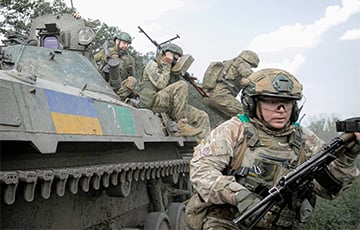
Ukrainian forces are conducting counterattacks that could disrupt Russia's spring-summer 2026 offensive plan.
Large-scale counterattacks by Ukrainian troops on the southern front in early March 2026 have created a critical situation for the Russian command. The tactical successes of the AFU at Orekhov and Gulyaypol are turning into operational problems for the aggressor, jeopardizing the Kremlin's ambitious plans to seize the Zaporizhzhya region.
After the AFU counterattacks began, the Russian grouping of troops "Dnipro" has almost completely lost offensive momentum in key areas of the front. This is stated in the analysis of the Institute for the Study of War ISW.
The failure of the "pincers" of Orekhov and Gulyaypol
According to the ISW analysis, the attempt of Russian troops to take Orekhov in "pincers", advancing simultaneously from the east (from the side of Gulyaypol) and the west, failed. Ukrainian troops not only stopped the advance of the 58th All-Russian Army, but also forced the enemy out of a number of settlements.
The active actions of the AFU forced Russian units to switch to a deaf defense instead of preparing for the announced summer offensive.
One of the reasons for the success of the Ukrainian counterattacks was the self-confidence of the Russian command. Using infiltration tactics with small groups of infantry penetrating the rear, the Russian occupiers neglected to consolidate the captured lines.
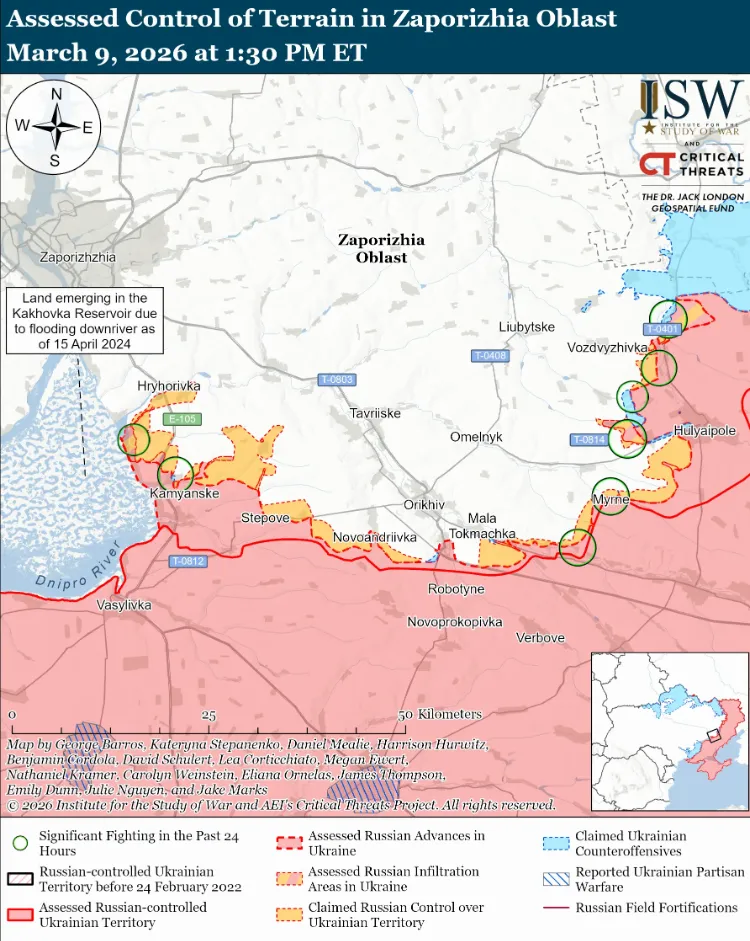
The absence of fortifications at the newly occupied positions allowed the AFU to quickly regain the lost territory. In addition, a serious blow to Russian logistics and control was the Starlink lockdown, which went into effect on February 1, disorienting Putin's army at a critical moment in the Ukrainian onslaught.
Cascading crisis of reserves
The situation in the Zaporizhzhya region forced the Russian commanders to make emergency and risky decisions. To hold the front near Orekhov, the Russian Federation plans to withdraw units from the Kherson direction, which will denude the Dnieper coastline.
It is also known that the 137th Airborne Regiment was transferred to the Kherson region, but because of the threat near Sumy (Yunakovka area), some units had to be urgently brought back.
The redeployment of Marine and Airborne units from Donetsk region to the south undermines the Russian occupiers' ability to advance in the main direction - against the Ukrainian defensive rampart in Donbass.
The Kremlin's strategic deadlock
Analysts emphasize that a series of local counterattacks by the AFU has turned into a strategic problem for Russia. Limited human resources do not allow Moscow to simultaneously buy breakthroughs in the south and prepare a large-scale strike in the Donetsk region.
At the moment, Russian troops demonstrate their inability to break through the fortified Ukrainian defenses, despite dictator Putin's regular claims of superiority. According to ISW analysts, the Kremlin will likely have to either completely revise its 2026 campaign plan or recognize the impossibility of achieving its goals of capturing large territories.

Bank's name: Bank Millennium S.A.
Address: ul. Stanislawa Zaryna, 2A, 02-593, Warszawa
IBAN: PL97116022020000000216711123
SWIFT: BIGBPLPW
Name of the account holder: Fundacja “KARTA ‘97”
Purpose/title of payment: Donation for statuary aims
You can contact us by the e-mail [email protected]