

"Khamenei's Son Is Unacceptable."
- 10.03.2026, 9:54
- 1,606
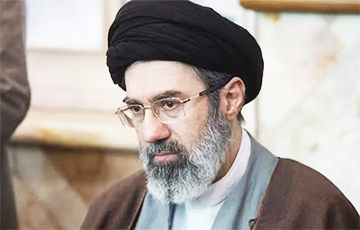
Iran's new supreme leader irritates the U.S.
56-year-old Mojtaba Khamenei has been officially confirmed as Iran's new supreme leader. He became only the third person in the country's history to hold the position, having inherited power after the death of his father, Ayatollah Ali Khamenei, writes Sky News.
The longtime Iranian spiritual leader reportedly died in his compound in Tehran on the first day of the war in an airstrike. He had led the country for more than 37 years. Mojtaba himself was not in the residence at the time of the attack, but his mother, wife and daughter were killed, according to media reports.
The Little-Public Heir
The new leader of Iran has long been a little-known figure. He is the second son of Ali Khamenei and for years has kept a low profile, rarely speaking publicly.
Mojtaba Khamenei served in the Habib Battalion of the Islamic Revolutionary Guard Corps during the Iran-Iraq war of the 1980s. It was his service in this structure that helped him establish close ties with members of the power elites who today hold key positions in the state.
He is also associated with the harsh suppression of anti-government protests in the country.
Criticism from the West
U.S. President Donald Trump sharply criticized the new appointment, calling Mojtaba Khamenei a "lightweight" and saying Washington wanted a leader in Iran who would promote peace:
"Khamenei's son is unacceptable to me.... We want someone who will bring harmony and peace to Iran."
Journalist and author of a book about the country Tara Kangarlu said the new supreme leader has considerable influence within IRGC structures and controls much of the state's political and economic infrastructure.
Dynasty instead of republic
Iran's supreme leader is formally elected by Iran's Assembly of Experts, a body of 88 Islamic theologians loyal to the regime.
But the transfer of power from father to son effectively creates a political dynasty in the country, which is controversial among Iranian society.
Historically, Iranians have overthrown ruling dynasties before, most notably during the 1979 Islamic Revolution.
Analysts believe that the new leader's close ties to the Islamic Revolutionary Guard Corps indicate the growing influence of hardliners in Iranian politics.
This, according to experts, could complicate any negotiations to end the war and worsen prospects for stabilizing the situation in the Middle East.

Bank's name: Bank Millennium S.A.
Address: ul. Stanislawa Zaryna, 2A, 02-593, Warszawa
IBAN: PL97116022020000000216711123
SWIFT: BIGBPLPW
Name of the account holder: Fundacja “KARTA ‘97”
Purpose/title of payment: Donation for statuary aims
You can contact us by the e-mail [email protected]