


Ukraine Has Forever Changed The Rules Of War At Sea
2- 9.02.2026, 14:59
- 3,754
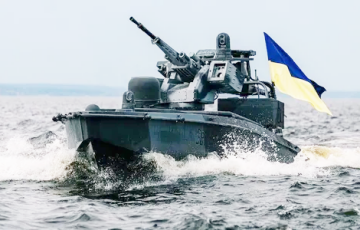
This turned out to be a disaster for the Russian Black Sea Fleet.
A full-scale invasion by Russia in 2022 would seem to have put an end to Ukraine's ability to have safe access to the Black Sea. Our fleet (or rather flotilla) was deprived of its combat-ready state in the very first days. But in the end, everything turned out to be exactly the opposite, and this war from a completely different position raised the question of who really controls the sea.
As of February 23, 2022, the strongest fleet in the Black Sea was considered to be Turkish, but with a big stretch. After all, Russia with its ship grouping represented a serious competition to the Turkish Navy (Türk Deniz Kuvvetleri), and in a number of positions even ahead of them.
The Turkish Navy received the palm of leadership in the Black Sea primarily due to the fact that it is part of the North Atlantic Alliance and in case of conflict with Russia, NATO countries have free access to the water area to assist the ally - while the Black Sea Fleet of the Russian Navy does not have such an opportunity.
But the war in Ukraine has shown that it makes little difference how many frigates, corvettes, submarines and even missile cruisers you have in combat-ready condition. All this can be leveled and even nullified by a country that has no fleet and is left without a full-fledged flotilla.
Fleet sinking
In the framework of a full-scale invasion of Ukraine, Russia paid special attention to the Black Sea operational zone and the capture of the entire southern coast with control of Odessa and access to Transnistria. An important factor in the realization of this scenario was to be the landing of a naval landing force. The grouping of large landing ships (BDC) concentrated in the Black Sea allowed for the simultaneous landing of 4,000-4,500 marines on the coast.
But for the Russian command, the question remained unanswered whether the Ukrainian anti-ship complex "Neptun" was destroyed as a result of strikes since February 24, 2022. It was in it that the ROV saw the main threat, since the R-360 missiles had the property of sinking a ship with a displacement of up to 5,000 tons. That is, one missile was quite enough to inflict critical damage or completely sink any Russian BDC.
At the very beginning of a full-scale invasion, the Russian command did not need a report about one or two battalions of marines who had gone to the bottom of the Black Sea.
Without reliable information, it refrained from landing troops, especially in difficult weather conditions.
In the meantime, Ukraine had already begun to systematically reduce the Russian fleet - on March 21 by sinking the Raptor boat near Mariupol, on March 24 by destroying the BDC Saratov, and by damaging the BDCs Caesar Kunnikov and Novocherkassk in Berdyansk. There were other strikes, confirmed in full or in part, against Russian ships, but the Russian occupants received the final answer regarding the Neptune missile cruiser on April 14, 2022, when two R-360 missiles sank the missile cruiser Moskva.
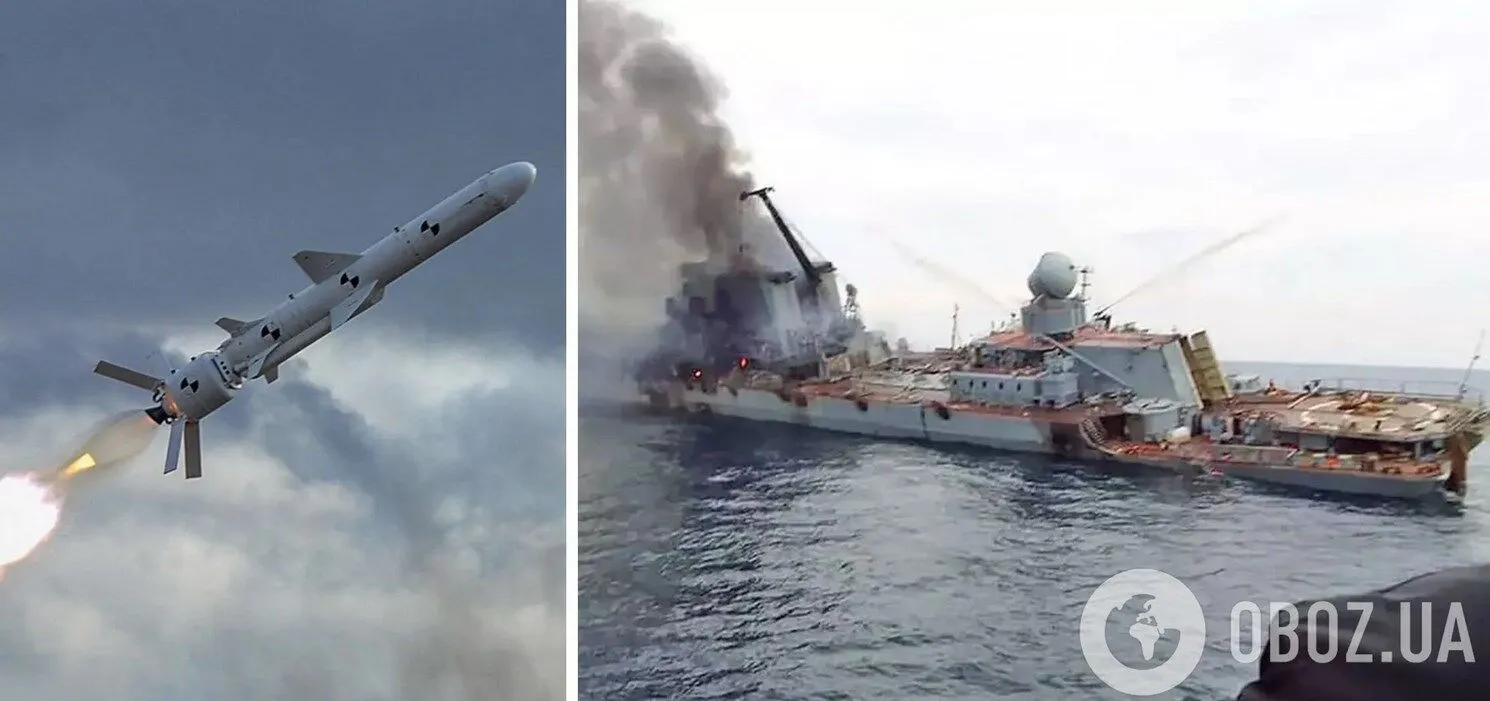
The Ukrainian forces initially damaged the Russian fleet with traditional means, including Neptun anti-ship systems and later Harpoon anti-ship missile cruisers transferred in May.
But by the end of 2022, Ukraine began looking for cheaper means of countering the Russian fleet, and such a solution became marine drones, the main types of which were MAGURA V5, used by the Defense Ministry's GSD, and Sea Baby, the main strike marine BEC of the SBU.
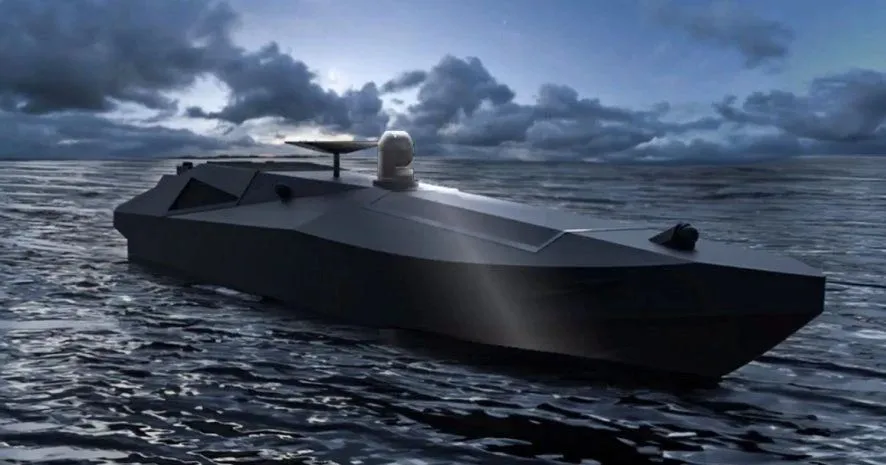
It is Ukrainian marine drones that have become the main counterweight in the Black Sea to the Russian fleet, having carried out dozens of successful strikes against both enemy ships and infrastructure. To date, only verified data confirms the destruction of about 30 Russian ships, as well as damage to more than 20 units of the fleet... Although what fleet?
With the loss of a flagship, a ship of the first rank, as well as the number of ships lost by Russia in four years of full-scale war, we can safely say that Russia no longer has a fleet in the Black Sea. At most, it has a flotilla.
Russia will never be able to restore its presence in the Black Sea to the level it had before the full-scale invasion of Ukraine. Moreover, the naval battle in the Black Sea has become the most shameful page in this war, where the Russian Navy not only suffered a crushing defeat, but continues to suffer it, regularly losing warships and submarines - even with its cowardly flight from Sevastopol to Novorossiysk and withdrawal of a number of ships to the Caspian Sea.
It was Ukraine that changed not only the rules of warfare at sea, but also the very concept of control of water areas.
Hunting from the sea and from the sky
Today, Ukrainian maritime drones are not only kamikaze BECs, whose main task is a one-time use to defeat an enemy ship.
Ukrainian BECs have turned into short-range maritime air defense systems by mounting R-73 or AIM-9 missiles on them. This allowed maritime drones to pose a threat not only to enemy ships, but also to aviation. Over the Black Sea, Russia has more than once lost Mi-8 helicopters and Su-30 fighter jets that collided with BECs armed with these missiles.
In addition, crewless boats are used for patrolling, and the placement of large-caliber machine guns and even multiple rocket launchers on them greatly expands their functionality.
The BECs have also been equipped as aerial drone carriers for raid operations, allowing Ukraine to conduct regular raids on the coastal zone of the temporarily occupied Crimean peninsula.
And this is without specifying submarine-type underwater drones, which have already proved themselves both by attacking the Kerch bridge supports and by hitting the Varshavyanka submarine in Novorossiysk.
No other country washed by the Black Sea can boast such a level of multifunctional control. Even Turkey, which now has undeniably the most powerful fleet in the water area, cannot boast of such a level - with the use of minimum resources and minimal threat to personnel in the performance of assigned tasks.
A completely separate topic is the control of the sea by means of not only sea drones, but also aerial drones. Especially in matters of hunting from the air both land targets, such as enemy air defense systems, and maritime targets, such as Russian ships sailing the high seas. In particular, such a strike was carried out on August 28, 2025 on a small missile ship of the "Buyan-M" type, and subsequently the threat of such strikes became systemic.
Now representatives of the Russian shadow fleet are forced to walk in the zone of Turkey's territorial waters, fearing Ukrainian drone strikes both by sea and from the air. And this is the only thing that restrains Ukraine from fully establishing control in the water area - respect for the borders of other states.
Otherwise, Ukraine has shown that it does not matter how many frigates, corvettes and destroyers you have - in modern warfare it does not play a special role. Any ship with a displacement of a thousand or ten thousand tons has vulnerabilities, and the means to hit those vulnerabilities is often much cheaper than the warship itself.
Alexandr Kovalenko OBOZ.UA

Bank's name: Bank Millennium S.A.
Address: ul. Stanislawa Zaryna, 2A, 02-593, Warszawa
IBAN: PL97116022020000000216711123
SWIFT: BIGBPLPW
Name of the account holder: Fundacja “KARTA ‘97”
Purpose/title of payment: Donation for statuary aims
You can contact us by the e-mail [email protected]