


Should We Expect Anything From The Negotiations
5- Petro Oleshchuk
- 6.02.2026, 17:05
- 4,420
"Process for process sake" without the "grand bargain".
The next round of trilateral consultations in Abu Dhabi (scheduled for February 4-5, 2026) was a continuation of the US-mediated negotiation format launched in January.
The logic of the February round can be read only in conjunction with the events of the previous weeks. First is the escalation of Russian strikes on Ukraine's energy infrastructure during the frosty period. Second, the evolution of the negotiation framework, where the territorial component and security guarantees remain the most conflicting topics.
The public positions of the parties in the February round can be described as not very specific. Ukraine and the U.S. are detailing the framework (what exactly is being discussed, in what formats), while the Russian Federation more often emphasizes the unchanged "conditions" and the continuation of the war until Kiev's "necessary decisions".
In the broader framework of the talks, the Kremlin in January publicly linked the possibility of an agreement with a territorial demand. "Cession" of the entire territory of Donbass. This element is important for interpreting the "unchanged position" spoken of in February.
Despite the closed nature of the content, several "knots" can be traced from the public statements and context of the January round, on which not only the outcome of this track depends, but also the geopolitical consequences.
The first knot is the mechanics of the ceasefire and de-escalation parameters, including the cessation of strikes on critical infrastructure. Ukrainian and European rhetoric directly ties the negotiations to the issue of Russia's "winter campaign" against energy.
The second node is territorial settlement, where Donbass is publicly labeled as the main point of divergence.
The third node is security guarantees and a mechanism for responding to possible ceasefire violations. In the public diplomacy of Ukraine and its partners, this block acquires a multilevel character.
As of February 5, we can try to identify three basic scenarios for further developments.
"Process for the sake of process" without a "grand bargain"
Humanitarian steps, technical agreements to reduce the risks of escalation. Everything to show the main spectator (US President D. Trump) that the parties respect him, respect his peace initiatives, are ready to negotiate and even show some "constructive". But go no further than demonstration.
Gradually "folding" the ceasefire framework with multi-level monitoring and guarantees. In spite of everything, the format of the ceasefire is still being worked out, but the question of a political solution remains. And here the main problem lies with the Russian dictator. When will Putin be ready to cease fire? And will he be at all? Can the crisis in the Russian economy affect this? No one has the answers to these questions.
Delaying/imitation dynamic
Contacts continue, but the Russian Federation does not change the basic terms, and Ukraine and partners respond with increased sanctions and military support.What will be important here is how the "West" and the US will react to the delaying and imitation? Will there be sanctions? Will there be pressure on Russia? If so, then the "Abu Dhabi format" may eventually strengthen Ukraine's position in some way.
In the end, the February round should be seen not as a "moment of truth" in the sense of an immediate political finale, but as a test of the parties' ability to convert negotiations into concrete steps.
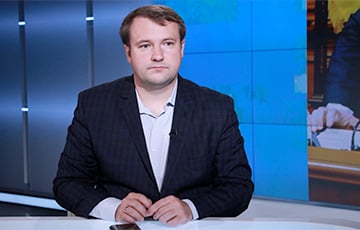
Petr Oleshchuk, professor at Taras Shevchenko National University of Kyiv, specially for Charter97.org.

Bank's name: Bank Millennium S.A.
Address: ul. Stanislawa Zaryna, 2A, 02-593, Warszawa
IBAN: PL97116022020000000216711123
SWIFT: BIGBPLPW
Name of the account holder: Fundacja “KARTA ‘97”
Purpose/title of payment: Donation for statuary aims
You can contact us by the e-mail [email protected]