

Energy Blow To The Kremlin
9- 3.02.2026, 13:10
- 29,316
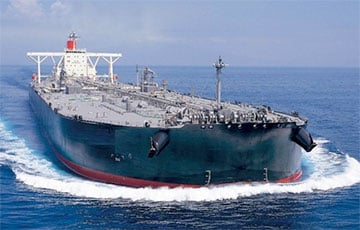
For Russia, the consequences are critical.
In the context of U.S. President Donald Trump's increased pressure on Russia, his recent statements on Venezuela, India and China are shaping the new architecture of the global energy market - with direct implications to finance Russia's war against Ukraine.
Venezuelan oil instead of Russian and Iranian oil
Trump said India would resume purchases of Venezuelan oil, emphasizing that New Delhi would buy it "instead of Iranian oil." In fact, this means a partial replacement of Russian imports, on which India relies as the third largest oil importer in the world.
The US is thus:
reducing the dependence of key Asian markets on Russian crude;
creating competitive pressure on Russian Urals;
redistributing energy flows in favor of alternative suppliers.
China as a potential "market switch"
Separately, Trump invited China to join the scheme, saying, "China is welcome and will make a great agreement on oil."
Although the details were not announced, the signal is clear: Beijing is being offered an alternative to Russian oil, which could potentially undermine a key channel for the Kremlin's foreign exchange earnings.
Price Factor: oil falls - Kremlin loses
With these statements and signals of de-escalation between the US and Iran, oil prices collapsed nearly 5% - the sharpest one-day drop in six months.
Brent fell to around $66 per barrel.
WTI to around $62 per barrel.
The market reacted by removing the "geopolitical premium", which further hit exporters' earnings.
Double blow to the Russian budget
The consequences for Russia are critical:
more than 40% of Russia's budget revenues are generated by oil and gas exports;
the price drop reduces margins;
Venezuelan oil, which the U.S. is actively pushing into Asian markets, displaces Russian volumes from India, and subsequently may - from China.
In the face of global oversupply and renewed Venezuelan production, the Kremlin's revenues could shrink by billions of dollars annually, making it directly difficult to finance military operations.
US strategy: "energy dominance"
The moves fit into a broader US strategy to weaken Russian influence in Europe and Asia. Trump himself has emphasized that with India, "there is already a concept of agreement," signaling a rapid and systemic change in the global oil trade. The falling revenues of the Kremlin's so-called war machine are no longer a hypothesis - they are an economic reality in which Moscow is forced to:
lose markets;
sell oil at increasingly deep discounts;
seek alternative sources of financing in the face of growing Western pressure.
Pavel Kukhta, Facebook

Bank's name: Bank Millennium S.A.
Address: ul. Stanislawa Zaryna, 2A, 02-593, Warszawa
IBAN: PL97116022020000000216711123
SWIFT: BIGBPLPW
Name of the account holder: Fundacja “KARTA ‘97”
Purpose/title of payment: Donation for statuary aims
You can contact us by the e-mail [email protected]