


Kazakhstan's President Has Scheduled A Referendum On The New Constitution For March 15
12- 12.02.2026, 9:11
- 7,794
What's different about her?
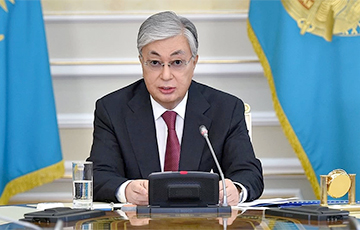
Kazakh President Kasym-Jomart Tokayev has signed a decree scheduling a referendum on constitutional amendments for March 15. Among the key changes are the transition from a bicameral parliament to a unicameral model and the enshrinement of the supremacy of the Constitution over international treaties. Despite media reports, the status of the Russian language has not changed and remains unofficial, the BBC writes.
Tokayev set the date for the referendum on the evening of February 11, after hearing the results of the Constitutional Commission's work that day and receiving the final version of the amendments.
It was reported earlier that the text of the new Constitution of Kazakhstan has been rewritten by more than 80% - the amendments will affect 77 articles.
Tokayev noted a day earlier that the adoption of amendments will give "a powerful impetus to the development of Kazakhstan and will contribute to the realization of the potential of each citizen."
"A panoramic look at the political reforms of recent years allows us to make sure that Kazakhstan is finally parting with the super-presidential form of government and moving to a presidential republic with an authoritative, influential parliament," the head of state said.
Despite these statements, the new draft constitution, as lawyers and human rights activists point out, will, on the contrary, expand presidential powers, weakening other bodies of state power. Moreover, the amendments may increase control over citizens under the pretext of protecting Kazakhstan's national interests.
"Even more authoritarian and super-presidential"
The Kazakhstan International Bureau for Human Rights (KIBHR) and the Legal Media Center addressed the Kazakh authorities with suggestions and criticism of the proposed amendments.
KMBHR's chief expert consultant Evgeny Zhovtis told the BBC that the new draft constitution, on the contrary, is more "authoritarian and super-presidential" in nature.
"Now, when appointing the chairman of the Constitutional Court, parliamentary consent is needed, and the president only submits candidates. In the draft of the new Constitution there is no need for parliamentary consent for a number of positions, i.e. the appointment is made by the president. And where parliamentary consent is required, for example, for the post of prime minister or judge, if the deputies do not give their consent twice, the president will have the right to dissolve parliament," the lawyer said.
The amendments reform the structure of parliament from bicameral to unicameral and significantly reduce the powers of deputies. It is also proposed to change the name of the parliament to Kurultai.
According to the proposed reforms, Kazakhstan's parliament is stripped of the right to remove immunity from the prosecutor general, the chairman of the Supreme Court and the human rights commissioner. In addition, the new version of the Constitution does not mention that members of parliament approve the republican budget, make amendments and additions to it.
"Frankly speaking, there are a lot of questions to this Constitution. In my opinion, it is worse than [the current version]. Political technologies decided to strengthen the presidential power in this way, to stick a lot of ideologemes like "law and order". The draft of the new Constitution is adopted by this power for this power. As time passes, it will be changed as well. I have no doubts in this sense," the KIBHR expert-consultant says.
The head of the constitutional commission, Elvira Azimova, reported to the president during a February 11 meeting that the text of the new constitution had been prepared on the basis of "initiative proposals from citizens and the expert community."
But earlier it was repeatedly reported that human rights activists and lawyers asked to be involved in the drafting of the amendments and criticized the changes being introduced to the country's main law.
The Legal Media Center noted that the new 23rd article in the draft constitution contains vague wording that could increase pressure on the media and limit freedom of speech.
"The proposed changes may be used to limit criticism of public officials, while modern constitutional development, on the contrary, requires enshrining the principle of public interest and the public's right to know significant information," the rights activists said.
The supremacy of the Constitution over international treaties
February 3, at a regular meeting of the constitutional commission, it was stated that the new Constitution will have supreme legal force over international treaties.
"In the conditions of increasing turbulence of international relations, the adoption and fulfillment of international commitments should be accompanied by a constitutional assessment in terms of sovereignty and the foundations of Kazakhstan's constitutional system," said Murat Abenov, a deputy of the Majilis (lower house of parliament).
He added that social guarantees will be applied only to foreigners whose countries guarantee the same social assistance to Kazakhstanis.
KMBHR expert consultant Yevgeniy Zhovtis explained in an interview with the BBC that in this way international law would no longer be prioritized over Kazakhstan's legislation.
Status of the Russian language
Media earlier reported that the new draft constitution allegedly "downgrades" the status of the Russian language in Kazakhstan.
According to lawyer Yevgeniy Zhovtis, the amendments do not change the status of the Russian language, but only change the wording.
Now Article 7 of the Constitution states that the Russian language is officially used in state organizations and local self-government bodies on an equal footing with Kazakh. In the draft of the new Constitution the word "equally" is replaced by "along with".
"When the word "equally" or "along with" is used, it is such a gentle wording, that is, the Russian language should be used in legal proceedings by state bodies, for example, when a person applies to a state institution in Russian, he has the right to receive an answer in Russian. Not much has changed here in terms of status. That is, Russian was not an official language, so it remains unofficial," the lawyer explained.

Bank's name: Bank Millennium S.A.
Address: ul. Stanislawa Zaryna, 2A, 02-593, Warszawa
IBAN: PL97116022020000000216711123
SWIFT: BIGBPLPW
Name of the account holder: Fundacja “KARTA ‘97”
Purpose/title of payment: Donation for statuary aims
You can contact us by the e-mail [email protected]