

Putin "shuffles" Russia's Military Leadership
4- 12.02.2026, 8:07
- 7,066
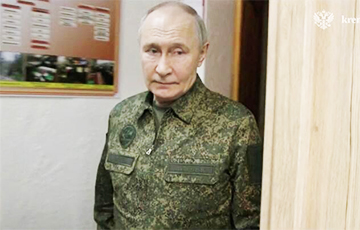
ISW analysts revealed the details.
Russia has changed the control system of the power bloc: a decree has been signed that places the Rosgvardia under the General Staff. Experts believe that this strengthens the vertical of control and strengthens the position of military leadership in the power structure.
This is reported by Institute for the Study of War (ISW).
On Wednesday, February 11, a document was signed, according to which the General Staff of the Russian Federation becomes the main management body of the Rosgvardia troops.
The decision stipulates that the General Staff will organize the command and use of units in both peacetime and wartime, participate in the development of plans for their development and ensure combat and mobilization readiness.
The General Staff will also receive authority in training, intelligence, combat support and creation of control systems for the Rosgvardia.
Possible reorganization of the Ministry of Emergency Situations
It was reported earlier that the Security Council of the Russian Federation is considering the liquidation of the Ministry of Emergency Situations with the subsequent inclusion of some of its employees in the structure of the Rosgvardia.
Sources say that up to 50,000 employees of the rescue corps, as well as sappers and other specialists may be transferred to the structure.
Analysts note that such steps may be aimed at strengthening control over security agencies after the events of June 2023.
In their assessment, the subordination of the Rosgvardia to the General Staff continues the course of centralizing all armed formations under the leadership of the Defense Ministry.
"Subordinating the Rosgvardiya and parts of the Russian Defense Command to the General Staff will significantly strengthen Gerasimov's control over the Russian security forces, underscoring that Putin rewards Gerasimov for his loyalty and that Gerasimov retains a central place in Putin's inner circle," ISW concludes.
Putin is facing the fact that the Russian army's skyrocketing losses in the war against Ukraine are increasingly seriously undermining the realization of the Kremlin's offensive designs. According to Michael Kofman, a senior fellow at the Carnegie Endowment for International Peace, Moscow's tactics of constant pressure along the entire front line are not yielding the expected results and are not creating conditions for large-scale operational breakthroughs.
It should be noted that Putin, against the backdrop of the ongoing war against Ukraine, has been promoting the thesis that victory is supposedly approaching, claiming Russia's ability to adapt to sanctions pressure and retain the strategic initiative on the front. Such statements are actively broadcast inside and outside the country, while the United States and Europe are closely monitoring such rhetoric and assessing the Kremlin's real capabilities in a protracted conflict.

Bank's name: Bank Millennium S.A.
Address: ul. Stanislawa Zaryna, 2A, 02-593, Warszawa
IBAN: PL97116022020000000216711123
SWIFT: BIGBPLPW
Name of the account holder: Fundacja “KARTA ‘97”
Purpose/title of payment: Donation for statuary aims
You can contact us by the e-mail [email protected]