

Fits In The Trunk: What Makes Ukraine's Own Laser Air Defense System Unique
6- 11.02.2026, 10:05
- 6,570
An American journalist reported new details.
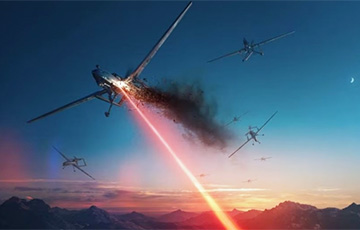
Ukraine has developed its own laser system that can be used to destroy Russian attack drones. It is called Sunray, will cost several hundred thousand dollars and is so compact that it fits in the trunk of a car.
The new development was seen in action with his own eyes by American journalist Simon Shuster. He shared his impressions and details about the invention in an article for The Atlantic.
What's known about the Ukrainian-made Sunray laser system
Shuster said that while in Ukraine, he saw the Ukrainian Sunray laser system in action, which could soon be defending Ukrainian skies from Russian drones.
"If you've never seen a laser shoot down an airplane in the sky, the experience can be unsettling. The weapon fits comfortably in the trunk of a car. It makes no noise and emits no light, not even that red beam so familiar from the movies. When a team of Ukrainian soldiers and engineers took me to see their prototype the other day, it seemed easy to use. Almost too simple," the journalist described his first impressions.
The demonstration took place in the field. The operator, says the author of the article, mounted a rig "resembling an amateur telescope with several cameras attached to the sides" on the roof of a pickup truck. The engineers then launched a small drone.
"The laser spun while its cameras tracked the target. The operator shouted: "Fire!" Within seconds, the drone began to burn, as if invisible lightning had struck it, and then fell to the ground in a fiery arc," Schuster wrote.
He recalled that laser weapon systems are not unique. The U.S. Navy, for example, has had the Helios system, developed by weapons giant Lockheed Martin, in service since 2022. Its main purpose, as well as the Ukrainian development - protection from enemy drones.
Developers of Sunray (which, as Shuster admits, he has never heard of before) told the journalist that work on the system lasted about two years and cost "several million dollars." The expected cost of a single Sunray system is "several hundred thousand dollars."
The fact that the Ukrainian system was developed faster and will cost less than its American counterpart is explained by the fact that Ukraine is developing weapons in a full-scale war, fighting for its existence.
"Many American companies are driven by money. It's a job for them. They do it. They get paid. We have another component: the need to survive. That's why we are moving faster," Shuster quotes Pavel Yelizarov, the newly appointed deputy commander of Ukraine's air defense forces.
The need to strengthen its own component in the air defense system arose because of a shortage of appropriate assistance from Western allies. The U.S., writes Shuster, diverts a significant amount of weapons to the Middle East; assistance from Europe is limited by the fact that the Europeans have to prepare for the possible defense of their own airspace against Russian drones.
"The Ukrainian response has become an element of a race to build a home-made version of Iron Dome, Israel's short-range air defense system, which is considered the most effective in the world.... Even in the case of Israel, which has nearly 30 times less territory than Ukraine, building an effective air defense shield took about four years. One battery of Iron Dome interceptors cost as much as $100 million in 2012. Ukrainian weapons manufacturers have been trying to achieve the same results on a much smaller budget for several years, and several of them showed me their inventions last week," the author of the article notes.
The developments shown to the journalist include a 3D-printed interceptor drone, a carbon fiber clone of Russia's best air defense missile, wheeled robots armed with machine gun turrets, and "more exotic weapons such as the Sunray" .
All of them together, Shuster believes, show a definite trajectory for Ukraine, adhering to which it will in the near future "be able to neutralize one of the biggest threats to its security: the swarms of Russian drones that continue to terrorize its civilians and destroy its infrastructure."
"The Dome against drones is not about the future. It is about survival today," the author quoted Ukrainian Defense Minister Mikhail Fedorov as saying last month.

Bank's name: Bank Millennium S.A.
Address: ul. Stanislawa Zaryna, 2A, 02-593, Warszawa
IBAN: PL97116022020000000216711123
SWIFT: BIGBPLPW
Name of the account holder: Fundacja “KARTA ‘97”
Purpose/title of payment: Donation for statuary aims
You can contact us by the e-mail [email protected]