


Ukrainian Strikes Have "knocked Out" More Than Half Of Russia's Gasoline Production Capacity
1- 13.11.2026, 22:42
- 1,096
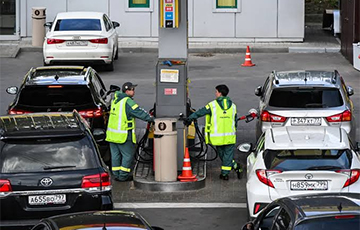
Russia's accumulated reserves may last only a week.
A new wave of attacks on Russian oil refineries could lead to a repeat of the fuel crisis in the aggressor state, the Russian Federation.
Extensive damage to these facilities threatens to cause a gasoline shortage, long lines at gas stations, and the imposition of restrictions on fuel sales, according to the Russian publication The Moscow Times.
According to an assessment by Sergey Vakulenko, a senior research fellow at the Carnegie Berlin Center for Russia and Eurasia, the Ukrainian strikes that began in late October may have disabled facilities accounting for about 55% of Russia’s gasoline production.
At the same time, the reserves accumulated during the relatively calm month of October may be sufficient for only about seven days of domestic consumption.
Over the past two weeks, drones have attacked all five of Russia’s largest oil refineries. Specifically, on November 11, the Omsk Refinery—which processes up to 22 million metric tons of crude oil annually—was targeted. Two days earlier, the “Kinef” refinery in the Leningrad Region, with a capacity of 21 million metric tons per year, was struck.
In early November, attacks also targeted facilities supplying fuel to the Moscow region. On November 5, drones attacked the Ryazan Oil Refinery, which has a capacity of 17 million metric tons per year, and on November 3, the Slavneft-YANOS refinery, capable of processing 15 million metric tons of crude oil annually.
In addition, on November 1, a strike hit the Lukoil refinery near Nizhny Novgorod. This facility, with a capacity of 17 million metric tons per year, is the country’s second-largest producer of automotive gasoline. On November 13, drones attacked the Volgograd Oil Refinery, designed to process 14 million metric tons of oil per year.
Rosneft’s Novokuybyshevsk refinery (8.3 million metric tons per year), “Bashneft-UNPZ” (6.6 million metric tons) and the Afip Refinery (7.2 million metric tons).
According to a Russian expert, the situation could reach a critical point in November 2026, when the emerging difficulties and inconveniences “turn into serious problems.”

Bank's name: Bank Millennium S.A.
Address: ul. Stanislawa Zaryna, 2A, 02-593, Warszawa
IBAN: PL97116022020000000216711123
SWIFT: BIGBPLPW
Name of the account holder: Fundacja “KARTA ‘97”
Purpose/title of payment: Donation for statuary aims
You can contact us by the e-mail [email protected]