

Today Is The Anniversary Of The Beginning Of The Uprising Of Kastus Kalinowski
6- 22.01.2026, 13:05
- 5,026
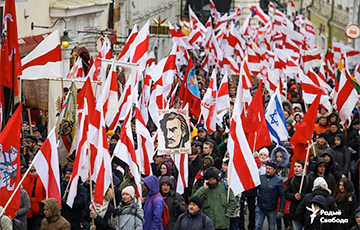
On January 22, 1863, the Central National Committee gave the signal to fight the Russian Empire.
On January 22, 1863, the Central National Committee in Warsaw launched an uprising against Russian tsarism. It was joined by the rebels of Belarus and Lithuania under the leadership of Kastus Kalinowski.
The first rebel units were created in the western counties of Belarus in late January, and in the rest of the territory - in March - April 1863. They were formed from small nobility, officers, artisans, students, high school students, and peasants. The rebel units led by Valery Vrublevsky, Felix Rozhansky (Grodno province), Zygmund Sierakowski, Antanas Mackievichus (Kovno province), Anton Trusov (Minsk province), Ludwig Zvezdovsky (Mogilev province), Maximilian Czerniak (Vilna province), sought to involve as many peasants as possible in the uprising, tried to implement an agrarian program.
The leaders of the uprising, especially Kastus Kalinowski, intended to spread the uprising to the Baltic and Russian provinces. For this purpose they planned to create new detachments in Latvia and Estonia.
The officers Budelovich, Zhebrovsky and others arrived from St. Petersburg and Moscow to help Zvezdovsky in order to spread the uprising to Smolensk and Moscow.
The Russian authorities used extraordinary measures to suppress the uprising. The number of soldiers in the territories covered by it was increased. Troops from the central regions of the empire were transferred to Belarus, Lithuania and Poland. Rewards were announced for the extradition of rebels. Those villages that assisted the rebels were completely burned, the property was sold off at auctions, and the inhabitants were sent for settlement to the central regions of Russia or to Siberia. Thanks to repressions, the authorities managed to suppress the uprising.
August 28, the Polish National Government ordered to stop military operations.
The armed struggle in Belarus continued for almost a year. In the summer of 1864, the last revolutionary organization in Novogrudok county was liquidated.
The participants of the uprising were subjected to merciless repression. Their farmsteads were destroyed, their property was confiscated. More than a hundred rebels were executed, 800 were exiled to hard labor, about 12.5 thousand people were evicted, including 500 - to Siberia.
The uprising, however, forced the tsarist government to agree to more favorable terms of peasant reform in Poland, Belarus and Lithuania. The uprising also had a great impact on the revitalization of the revolutionary movement both in the Russian Empire and in Western Europe, as well as on the growth of national consciousness of Belarusians, Lithuanians and Poles.

Bank's name: Bank Millennium S.A.
Address: ul. Stanislawa Zaryna, 2A, 02-593, Warszawa
IBAN: PL97116022020000000216711123
SWIFT: BIGBPLPW
Name of the account holder: Fundacja “KARTA ‘97”
Purpose/title of payment: Donation for statuary aims
You can contact us by the e-mail [email protected]