


Is Iran On The Brink Of A "Persian Spring"?
8- 20.01.2026, 23:56
- 16,394
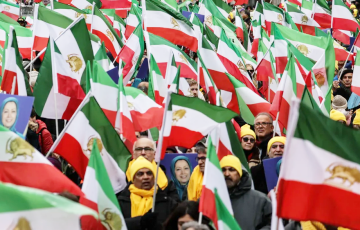
Fragile autocracies eventually collapse.
Former U.S. Ambassador to Tunisia Gordon Gray drew parallels between the current protests in Iran and the Arab Spring of 2011. In his opinion, after the fall of the Bashar al-Assad regime in Syria in December 2024, Tehran is facing a similar crisis caused by economic collapse, writes National Security Journal (translated by Charter97.org).
Although the regime in Iran has survived five major waves of protests since 2009 thanks to the loyalty of the Islamic Revolutionary Guard Corps (IRGC), Gray warns that "fragile" autocracies eventually collapse.
Gray recalls his experience in Tunisia at the beginning of the Arab Spring. In January 2011, mass protests toppled the country's longtime authoritarian leader. The main lesson he learned was that dissatisfaction with the economy, corruption, unemployment and a sense of loss of dignity becomes the fuel for mass protests. These conditions are being repeated in Iran today.
The key difference between Iran and the Arab Spring countries is the loyalty of the security forces. In Tunisia and Egypt, the armies refused to fire on protesters or even force leaders to resign. In Iran, on the other hand, the IRGC and paramilitary forces remain a reliable pillar of the regime.
Nevertheless, Gray notes, regime survival is different from regime success. Without decisive reforms and a response to the economic and social demands of its citizens, the Islamic republic is ultimately doomed. According to the diplomat, "history doesn't repeat itself, but it often rhymes," and current events in Iran could be a new round of sweeping social and political change in the region.

Bank's name: Bank Millennium S.A.
Address: ul. Stanislawa Zaryna, 2A, 02-593, Warszawa
IBAN: PL97116022020000000216711123
SWIFT: BIGBPLPW
Name of the account holder: Fundacja “KARTA ‘97”
Purpose/title of payment: Donation for statuary aims
You can contact us by the e-mail [email protected]